
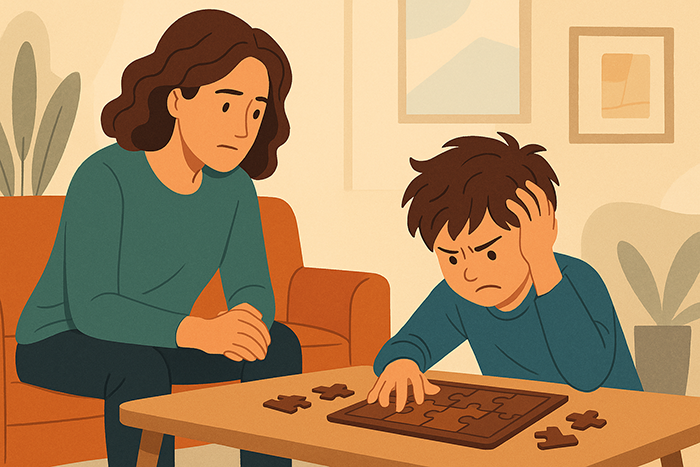
There’s a moment that every parent knows well: your child’s face crumples, frustration rises, maybe even tears start to fall. Every fiber in your body wants to fix it. To smooth the way. To reach in and solve the problem—sometimes before your child even knows there is a problem.
But what if I told you that the hard moments—those messy, imperfect, not-yet-solved ones—are exactly where your child needs to be? What if struggle isn’t something to avoid, but something to gently, lovingly allow?
Letting your child struggle isn’t about being cold, distant, or unresponsive. It’s the opposite: it’s an act of deep love and faith. Because when you allow your child to wrestle with something difficult, you send a powerful message: “I believe in you. I believe you are capable. I believe you can handle hard things.” And that belief, more than any solution we could offer, is what builds a child’s confidence from the inside out.
Struggle Is Where Skills Grow
Kids don’t become resilient because life is easy. They become resilient because they have opportunities to meet challenges and learn that they can survive frustration, disappointment, or failure. It’s in the struggle—trying to tie their shoes, navigating a tricky friendship, working through a difficult homework assignment—that your child learns:
-
I can tolerate discomfort.
-
I can try new strategies when the first one doesn’t work.
-
I can ask for help, but I don’t always need someone to fix it for me.
When we rush in to save our children from every frustration, we accidentally send the message that they can’t handle difficulty without us. We want to help, of course—but often, the kindest thing we can do is sit beside them in the hard stuff, offering support without stepping in to solve.
Being With, Not Doing For
This doesn’t mean leaving your child alone with their struggles. It means being present, warm, and attuned while you hold a boundary. You might say:
-
“I see you’re having a hard time with this puzzle. It’s okay to feel frustrated. I’m right here if you want to try again.”
-
“I know it’s disappointing when things don’t work out. I believe in your ability to figure out what to do next.”
You are the sturdy presence. You don’t remove the challenge, but you do remove the loneliness. And that is the sweet spot where children grow most.
What If My Child Gets Really Upset?
It’s hard to watch our kids struggle—especially if their distress triggers our own old anxieties. But here’s what’s true: when you allow your child to move through hard moments (with your support nearby), you’re building their emotional muscles. You’re teaching them that feelings—frustration, anger, sadness—aren’t emergencies. They’re just part of being human.
You’re saying: “Hard isn’t bad. You can do hard things. And I’ll be right here with you, no matter what.”
Struggle Is Not a Problem to Be Solved. It’s a Path to Growth.
So the next time you see your child wrestling with something tough, pause before you swoop in. Take a breath. Remind yourself: this is where growth happens. You are not abandoning your child; you are gifting them the opportunity to discover their own strength.
Letting your child struggle doesn’t make you a less caring parent—it makes you the kind of parent who is raising a capable, resilient, confident human being. And that, truly, is enough.