
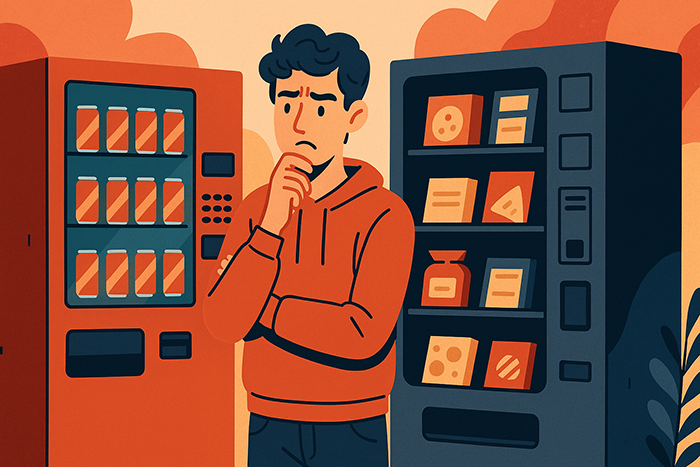
I never set out to be the vending machine guy. I was just a broke college student looking for a decent side hustle, and I thought vending machines would be this easy, mostly passive thing—buy a machine, stock it with snacks, and let the quarters pile up. If only it were that simple.
Like a lot of people who jump into this business, I made the classic rookie mistake of not actually running the numbers. I’d heard that a good machine could pull in around $300 gross a month and net about $240. That sounded fantastic, at least on paper, until I learned how rare it is to land a “good location.” Most of the spots I got were just okay at best. The worst ones barely made $100 gross, maybe $70 net. When you’re paying off a $2,000 machine, those numbers aren’t great. It takes nearly a year just to break even—and that’s if everything goes right. Winter months were brutal. People stay inside, nobody wants a soda when it’s cold, and your sales just tank.
You might think you can dip your toes in with just one or two machines, but that was another mistake I made. With so few machines, you can’t buy inventory in bulk without a ton of it going stale. Even when I hit ten machines, I was tossing out expired chips and candy bars every month, which eats into any profits you think you’re making.
I also blew it on pricing. I kept my prices low—everything under $2.50, sometimes a soda for just a dollar, candy for $1, chips for $2.50, because I thought that would bring in more sales. I didn’t have to pay sales tax as a business, so margins were a little better, but I didn’t actually track my profit per item. I just guessed that my average margin was about 20%. I realized way too late that my prices were too low, especially when I looked at places like amusement parks charging $4 for a drink and people still paid up. Raising prices later is tricky—people notice and complain. It’s way easier to start high and only drop your prices if you have to.
Drink machines are the real moneymakers, by the way. If you can, focus on sodas, water, energy drinks—those always sold better for me. I had one warehouse location where I could sell sixty cans of Coke a month at $2 each, no sweat.
So how many machines do you need to actually make decent money? Honestly, a lot. Ten is the bare minimum, and only if a few of them are in prime spots. You really need twenty or more if you want to see real income and avoid wasting money on spoiled snacks. If you’re serious, you either need capital to buy your way in or some real sales skills to land new locations.
And finding locations? That’s the hardest part by far. For every yes, you’ll get at least twenty no’s. Most of the best spots are already under contract, and those contracts are gold. If you have the money, buy a business with great locations already lined up. That’s what I did—I found mine on BizBuySell for $15,000, split with a friend and family member. It came with several machines in existing locations, but even then, it was a grind to add new ones. Warehouses with a hundred-plus employees were the only places I had where people actually used the machines on every break.
When it comes to reaching out to places like warehouses or big chain locations, emails and follow-ups worked better than just walking in. Receptionists are usually pretty good at getting rid of people like me. If you buy an existing route, make sure you get introduced to every manager and owner. Otherwise, you might show up to restock and find your machine unplugged and sitting out back. Contracts matter more than you think.
Definitely invest in credit card readers, at least for your good locations. People don’t carry cash like they used to. In small businesses, cash is still common, but in high-traffic spots, card payments are a must.
Restocking ten machines took me maybe five hours a week. Not bad, but even with that time commitment, this business never became my main gig. Too many mistakes, not enough research, and just being inexperienced kept me stuck in the side hustle zone.
Looking back, my mistakes are obvious. I didn’t ask for profit and loss statements or cash flow documents before I bought the business. I had no system to manage inventory, so things expired and margins were a mystery. We set the company up as a three-way partnership, but no one was in charge, so decision-making was always a fight. If I ever do it again, one person will have majority control—trust me.
When it comes to the machines themselves, the brand wasn’t all that important. What really matters is making sure you can find parts and a user manual. If you can, stick to brands supported by local refurbishers—they’re a lifesaver if you ever need repairs or want to offload old machines.
So, what’s the big takeaway? This isn’t a passive business, and it’s definitely not a fast track to easy money. If you’re scrappy, have sales skills, and some startup capital, you can make it work. But go in with your eyes wide open—run the numbers, buy contracts for good locations if you can, don’t lowball your prices, and track your margins. And most of all, don’t be as clueless as I was when I started out.
Would I do it again? Maybe, but only if I was way more prepared.