
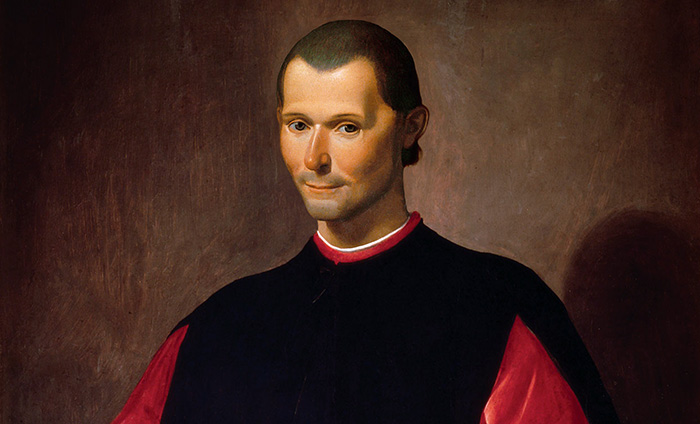
There are historical figures who are misunderstood. Then there are those who are so deeply entangled in the mythology of their own name that the myth becomes the understanding. Niccolò Machiavelli is in the second camp. His name is shorthand for manipulation, deception, backstabbing, and political sociopathy—an entire worldview reduced to a sneer.
But that reduction misses something. It misses the context. It misses the raw fear of living in a time when betrayal didn’t happen in smoke-filled backrooms—it happened with daggers, with exiles, with disappearances in the night. When the idea of stability was laughable and the only guarantee was chaos.
Machiavelli lived in Florence during the tail end of the 15th century. This was no golden age of peace and prosperity. This was a powder keg of city-states, foreign invasions, coups, and bloody religious fervor. The Medici family ruled. Then they didn’t. Then they did again. France and Spain used the Italian Peninsula like a chessboard. And in between all of this, a man like Machiavelli had to figure out: What does it take to survive this? Not just as a man—but as a state.
That’s the key to understanding Machiavelli. He wasn’t writing about how to be evil. He was writing about how to endure in a world where moral people often ended up hanging from ropes or bleeding out in the gutter. His most infamous work, The Prince, is not a manifesto of cruelty—it’s a survival guide for rulers living in a world where the virtuous often get crushed and the ruthless often get results.
This wasn’t hypothetical. Florence had just been through the rise and fall of Savonarola, a fire-and-brimstone monk who ran the city like a theocracy and ended up burned at the stake. Machiavelli watched the Medici regain power, was accused of conspiracy, tortured, and exiled. He wrote The Prince in disgrace. And in many ways, it reads like the desperate dispatch of a man trying to claw his way back into relevance by showing the rulers of the day that he understood the game—maybe better than anyone else.
Now here’s where things get tricky.
Machiavelli says things like: “It is better to be feared than loved, if you cannot be both.” That line gets quoted constantly. It sounds monstrous. But it only sounds that way if you remove it from its battlefield. Machiavelli wasn’t talking about your local mayor or your corporate boss. He was talking about Renaissance warlords. He was talking about men who could lose a kingdom in the space of a weekend. Who had to balance their armies, their nobles, their foreign alliances, and their own citizenry—all of whom had knives.
When Machiavelli says a ruler should be like a lion and a fox—strong when he can be, cunning when he must be—he’s not just painting a picture of tyranny. He’s laying out a playbook for how to lead when betrayal is a currency and failure gets you beheaded.
And this is what makes Machiavelli so uncomfortable.
Because once you understand the world he’s writing from, you start to realize he’s not always wrong.
Modern democracies don’t like to hear this. We like our leaders moral. We want politics to be clean, inspiring, a contest of ideas. But Machiavelli would laugh at that. He would say: That’s not politics. That’s a fantasy. Real politics, he’d argue, lives in the tension between what people should do and what they actually do. Between the world we wish existed and the one we actually have to live in.
To him, the highest virtue wasn’t being good—it was preserving the state. If a ruler had to lie, to kill, to break promises, so be it. The alternative—anarchy, conquest, civil war—was worse. In his mind, the prince who survives is always better than the idealist who dies.
That’s the thread running through Machiavelli’s philosophy: brutal pragmatism. And it’s why he’s still relevant. Because even today, you can feel the pull of the Machiavellian logic. In boardrooms. In foreign policy. In the way power moves behind closed doors. We all want to believe the good guy wins. But Machiavelli makes us ask: What if the good guy can’t?
It’s not an answer. It’s a question that echoes.
And that’s what Machiavelli really gave us—not just a manual for rulers, but a mirror held up to power. A reminder that underneath every government, every leader, every system, there’s still a human being, doing calculus in the dark, trying not to lose the game.
Not because they’re evil.
But because the game is real.