
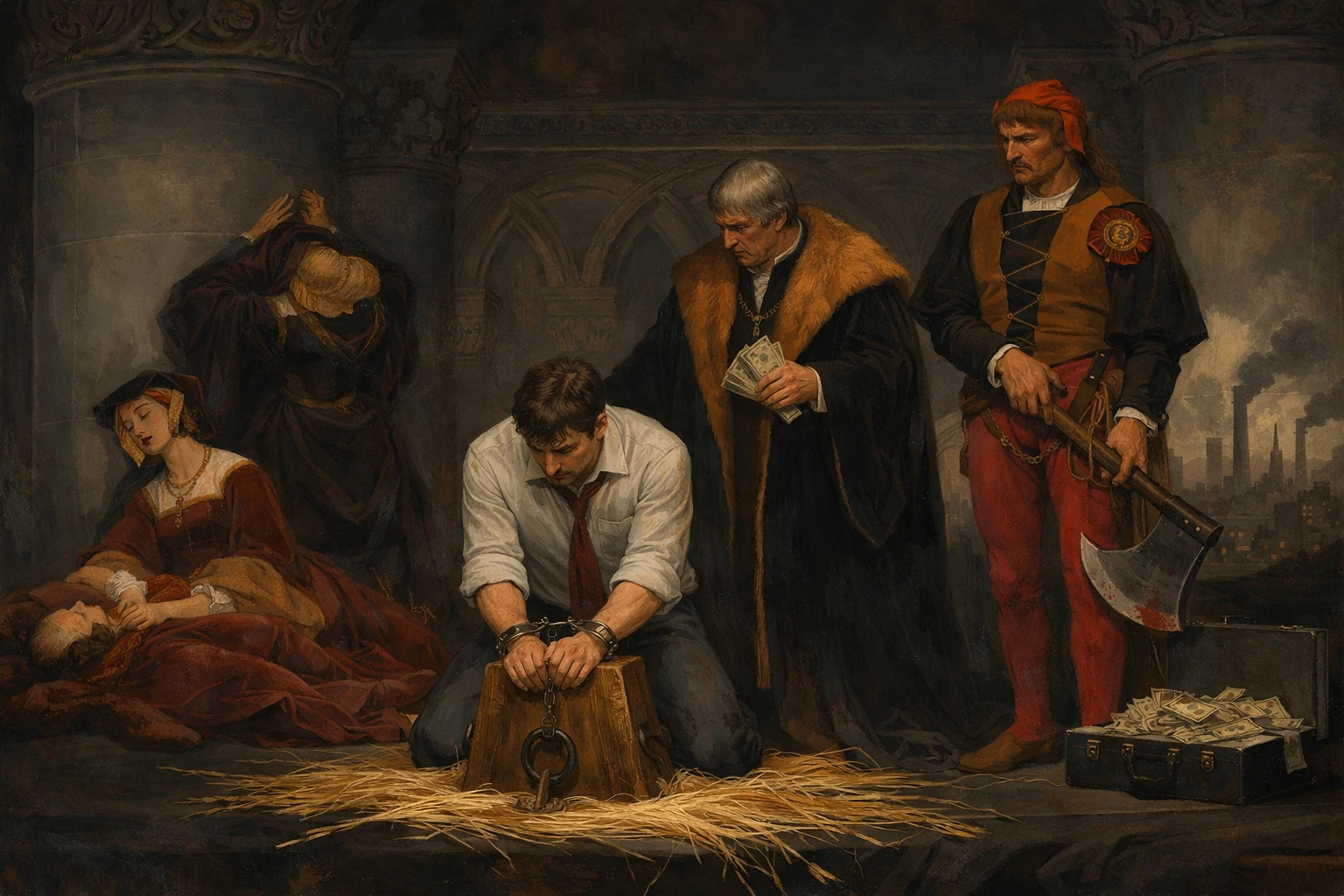
People like to think slavery is a thing of the past, something that ended long ago. But if you take a closer look at the modern workforce, you’ll see that it never really went away—it just changed form. Today, people aren’t chained up and forced to work under threat of a whip. Instead, they’re trapped by low wages, rising costs of living, and the constant fear of losing everything if they stop working. The 9-5 job isn’t freedom—it’s a slow, quiet kind of slavery, disguised as opportunity.
From the time we’re kids, we’re told to work hard, get a degree, and land a “good job.” We’re made to believe that this is the path to success. But what really happens? Most people end up stuck in jobs that drain them, working long hours for barely enough money to survive. They keep grinding, hoping for a raise or a promotion that may never come, while the CEOs and shareholders make millions off their labor.
Corporate America doesn’t care about its workers. It just wants to squeeze as much as it can out of them, then toss them aside when they’re no longer useful. And the worst part? People don’t even realize they’re being exploited because the system has convinced them that this is just “how life works.”
No. You are not a slave.
You are a participant in a system you benefit from more than you’re willing to admit.
And calling your life “slavery” isn’t edgy — it’s intellectually lazy.
Real slavery is not “I hate my job and rent is expensive.” Real slavery is “You do not own your body, your time, your children, or your future.” Real slavery is violence, captivity, and zero exit. You can quit your job. You can change cities. You can retrain. You can start over. Millions of people do — every single year.
Is the system imperfect? Yes. Is it often unfair? Yes. Is it sometimes exploitative? Yes.
But those are frictions of a market economy, not chains on your ankles.
Here’s the uncomfortable part nobody likes to hear:
Most people aren’t trapped. They’re comfortable, afraid, and unwilling to pay the price of change.
They hate their jobs, but they like their Netflix, their takeout, their subscriptions, their predictable paychecks, and the identity of being “busy.” They want freedom — but not the responsibility that comes with it.
And responsibility is the real cost of freedom.
Freedom means taking financial risk, living smaller for a while, being bad at something new, being judged, failing publicly, and owning your outcomes.
Most people don’t want that. They want safety dressed up as oppression so they can feel noble about staying still.
So no — you’re not enslaved.
You’re choosing predictability over possibility.
And that choice has a cost.