
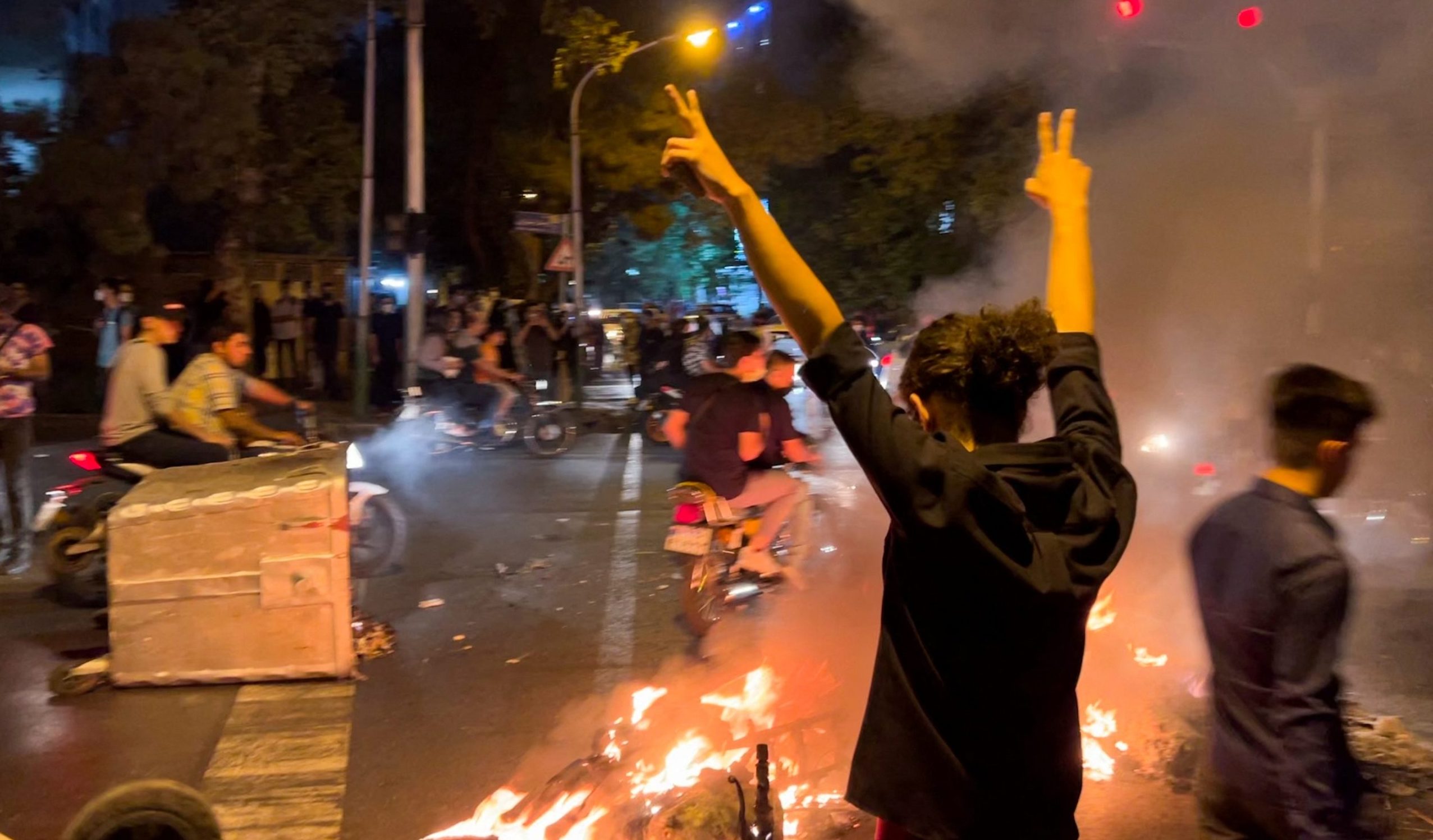
Iran is currently in the grip of its most significant and volatile uprising since the 1979 revolution. What began in late December 2025 as localized frustration over soaring prices has rapidly mutated into a violent, nationwide movement explicitly calling for the end of the Islamic Republic.
Unlike previous waves of unrest, which were often driven by specific social issues or concentrated among the urban middle class, today’s protests are a “revolution of the hungry.” The current crisis is characterized by a lethal government crackdown, a near-total information blackout, and a convergence of economic collapse and political fury that has brought an unprecedented cross-section of Iranian society onto the streets.
Here is an examination of what is happening in Iran right now, and the “perfect storm” of events that triggered it.
The Spark: A Currency in Freefall
While political dissatisfaction in Iran is chronic, the immediate trigger for this specific wave of unrest was acute economic catastrophe. In late December 2025, the Iranian rial, already weakened, went into a death spiral.
Within a matter of weeks, the currency plummeted to historic lows, trading on the black market at roughly 1.45 million rials to $1 USD. This effectively decimated the purchasing power of ordinary Iranians overnight. Hyperinflation surged past 50%, with basic food staples seeing price hikes of over 70%.
The defining moment occurred when the Tehran Grand Bazaar—the historic economic heart of the capital and a traditionally conservative pillar of regime support—shuttered its gates. Merchants went on strike, declaring they could no longer price goods or conduct business. Historically in Iran, when the Bazaar turns against the state, the foundations of the government begin to shake.
The Fuel: Why the Economy Crashed
The collapse of the rial was not an accident. It was the predictable outcome of three major crises converging in the latter half of 2025:
- The “Snapback” of UN Sanctions (September 2025): The structural blow came when United Nations sanctions were reimposed via the “snapback” mechanism. Unlike previous unilateral US measures, these binding global restrictions choked off Iran’s “ghost fleets” used to smuggle oil to China. Oil revenue—the regime’s lifeline—evaporated, leaving the central bank with no foreign currency to defend the rial.
- The War Hangover (June 2025): The economy was already reeling from direct military exchanges with Israel and the US in mid-2025. The strikes damaged critical industrial infrastructure, draining the national coffers for repairs. More importantly, the direct conflict shattered public confidence in the regime’s stability, leading citizens to dump rials for gold and dollars in a panic.
- The Austerity Panic (December 2025): The final straw was the government’s own 2026 budget proposal. Admitting effective bankruptcy, the administration proposed a staggering 62% tax increase to cover its deficit. This terrified the business class and merchants, sparking the capital flight and strikes that ultimately crashed the system.
The Shift: From “Bread” to “Regime Change”
What makes the current situation existential for Supreme Leader Ali Khamenei is the speed with which economic grievances transformed into revolutionary demands.
Initiated by the poor and the merchant class, the protests were quickly joined by university students and activists carrying the torch of the 2022 “Woman, Life, Freedom” movement. This created a dangerous coalition of the economically desperate and the politically repressed.
The slogans on the street tell the story of this shift. Initial chants about the price of chicken have been replaced by explicit calls for the fall of the system, including “Death to the Dictator” and chants favoring the return of the pre-1979 monarchy.
Crucially, a widespread chant has been, “Neither Gaza nor Lebanon, my life for Iran.” This reflects deep-seated anger that the regime has spent billions funding regional proxies like Hezbollah and Hamas—investments that led to the devastating 2025 military conflict—while Iranians starve at home.
The Regime’s Response: Darkness and Violence
The Islamic Republic has responded with its standard playbook of extreme force, though the scale is currently obscured.
The regime has implemented a near-total internet and telecommunications blackout, exceeding the severity of the 2019 shutdowns. This is designed to prevent protesters from organizing and to stop evidence of atrocities from reaching the outside world.
Despite the blackout, harrowing reports are leaking out via satellite connections indicating that security forces are using live ammunition against unarmed demonstrators across all 31 provinces. Human rights organizations estimate hundreds of deaths and thousands of arrests in just the first two weeks of January.
The international stakes are incredibly high. Following the military clashes of 2025, the US administration has issued severe warnings to Tehran against the slaughter of civilians.
As January 2026 progresses, the situation remains highly fluid. The Iranian regime is cornered, facing a population that has lost both its savings and its fear, creating a volatile deadlock with no clear exit strategy.