
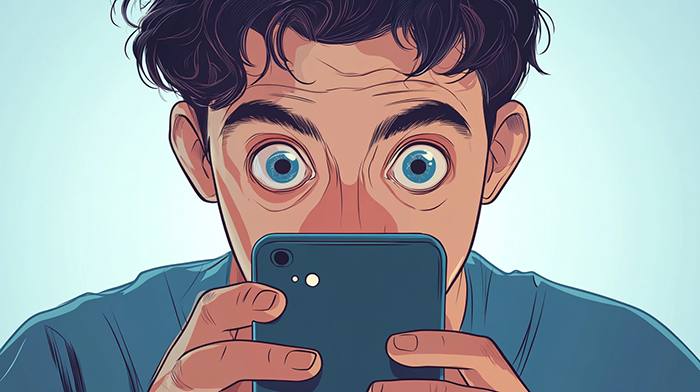
No one at the companies behind TikTok, Instagram Reels, or YouTube Shorts calls their products “addiction machines.” That phrase tests badly in earnings calls.
They prefer words like engagement, retention, stickiness, and time spent. Each one sounds neutral. None of them is. Together, they describe a system that is rewiring how hundreds of millions of people think, feel, and behave — in real time, at global scale, and with almost no meaningful guardrails.
Silicon Valley didn’t stumble into this by accident. Short-form video is not a cultural inevitability; it is a business strategy.
The model is simple:
Capture attention. Keep it. Monetize it.
Everything else — including what happens to your brain — is secondary.
How the machine actually works
These platforms are not competing with one another. They are competing with your nervous system.
Algorithms don’t care what you like. They care what keeps you watching. That’s why the feed moves so quickly from harmless dance trends to extreme diets, doom loops, political outrage, body image spirals, and fringe communities that can radicalize users before they even realize it.
The companies know this. Internal documents have shown as much. Engineers test, tweak, and optimize for exactly the kind of scrolling behavior that leaves people glazed over after an hour they never meant to spend.
But it’s more profitable to call this “personalization” than to call it what it is: behavioral manipulation.
What this does at scale
Individually, the impact looks like distraction — shorter attention spans, poorer sleep, more anxiety. But the societal effects are the real story.
- Education is being disrupted. Teachers report students who can barely read a page without checking their phones, yet can process dozens of micro-videos in minutes. That is not a generational flaw. It is a design outcome.
- Politics is being reshaped. Complex issues are compressed into 15-second clips, where nuance loses and outrage wins. Algorithms reward conflict, not understanding.
- Mental health is being strained. Platforms are visually comparison factories — especially for teens — amplifying insecurity, loneliness, and distorted self-image while claiming they are simply “neutral hosts.”
And still, executives insist the products are “safe by design.”
The business nobody wants to change
Every major platform now depends on short-form video because it is brutally effective at driving ad revenue. Once that incentive is locked in, promises about “well-being features” start to look like public relations rather than policy.
Screen-time reminders? A cosmetic bandage.
Parental controls? Patchwork at best.
Algorithmic transparency? Still mostly a fantasy.
Real change would require something the industry resists: profit sacrifice.
Who is actually responsible?
The narrative that this is simply about “personal responsibility” is convenient for companies. If users are addicted, that’s their problem, not Meta’s or ByteDance’s or Google’s.
But no other industry gets to design products this psychologically powerful and then shrug when harm follows.
You don’t blame a child for getting hooked on nicotine; you regulate the tobacco industry. The same logic applies here.
What should happen next
Three things would actually matter:
- Algorithmic accountability. Independent audits of recommendation systems — not glossy reports written by the companies themselves.
- Real age protections. Not fake checkboxes, but serious verification and limits for minors.
- Limits on addictive design. Slowing down infinite scroll, reducing auto-play, and removing dark patterns that make quitting difficult.
None of this will happen voluntarily.
The uncomfortable bottom line
Short-form video didn’t become dominant because it made society better. It won because it made a lot of money.
And as long as that remains true, Reels, TikToks, and Shorts will keep doing exactly what they are doing to our brains — until lawmakers, regulators, and users force them to stop.