
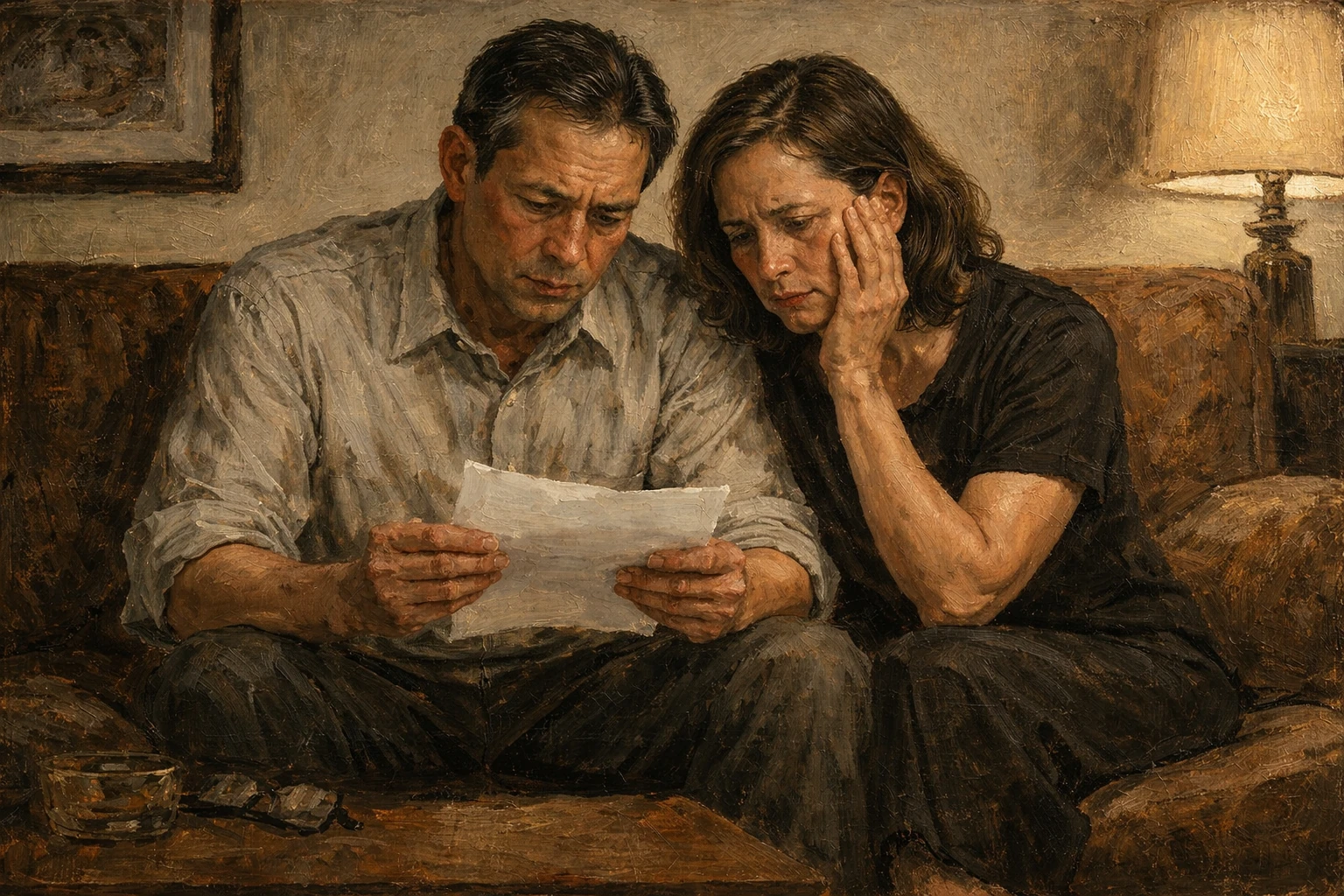
Yesterday, my son (25) told my wife and me that he’s cutting us out of his life, seemingly out of nowhere. He sent a long letter accusing us of being “emotionally abusive” when he was growing up. My wife and I believe in tough love, and we don’t think a family needs constant platitudes like “I love you” said out loud to function—but I feel like he’s taking this way too far.
He claims we were controlling, uninterested in his life, and dismissive of his feelings and interests. He even says he was depressed for most of his childhood because of us and that he once felt suicidal. He accused my wife of “robbing him of his childhood” because she talked to him about her emotional struggles. But we’re a family—talking and being close is part of that—and this all feels deeply unfair and, frankly, selfish.
My wife and I had difficult upbringings ourselves, and we genuinely tried to be better parents than our own. We provided food, shelter, stability, and paid for his entire university education. He grew up with privileges: we weren’t poor, we took family vacations, and we had money for extras. If he felt this unhappy, I don’t understand why he never said anything—we would have done something to help.
A few months ago, he came out as gay and says our reaction made him feel unloved and unaccepted. We’re more old-fashioned and not fans of that lifestyle—that’s just who we are—but we didn’t react nearly as dramatically as he’s portraying. Now that he’s finished college, has a job, and lives on his own, we think he may just be overwhelmed by his new independence and going through a phase.
We’re heartbroken. Everything we did was in what we believed was his best interest. Now he’s an adult with freedom and stability, and instead of appreciating that, he’s shutting us out entirely. We don’t know how to talk sense into him or get him to see that what we gave him came from love, even if it wasn’t expressed the way he wanted.
It feels like an extreme punishment without giving us the chance to explain our side. We just want him to understand the value of family and tough love—and it hurts deeply that he won’t even hear us out.
Right now, you’re not losing your son because he’s “going through a phase.” You’re losing him because, from his perspective, being in a relationship with you was painful enough that no relationship feels safer. People don’t cut off their parents on a whim. They do it after years—often decades—of trying to be seen, heard, and taken seriously and finally giving up.
Providing food, shelter, money, and tuition does not cancel emotional harm. That’s the baseline of parenting, not the gold medal. You don’t get extra credit for keeping a child alive. You get relationship credit for making them feel safe, valued, and emotionally secure.
You keep saying, “We believed in tough love.” What your son is telling you—clearly—is that what you call tough love felt like emotional neglect, control, and dismissal to him. Intent does not outweigh impact. Ever.
You also said, “If he felt this unhappy, why didn’t he say anything?” He just told you he was depressed most of his childhood and felt suicidal—and your response is to debate whether that’s fair. That right there is why he didn’t tell you. When kids learn that their feelings will be minimized, argued with, or explained away, they stop talking. Silence is a survival strategy.
Let’s talk about the coming-out piece, because this matters more than you’re admitting.
You said you’re “not fans of that lifestyle.” What your son heard was: “The real you is unacceptable to us.” You don’t get to soften that after the fact. When a child—especially one who already feels unseen—comes out and senses rejection, it cuts deep. For many people, it’s the final confirmation that love is conditional.
Another hard truth: your wife leaning on him emotionally during his childhood may have felt like closeness to her—but to a child, it can feel like being asked to carry adult weight before they’re ready. That does rob kids of childhood, even if the intention was connection.
You keep wanting him to “see your side.” That’s the problem. This moment is not about your side.
If you want any chance of reconciliation, here’s what has to change—completely:
1) Stop defending yourselves. Every explanation sounds like invalidation to him right now.
2) Stop minimizing his pain. Whether you agree or not is irrelevant. His experience is real.
3) Own the impact without qualifiers. Not “we did our best,” not “that wasn’t our intention.” Just: “We hurt you.”
4) Accept that distance may be necessary. You don’t get to negotiate his boundaries.
5) Get professional help yourselves. Not to fix him—to confront your own blind spots.
You don’t repair a broken relationship by demanding gratitude. You repair it by taking responsibility.
Right now, your son isn’t asking you to agree with him. He’s asking you to take him seriously. If you can’t do that—if you keep framing this as selfishness, punishment, or a phase—you will likely lose him permanently.
That’s the real cost of “tough love” when it never makes room for tenderness.
And this is the hardest part: if you want your son back, you’re going to have to grieve the parents you believed you were—and become the parents he needed instead.