
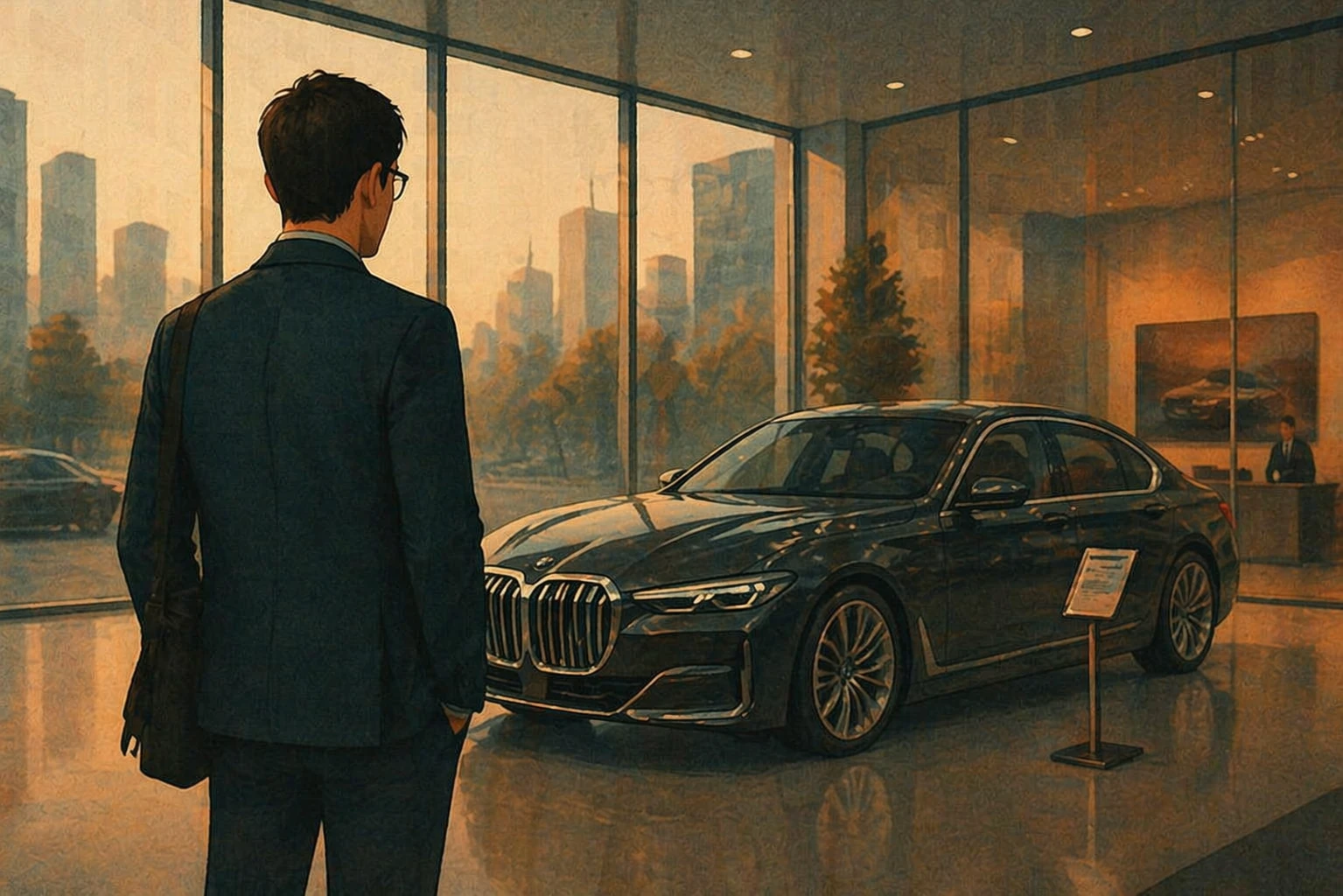
You ever catch yourself wanting something—not because you actually need it, not even because you really want it—but because of how it might look?
A nicer car. A more expensive watch. A cleaner, more aesthetic apartment. A vacation that photographs well.
And if you’re honest, the thought underneath all of it isn’t “this will make my life better.”
It’s: this will make me look like someone whose life is better.
That’s the quiet, slightly embarrassing truth most people don’t say out loud. We buy things to signal something. Status. Taste. Success. Control. Even identity.
And more often than not, we’re signaling it to people we don’t even know—or worse, people we don’t even like.
So what’s going on here?
You’re Not Buying the Thing—You’re Buying the Story
Nobody buys a $4,000 couch because they desperately need a place to sit.
They buy it because of what it says.
It says, “I have my life together.”
It says, “I have taste.”
It says, “I’m not struggling.”
Same goes for the car, the clothes, the phone, the gym membership, the luxury kitchen gadgets that get used twice.
These aren’t purchases. They’re narratives.
You’re buying a version of yourself.
The problem is, that version usually isn’t for you—it’s for an invisible audience that exists mostly in your head.
The Invisible Audience Is Ruthless
Here’s the part that messes people up:
That audience you’re trying to impress? They’re not paying nearly as much attention as you think.
Most people are too busy worrying about how they look.
You show up with the nice car. Someone notices for about three seconds. Maybe they think, “nice,” maybe they feel a quick flicker of envy, and then they go right back to thinking about their own problems.
Meanwhile, you’ve just locked yourself into a payment plan, stress, and a subtle pressure to keep “living up” to that image.
You didn’t buy freedom. You bought expectations.
Status Is a Game With No Finish Line
Once you start buying things for status, you’re playing a game you can’t win.
Because there’s always someone with more.
Nicer car. Bigger house. Better vacation. More effortless-looking life.
And now you’re not just buying things—you’re chasing a moving target.
What felt impressive last year starts to feel normal. Then it feels inadequate. Then it feels embarrassing.
So you upgrade.
And upgrade.
And upgrade.
Until you realize you’re not even enjoying any of it. You’re just maintaining an image.
The Brutal Tradeoff Nobody Talks About
Every dollar you spend trying to impress people is a dollar you’re not using to actually improve your life.
Freedom. Time. Flexibility. Peace of mind.
Those things don’t photograph well, but they matter a hell of a lot more.
It’s the difference between:
“I hope people think I’m successful”
and
“I don’t really care what people think because my life actually works for me.”
One of those is fragile. The other is real.
The Question That Cuts Through the Noise
Next time you feel the urge to buy something, ask yourself one uncomfortable question:
Would I still want this if nobody else ever saw it?
No social media. No compliments. No subtle nods of approval. Nothing.
Just you.
If the answer is yes, great. Buy it and enjoy it.
If the answer is no, then at least you know what you’re actually paying for.
And once you see that clearly, it gets a lot harder to justify.
The Real Flex
The real flex isn’t the car, the watch, or the curated life.
It’s not needing any of it.
It’s being able to walk into a room and not feel like you have to prove anything to anyone.
That kind of confidence doesn’t come from what you buy.
It comes from finally realizing that the people you were trying to impress were never really watching in the first place.