
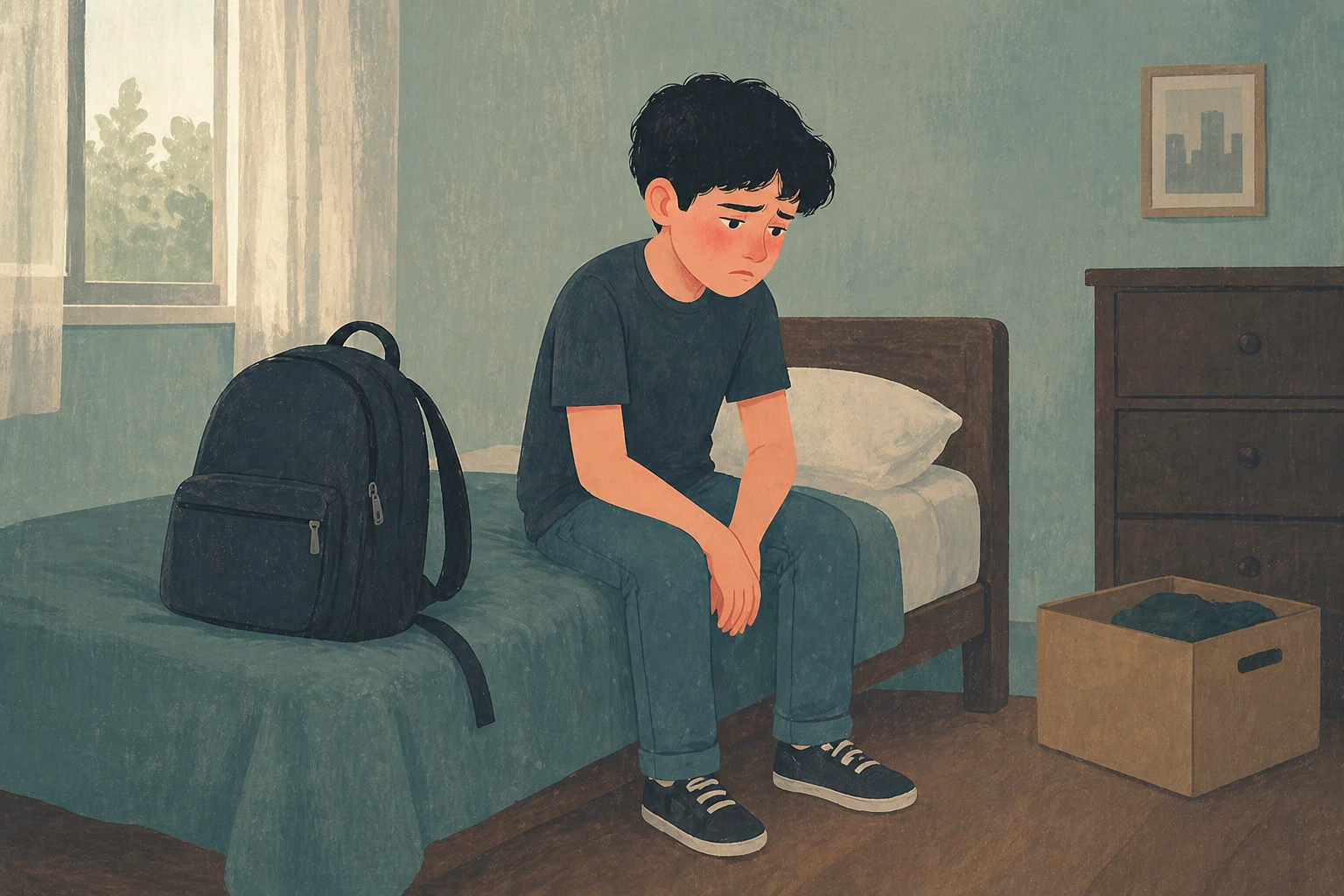
I don’t remember a “before.”
There’s no clean break in my life where things were normal and then suddenly weren’t. My parents died in a car accident when I was just a few months old, so I never knew them. Not really. I have pictures, a few videos, fragments of who they were. But memory? Nothing. Just the absence of it.
And over time, that absence starts to feel like something you’re actively losing, like you’re forgetting people you never even got the chance to remember.
For the first few years, I was passed around between relatives. That’s what people assume will save you. That family will step in. But “family” isn’t always what you think it is. Some didn’t want me. Some weren’t safe. Some placements just fell apart.
By the time I was three or four, the system stopped trying to keep me with them and I was placed into foster care for real.
From there, it was movement. Constant movement.
Different homes. Different cities. Eleven schools by the time I was done. The longest I ever stayed anywhere was just under three years, and even that felt temporary. Like I was borrowing someone else’s life, knowing eventually I’d have to give it back.
That’s the thing no one really explains about foster care. You’re not just changing houses. You’re restarting your entire identity over and over again. New rules, new expectations, new dynamics. Every time.
And you learn quickly not to get too comfortable. Not to get too attached.
Because you’re not really part of the family.
You’re adjacent to it.
I remember always feeling like a guest. Like I had overstayed my welcome even when no one said it out loud. Like at any moment someone might tap me on the shoulder and say, “Okay, time to go.”
And eventually, they always did.
Sometimes it wasn’t even because anything went wrong. The system has its own logic. If you’ve been in a stable home for a while, they start pushing for permanency. Adoption. A forever placement. So even if things are good, even if you’re finally settling in, they might move you somewhere else. Somewhere they think might become permanent.
Imagine being uprooted not because something failed, but because something might work somewhere else.
After a while, you stop expecting anything to stick.
School didn’t help. When you’re constantly moving, education becomes patchwork. You miss chunks. You repeat others. You’re always the new kid, always catching up, always slightly behind. And no one teaches you the things that actually matter.
How to open a bank account.
How to drive.
How to buy a car.
How to exist as an adult.
So when I turned 18 and aged out, I didn’t step into independence. I fell into it.
There’s this idea that you graduate from foster care. That you transition into adulthood.
That’s not what it feels like.
It feels like being dropped.
One day you’re in the system, and the next day you’re not. No family. No fallback. No one to call when something goes wrong. Just a bag of your stuff and a list of resources that may or may not help.
I didn’t know how to drive. That alone can trap you. If you live somewhere without public transportation, you’re stuck. Jobs, groceries, basic mobility. It all depends on something no one ever taught you.
I didn’t know how to open a bank account. The first time I tried, I was terrified. It felt like everyone else had gotten a manual for life that I never received.
And the truth is, they kind of did.
Most people have parents who fill in those gaps. Or someone. Anyone.
I didn’t.
Even the support that exists on paper, extended foster care, services, programs, often doesn’t land the way it’s supposed to. In my case, it felt like they placed me into college and then disappeared. I had to figure out healthcare, finances, transportation, everything, on my own.
College, ironically, was the first place I felt seen.
For the first time, there were adults, professors, advisors, who actually cared whether I succeeded. Not because it was their job to check a box, but because they genuinely wanted me to do well.
My advisor became one of the biggest supporters I’ve ever had. My softball coach taught me how to drive and even gave me her old car.
Think about that.
The first person who really helped me learn how to navigate the world wasn’t a guardian or a system. It was a coach.
That says a lot.
But the moment that really sticks with me, the one that still feels unreal when I think about it, happened when I was 19.
Finals week.
Six of us crammed into a dorm room, sleeping on the floor, half studying, half messing around. No tension. No walking on eggshells. No feeling like I didn’t belong.
Just being there.
And I remember thinking: This is what it feels like.
This is what it’s supposed to feel like.
Like you’re part of something. Like you’re not waiting to be moved along. Like you can exist without questioning whether you’re allowed to be there.
That was the first time I felt like I had a place.
Not assigned to me.
Not temporary.
Mine.
I think somewhere along the way, I stopped wanting to be adopted. Not because I didn’t want a family, but because I stopped believing I could fit into one that already existed.
So I shifted.
If I couldn’t find a place in someone else’s family, I’d build my own.
And I did.
I met my husband at 19. We’ve been together ever since. I have friends now. Real ones, the kind you don’t feel like you have to audition for. And we’re expecting our first child soon.
That part matters.
Because people assume that when you come from nothing, you’re trying to fill a void. That you’re chasing something you didn’t have.
But it’s not just that.
It’s that you know what it feels like to go without it.
And you don’t want that for someone else.
Not if you can help it.
I don’t feel fixed. I don’t think that’s how it works. There are still things I struggle with. Connection. Memory. The idea of unconditional love. There’s still that underlying sense that things can disappear if you’re not careful.
But I’m okay.
More than okay.
I built something out of a life that never really gave me a foundation to start with.
And maybe that’s the thing people don’t understand about kids who grow up like this.
We don’t just want stability.
We have to invent it.
From scratch.