
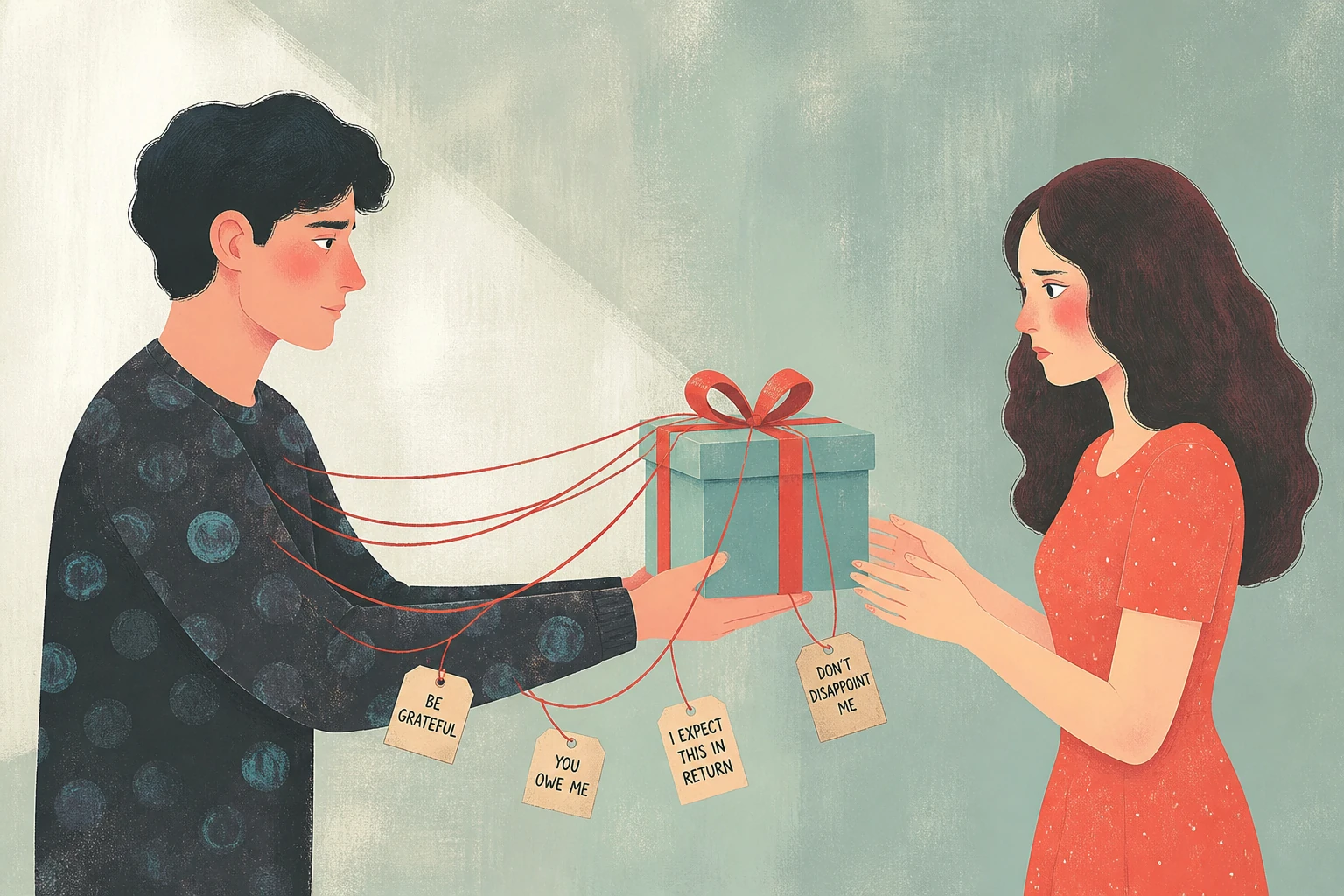
We say we’re generous. Thoughtful. Selfless. We say we give because we care.
But if you look a little closer, a lot of what we call “giving” is actually a subtle form of control.
Because a real gift is given freely. No conditions. No expectations. No mental invoice in the background.
And that’s rarer than people think.
What Most “Gifts” Actually Are
Let’s be honest.
You buy someone dinner and expect them to get the next one.
You help a friend move and feel annoyed when they don’t return the favor.
You give your partner love and support and quietly expect appreciation or loyalty in return.
And when those expectations aren’t met?
You feel it. That sting. That resentment.
That’s your signal.
Because the moment resentment shows up, the gift wasn’t free.
It was a trade.
Maybe not consciously. But emotionally, that’s what it became.
The Hidden Cost of Conditional Giving
When you give with expectations, you put the other person in a position they didn’t agree to.
They’re not just receiving something. They’re inheriting an obligation.
And people can feel that, even if nothing is said.
That pressure slowly erodes trust.
Because now your “generosity” isn’t generosity. It’s leverage.
The relationship becomes transactional. You give. They owe. Back and forth, like a silent ledger.
Eventually, either they pull away, or the relationship turns into a quiet negotiation where nobody feels free.
Why We Do This
Most of us were taught that love is earned.
That if you give enough, you’ll be valued. You’ll be chosen. You’ll be safe.
So we give, hoping it buys us something.
Approval. Security. Validation.
But it never fully works. Because the return isn’t guaranteed.
So we give more. Try harder.
And slowly, we lose ourselves.
What a Real Gift Looks Like
A real gift is simple.
You give it, and you let it go.
No scoreboard.
No expectations.
If they appreciate it, great.
If they don’t, that’s information, not betrayal.
That doesn’t mean you let people take advantage of you. It means you’re honest about why you’re giving.
Because if you’re giving to get something back, you’re not being generous. You’re negotiating.
The Uncomfortable Shift
If you start giving without expectations, some things will change.
Some people will stop showing up.
Some relationships will feel different.
That’s not failure. That’s clarity.
What’s left is stronger.
People who are there because they want to be.
And generosity that actually feels good.
The Bottom Line
A true gift doesn’t cost money or effort.
It costs control.
You give without managing the outcome or tying your worth to the response.
It’s uncomfortable, but it’s the only kind of giving that doesn’t turn into resentment.
And that’s how you know it was real.