
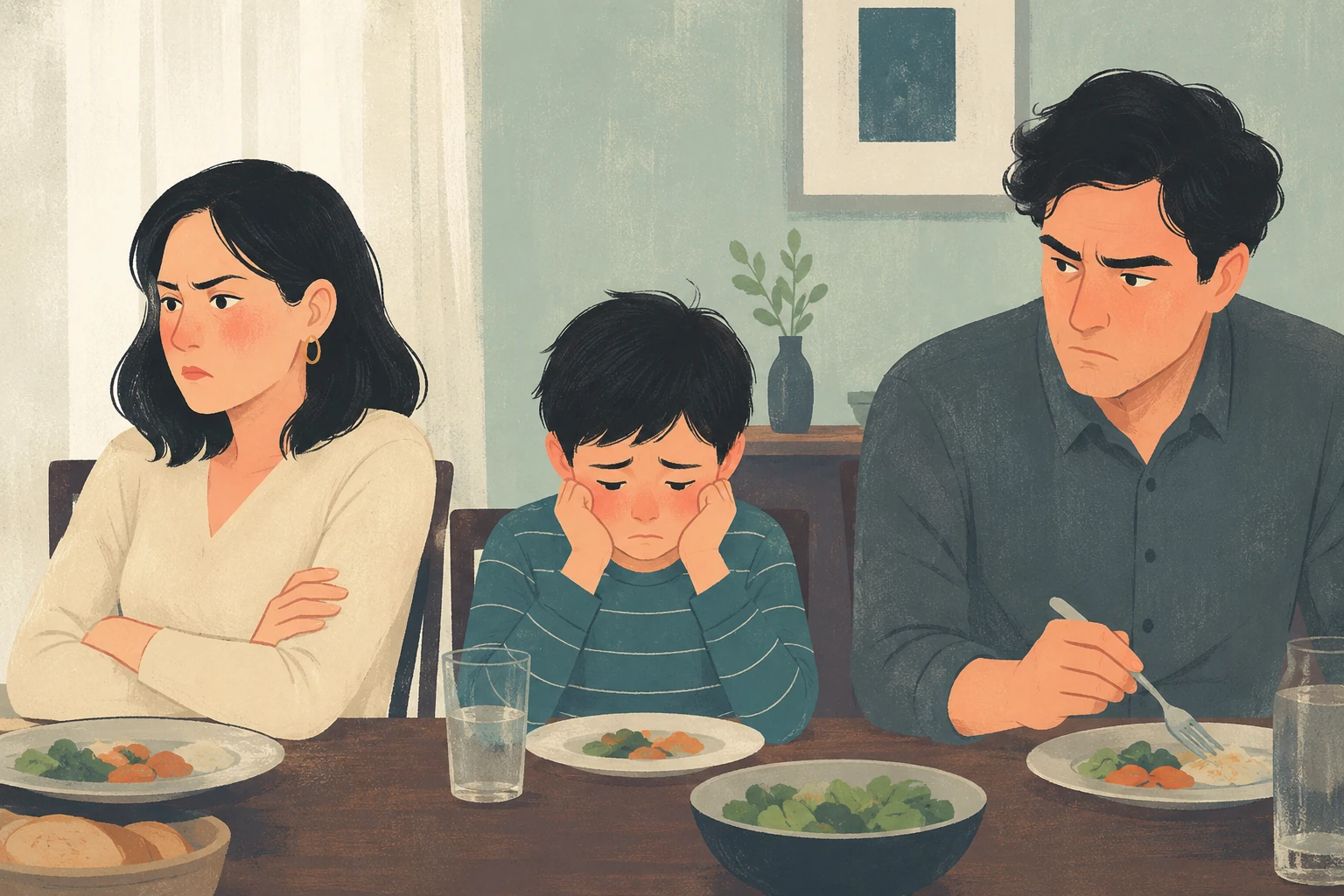
If you wanted to raise a child who grows up confident, emotionally stable, and capable of handling life, there are some pretty obvious things you’d probably do.
You’d encourage them. You’d let them fail sometimes. You’d listen when they talk. You’d make them feel safe without making them soft.
So naturally, if you want to raise a child to be deeply insecure, you do the opposite.
And the scary part is, a lot of parents accidentally do this while genuinely believing they’re helping.
Because insecurity usually doesn’t come from one giant traumatic moment. It comes from a thousand tiny moments where a kid quietly learns:
Who I am is not enough.
Step 1: Make Your Love Feel Conditional
This is the foundation of the whole thing.
Make sure the child understands that love, approval, attention, and warmth are earned through performance.
Good grades? Affection. Winning? Praise. Being convenient? Acceptance.
But when they fail, disappoint you, embarrass you, or become emotionally inconvenient?
Withdraw.
Get cold. Get distant. Get critical.
The child starts adapting immediately because kids are emotional survival experts. They learn:
“I am lovable when I perform correctly.”
That kid often becomes the adult who cannot relax. The adult who feels anxious when they’re not productive. The adult who thinks rest has to be earned.
They become someone who confuses achievement with self-worth.
And from the outside, they often look wildly successful.
Step 2: Never Let Them Fail at Anything
Modern parenting sometimes treats discomfort like it’s a human rights violation.
Kid forgot homework? Rescue them.
Kid argues with a teacher? Call the school.
Kid faces consequences? Smooth it over immediately.
The intention is love. The result is fragility.
Because confidence is not built by avoiding difficulty. Confidence is built by surviving difficulty.
A child who never learns, “I can handle hard things,” eventually becomes an adult who panics the second life stops cooperating.
Overprotected children often grow up terrified of rejection, mistakes, conflict, and uncertainty because they were never allowed to emotionally metabolize those experiences when the stakes were small.
You don’t create resilience by removing every obstacle.
You create it by teaching someone they can survive obstacles.
Step 3: Compare Them Constantly to Other People
Nothing creates insecurity quite like turning life into a permanent ranking system.
“Why can’t you be more like your brother?”
“Look how disciplined she is.”
“Your cousin already got into medical school.”
“Other kids don’t act like this.”
Comparison teaches children that their value exists relative to other people.
Which means somebody will always be winning. And they’ll always feel behind.
These kids often grow into adults who cannot enjoy their own lives because they’re too busy measuring themselves against everyone else.
They can’t celebrate. They can’t rest. They can’t appreciate what they have.
Because somewhere deep down, they learned that being themselves was insufficient.
Step 4: Make Sure They’re Afraid of Your Emotions
One of the fastest ways to create anxiety in a child is emotional unpredictability.
Explosive anger. Silent treatment. Passive aggression. Mood swings. Making the child responsible for your emotional state.
Kids should not have to become emotional weather forecasters.
But many do.
They learn to scan faces. Monitor tone shifts. Walk on eggshells. Avoid honesty to keep the peace.
Then years later people call them “people pleasers” as though it’s some cute personality trait instead of a nervous system adaptation.
A lot of insecure adults were once children who learned:
“My safety depends on managing other people’s emotions.”
That is an exhausting way to live.
Step 5: Shame Them Instead of Correcting Them
There’s a difference between:
“You made a bad choice.”
and:
“You are bad.”
Healthy correction focuses on behavior.
Shame attacks identity.
One teaches responsibility. The other teaches self-hatred.
If a child spills milk and you treat them like they’re incompetent, annoying, or burdensome long enough, eventually they stop seeing mistakes as something they did.
They start seeing mistakes as evidence of who they are.
That voice follows people into adulthood.
You can hear it every time someone says:
“I’m such an idiot.”
“I ruin everything.”
“I’m probably too much.”
“I’m never enough.”
Most chronic self-criticism started somewhere.
Step 6: Never Apologize
Parents who refuse to apologize often think they’re maintaining authority.
What they’re actually teaching is:
Power matters more than accountability.
When parents cannot admit fault, children learn one of two things:
Either:
“My feelings must not matter.”
Or:
“Love means tolerating disrespect.”
Neither lesson ends well.
Apologizing to your child does not weaken your authority. It teaches emotional maturity.
It teaches:
Relationships can survive honesty. Mistakes can be repaired. People can hurt each other without becoming enemies.
That’s an incredibly important lesson.
The Hard Truth
A lot of insecure adults are not weak.
They are adaptive.
They became hypervigilant because they had to. They became perfectionists because love felt conditional. They became people pleasers because honesty felt dangerous. They became emotionally shut down because vulnerability got punished.
Those behaviors made sense once.
But eventually survival strategies become prisons.
And unfortunately, parenting is one of the few jobs where people can unintentionally pass down unresolved pain for decades while calling it “normal.”
So What Actually Helps?
Children do not need perfect parents.
That’s good news because perfect parents do not exist.
What children actually need are parents who are safe enough.
Parents who can say:
“I was wrong.”
“I love you even when you fail.”
“You can tell me the truth.”
“You don’t have to earn your worth here.”
Because confidence is not built from constant praise.
It’s built from knowing:
“I can fail, struggle, embarrass myself, disappoint people, and still be loved.”
That’s what secure people usually have somewhere in their history.
Not perfection.
Safety.