
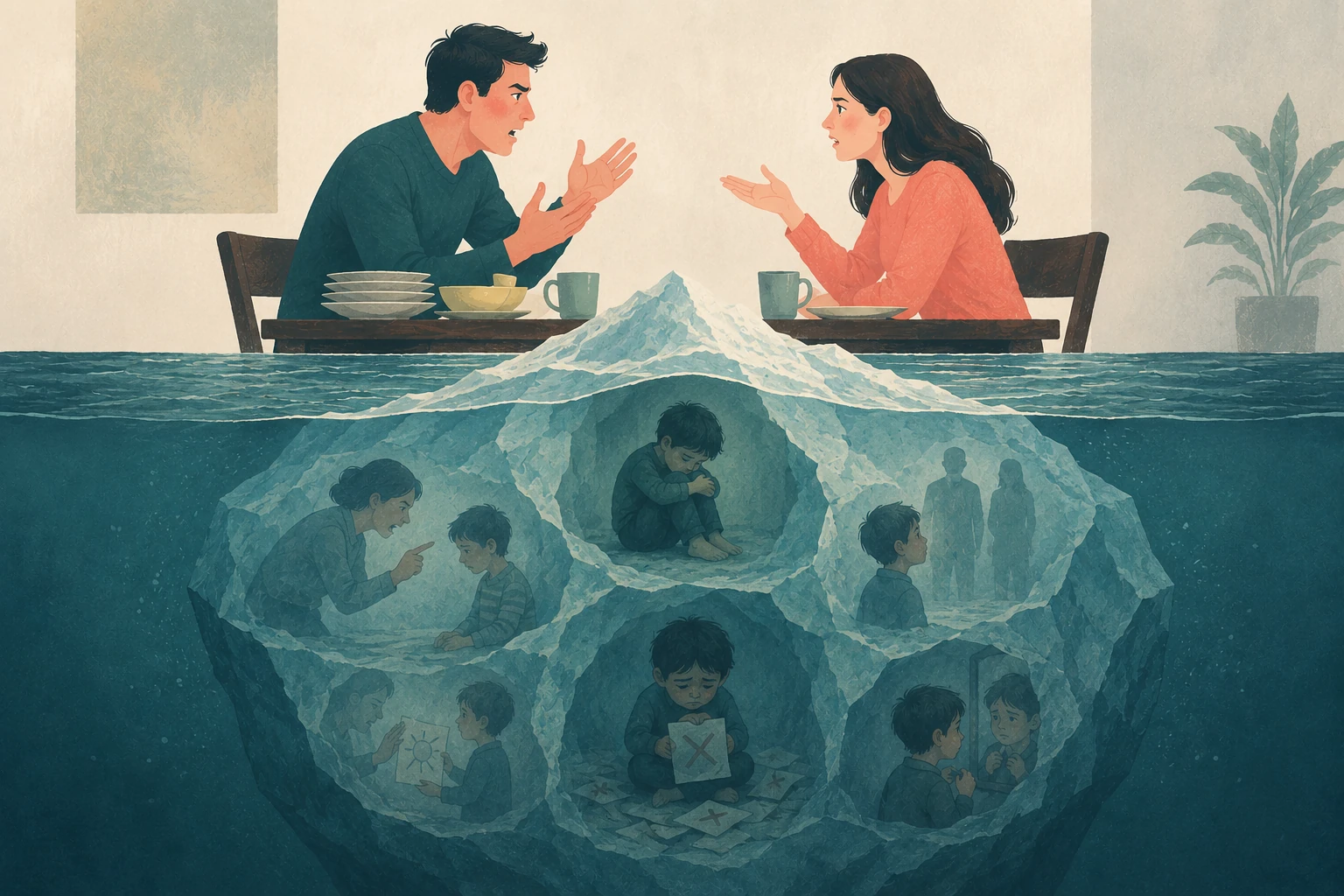
For most of my life, I thought relationship problems were fairly straightforward.
Someone did something annoying. I got annoyed. Someone said something hurtful. I got hurt. Someone acted selfishly. I got angry.
Case closed.
The solution seemed obvious: if everyone else would stop doing irritating things, life would be much easier.
Unfortunately, reality has a way of exposing bad theories.
The first crack in this theory appeared when I started noticing that some things bothered me far more than they should have. Not big things. Small things. Ridiculously small things.
A delayed text message. A minor criticism. A disagreement over something that wouldn’t matter a week later.
Sometimes I’d find myself replaying a conversation in my head for hours. I’d be mentally constructing arguments, gathering evidence, and preparing a defense as if I were taking a case to the Supreme Court.
The weird part wasn’t that I was upset. The weird part was the size of the reaction compared to the size of the event.
That’s when I stumbled onto a question that has probably improved my relationships more than any communication technique or self-help advice I’ve ever encountered:
Why am I reacting so strongly?
It’s a deceptively simple question.
Most people ask, “Why did they do that?” Others ask, “How do I get them to understand my point of view?” Some ask, “How do I make sure this never happens again?”
But very few people stop and ask why a relatively ordinary event has suddenly generated enough emotional energy to power a small city.
The answer is often uncomfortable.
Because when you start digging, you discover that the thing upsetting you isn’t always the thing upsetting you.
The Thing Upsetting You Isn’t Always the Thing Upsetting You
Imagine someone criticizes your work.
You tell yourself you’re angry because they’re being unfair. Maybe they are. But why does their opinion have so much power over your emotional state? Why does one comment ruin your afternoon while another person would shrug and move on?
Sometimes the answer has nothing to do with the criticism itself. Maybe you’ve spent your entire life measuring your worth through achievement. Maybe being competent isn’t just something you value—it’s become part of your identity. In that case, criticism doesn’t feel like feedback. It feels like a threat.
The same thing happens in relationships.
A spouse questions a decision and suddenly you’re defensive. A friend forgets to invite you somewhere and you’re disproportionately hurt. A child ignores you and you find yourself becoming much angrier than the situation seems to justify.
The event is real. The emotion is real. But the intensity often comes from somewhere deeper.
Sometimes You’re Not Reacting to Today
What took me far too long to understand is that many of our strongest emotional reactions aren’t actually about the present moment. They’re about old stories we’ve been carrying around for years.
Maybe you grew up feeling ignored, so rejection hits harder than it should. Maybe you were constantly criticized as a kid, so feedback feels dangerous. Maybe you learned that making mistakes wasn’t safe, so any hint of failure feels catastrophic.
We like to think we’ve moved on from these things. We tell ourselves that childhood is over, that we’re adults now, that the past is in the past.
Then someone makes an offhand comment at dinner and suddenly a part of us that is fifteen years old is driving the car.
The reason this matters is that most people spend their lives focused entirely on the trigger. They’re obsessed with the thing that happened. They’re trying to fix the other person, change the circumstances, or prove that they’re right.
Meanwhile, the deeper issue remains untouched.
It’s like repeatedly treating the smoke while ignoring the fire.
Your Reaction Contains Information
The irony is that asking, “Why am I reacting so strongly?” doesn’t mean letting other people off the hook. It doesn’t mean becoming passive or blaming yourself for everything.
It means recognizing that your emotional reactions contain information.
Sometimes that information is telling you that a boundary needs to be set. Sometimes it’s revealing an insecurity you didn’t know you had. Sometimes it’s exposing a fear you’ve spent years avoiding.
And sometimes it’s pointing directly at an old wound that never healed as much as you thought it did.
The strongest relationships I’ve seen aren’t built by people who never get upset. They’re built by people who become curious about their reactions instead of immediately obeying them.
Instead of saying, “My spouse made me feel this way,” they ask, “Why did this hit such a nerve?”
Instead of saying, “My kid is driving me crazy,” they ask, “Why is this particular behavior affecting me so much?”
Instead of saying, “That person ruined my day,” they ask, “What is this situation revealing about me?”
Those questions aren’t always pleasant to answer. In fact, they’re often brutal. But they tend to lead somewhere useful.
The People Closest to You Will Find What Is Unfinished
The truth is that the people closest to us eventually find every unfinished corner of our lives. They find the insecurities, the fears, the unresolved baggage, and the stories we tell ourselves about who we are.
Not because they’re trying to.
That’s simply what intimacy does.
The closer someone gets, the harder it becomes to hide from yourself.
For years I assumed that maturity meant becoming less emotional. What I’ve come to believe instead is that maturity means becoming more aware of your emotions and less controlled by them.
The feeling isn’t the problem. The reaction isn’t even the problem.
The problem is moving through life without ever stopping to ask what those reactions might be trying to teach you.
And that’s why, whenever I find myself getting disproportionately angry, defensive, embarrassed, jealous, or hurt, I try to come back to the same question:
Why am I reacting so strongly?
The answer isn’t always flattering.
But it’s usually where the real work begins.