
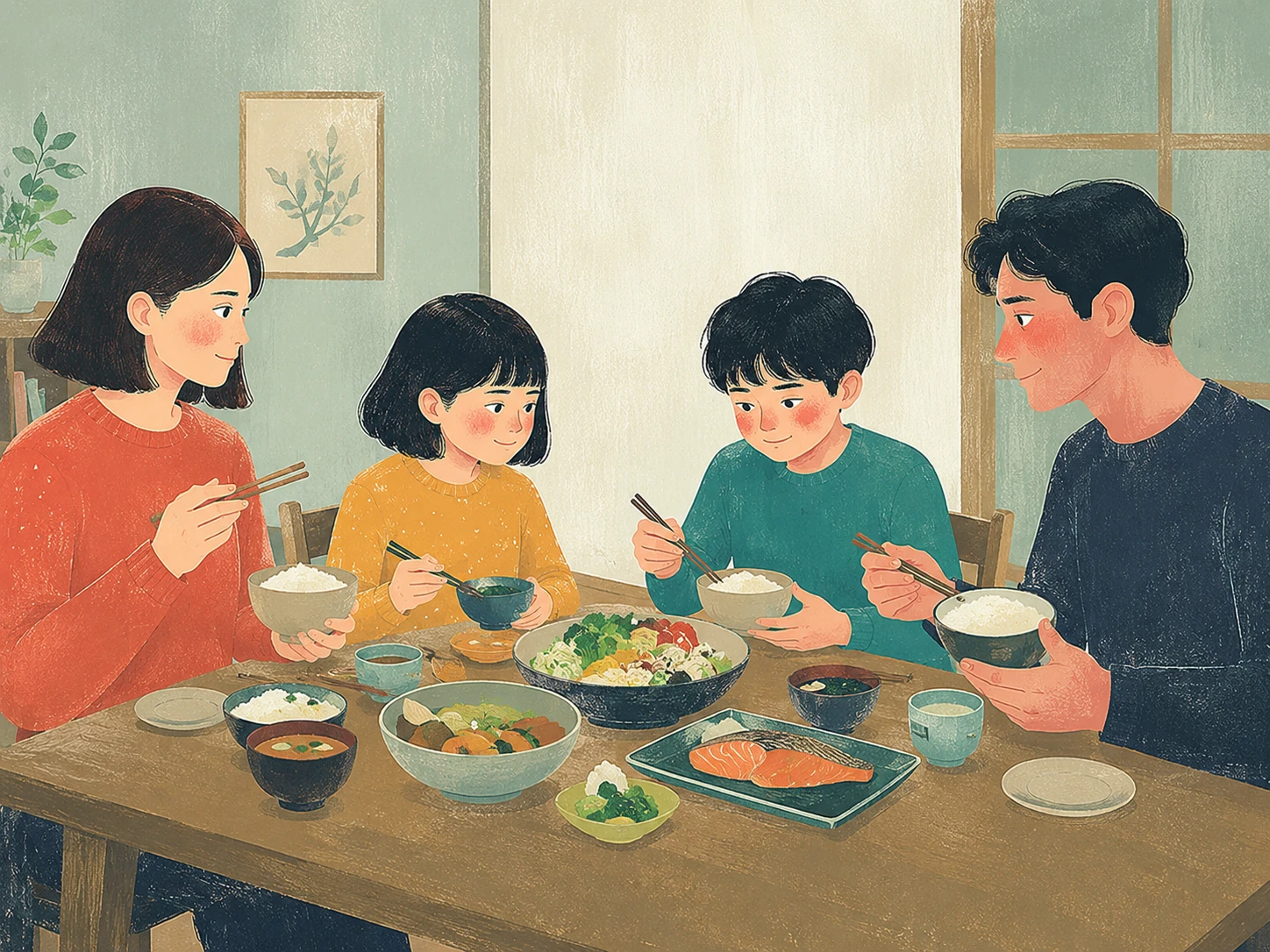
The United States and Japan are both wealthy, modern countries with easy access to food. Yet their obesity rates couldn’t be more different.
In America, roughly 40% of adults are considered obese. In Japan, the figure is typically around 4% to 5%.
No single habit explains that gap. Japan’s lower obesity rate is influenced by everything from smaller portion sizes and walkable cities to different food traditions and cultural attitudes toward eating.
But one Japanese practice stands out for its simplicity.
It’s called hara hachi bu, a phrase that means “eat until you’re 80% full.”
That’s it.
No calorie counting. No banned foods. No complicated meal plans.
Just stop eating before you’re completely full.
For centuries, this idea has been especially associated with Okinawa, a Japanese island famous for producing an unusually high number of healthy older adults. While longevity is influenced by many factors, hara hachi bu remains one of the most well-known habits linked to the region’s lifestyle.
And in a world obsessed with diets, its simplicity is what makes it so appealing.
The Problem With Waiting Until You’re Full
Most people assume that hunger and fullness work like an on-off switch.
You’re hungry, you eat, then you’re full.
In reality, the process is much slower.
Your stomach and digestive system need time to communicate with your brain. Hormones that regulate appetite need time to respond. The signal that you’ve eaten enough often arrives long after you’ve actually eaten enough.
That’s why it’s easy to sit down for dinner feeling hungry and stand up feeling stuffed.
The body is still playing catch-up.
The 80% rule creates a buffer. Instead of waiting until you’re completely full, you stop when you feel comfortably satisfied.
By the time your body’s fullness signals arrive, you’ve avoided overeating.
Satisfaction Is Different From Fullness
One of the reasons hara hachi bu can feel strange at first is that many people have spent years treating fullness as the goal.
A successful meal is often defined by the feeling that you couldn’t possibly eat another bite.
But satisfaction and fullness are not the same thing.
Satisfaction is the absence of hunger.
Fullness is what happens after that.
The 80% rule encourages people to pay attention to the space between those two feelings. It asks you to stop when your hunger has disappeared, not when your stomach is stretched to its limit.
It’s a subtle distinction, but it can dramatically change how much food you consume over time.
A Different Way of Thinking About Food
Most diets focus on restriction.
You can’t eat this. You should avoid that. This food is good. That food is bad.
The problem is that many people eventually grow tired of living under a long list of rules.
Hara hachi bu takes a different approach.
It doesn’t tell you what to eat.
It tells you when to stop.
You can still enjoy your favorite foods. You can still have dessert. You can still go out to restaurants and celebrate special occasions.
The focus shifts away from deprivation and toward awareness.
Rather than asking, “Can I have more?” the question becomes, “Do I actually need more?”
Why Slowing Down Matters
The 80% rule naturally encourages another healthy behavior: eating more slowly.
It’s difficult to determine whether you’re 80% full if you’re rushing through a meal.
People who embrace this philosophy often begin pausing between bites, putting down their utensils, and spending more time talking with family and friends during meals.
The slower pace gives the body’s natural fullness signals time to emerge.
It also tends to make food more enjoyable.
When you’re not racing to finish, you notice flavors more. You pay attention to texture. You actually experience the meal rather than simply consuming it.
The Power of Small Decisions
One oversized meal won’t make someone unhealthy.
Likewise, stopping at 80% full once won’t transform your life.
What matters is repetition.
A few hundred fewer calories here. A slightly smaller portion there. One less helping after dinner. Another meal that ends with satisfaction instead of discomfort.
Those small decisions accumulate.
Over months and years, they can have a meaningful impact on weight, energy levels, and overall health.
That’s why hara hachi bu remains relevant today.
It isn’t a trendy diet. It doesn’t require expensive supplements or complicated tracking apps. It doesn’t promise dramatic results in 30 days.
Instead, it offers a simple reminder that many people have forgotten:
You don’t have to be completely full to be finished eating.
And sometimes, the healthiest bite is the one you choose not to take.