
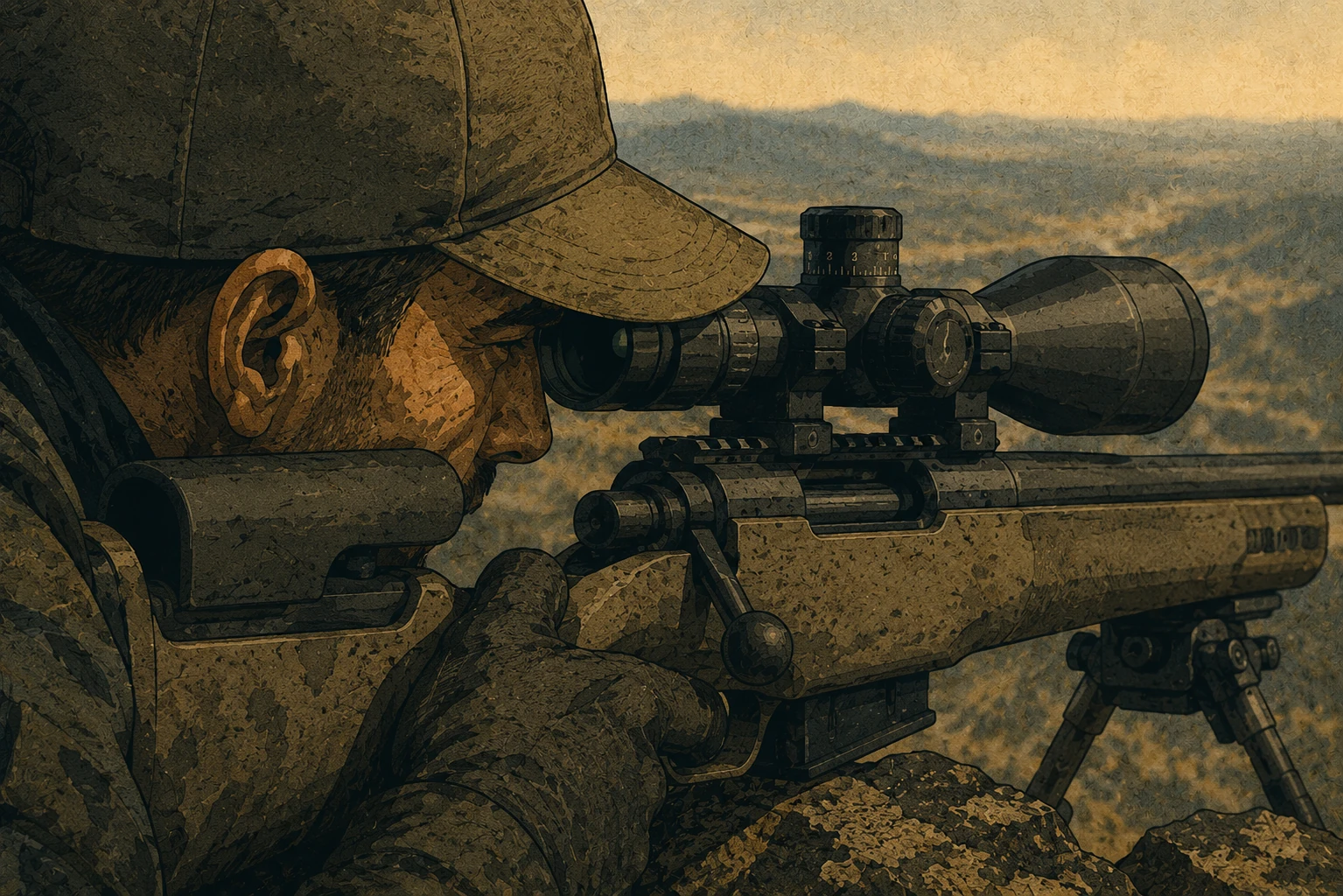
In World War II, a phenomenal sniper shot was something like 1,100 meters. The German marksman Matthäus Hetzenauer is generally credited with the longest confirmed kill of the war at roughly that distance, and at the time it was the stuff of legend. A kilometer. Through iron-and-glass optics, with a bolt-action rifle, in the dirt, with nothing but your own eyeballs and a lot of math done in your head.
The current record is 4,000 meters. That’s about two and a half miles. And the shot was guided by a drone and a computer running artificial intelligence.
The distance between those two numbers is one of the more quietly staggering technology stories of the last century, and almost nobody talks about it. So let’s talk about it.
The slow climb: 1967 to 2002
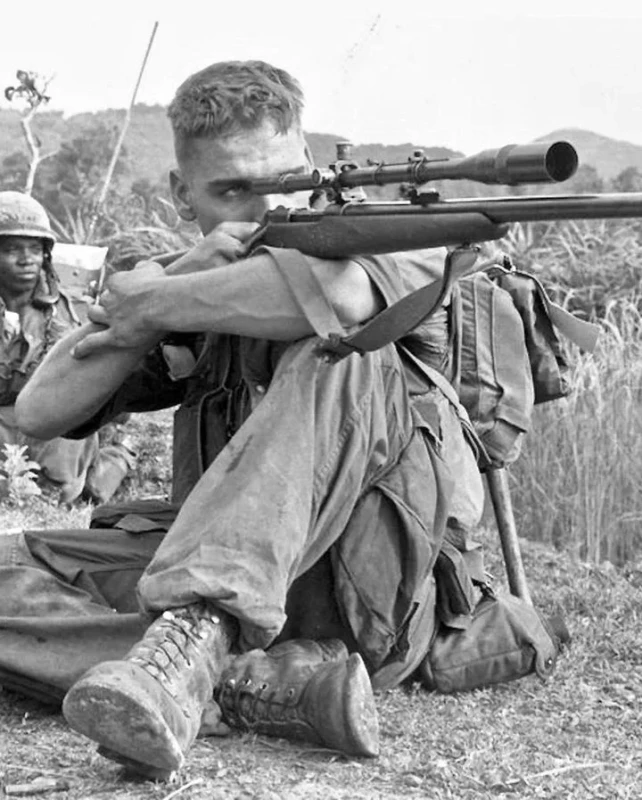
For most of the modern era, the record didn’t move much at all. After WWII, the science of long-range sniping really matured during Vietnam, where US Marine Gunnery Sergeant Carlos Hathcock became something close to a folk hero. Hathcock had 93 confirmed kills and a $30,000 bounty on his head from the North Vietnamese, who badly wanted him gone. In 1967 he made a shot of about 2,286 meters (2,500 yards) using a heavy machine gun fitted with a telescopic sight.
That record then stood for thirty-five years. From 1967 all the way to 2002, nobody on record beat it. Hathcock went on to help found the Marine Corps Scout Sniper School, and his shot became the high-water mark of an entire generation.
Then 2002 happened, and everything sped up.
The Afghanistan leap
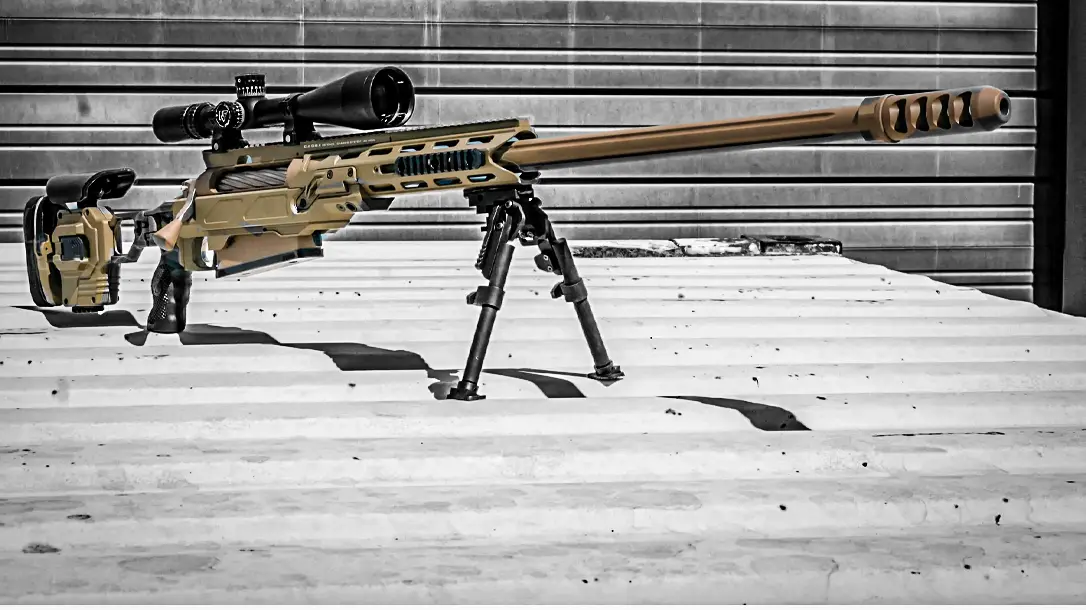
During Operation Anaconda in Afghanistan, a Canadian sniper team from the Princess Patricia’s Canadian Light Infantry started rewriting the books almost casually. Corporal Arron Perry beat Hathcock’s record at 2,310 meters. He held it for a matter of days before his own teammate, Corporal Rob Furlong, pushed it to 2,430 meters. Furlong’s first shot reportedly missed, his second hit his target’s backpack, and the third landed center mass. Both men were using the McMillan TAC-50, a heavy anti-materiel rifle that became the standard issue for Canadian forces.
In 2009, British soldier Craig Harrison of the Household Cavalry took it to 2,475 meters in Afghanistan—and did it twice in a row, hitting two Taliban machine gunners back-to-back with a third shot disabling their gun. The rounds spent nearly five seconds in the air before arriving. His targets were about 900 meters past what his rifle was officially rated to do.
Read that again: the rifle was hitting people nearly a kilometer beyond its own recommended maximum range. We’ll come back to why that became possible.
The two-mile club
After Harrison, the numbers stopped feeling like rifle shots and started feeling like artillery.
In 2012, an unnamed Australian commando in Helmand Province reportedly hit a Taliban commander at 2,815 meters. The detail that gets me: two snipers fired simultaneously, the bullets were in the air for around six seconds, and to this day nobody knows for certain which one made the fatal hit.
In 2017, a Canadian special forces operator from Joint Task Force 2 made a shot in Iraq at 3,540 meters—more than 2.1 miles—firing from a high-rise building at an ISIS fighter. The bullet was airborne for nearly ten seconds. Ten seconds is enough time to read this sentence out loud. The target had no idea it was coming.
Then in November 2023, a 58-year-old former businessman named Viacheslav Kovalskyi, working with Ukraine’s security service, sat in freezing weather for hours and made a confirmed shot at 3,800 meters using a Ukrainian-made anti-materiel rifle called the Volodar Obriyu—”Horizon’s Lord.” His first shot missed on a wind miscalculation; his spotter recalculated and the second one connected.
The shot that changed the category
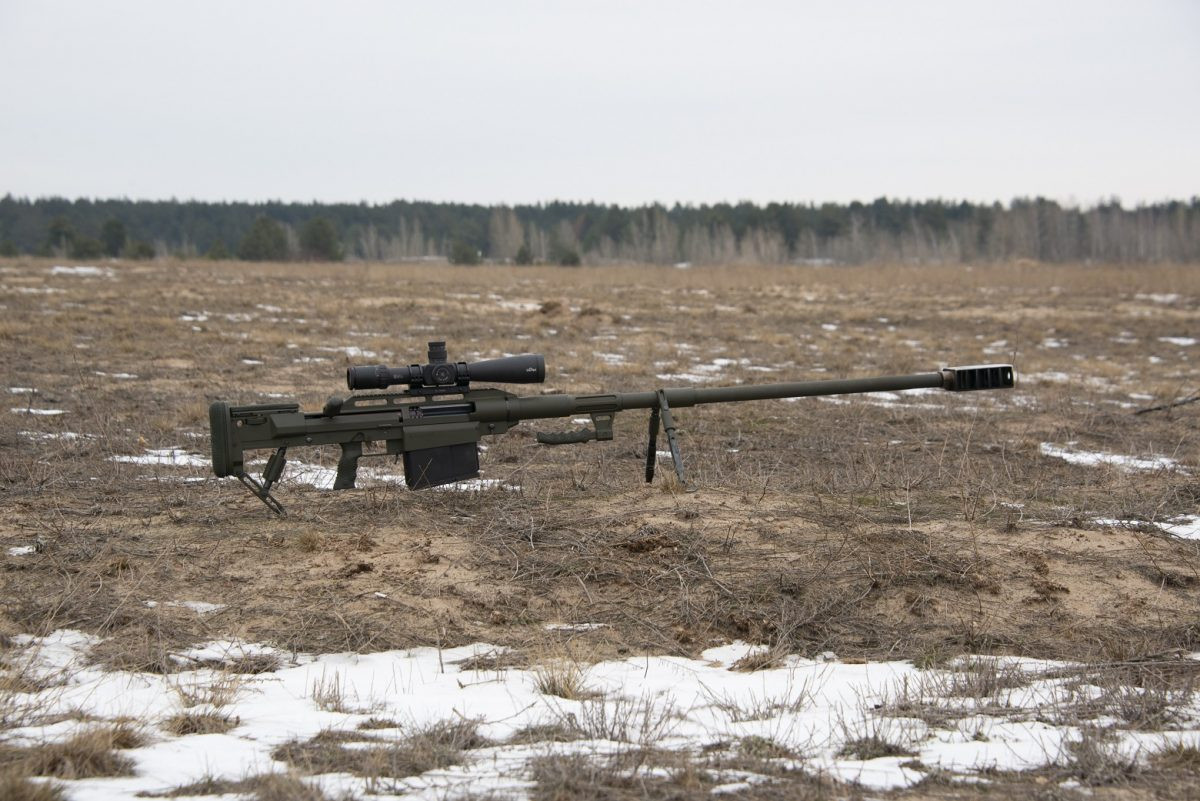
In August 2025, a Ukrainian sniper unit reportedly broke 4,000 meters—roughly 2.49 miles—dropping two Russian soldiers with a single round near Pokrovsk. The weapon was a 14.5mm rifle so large it weighs around 25 kilograms and was originally built to destroy equipment, not people. It was rated for an effective range of 2,000 meters. The shot was twice that.
But the distance isn’t even the most important part. According to reporting on the shot, the team used a reconnaissance drone and artificial intelligence to find the targets, track them, calculate the firing solution, and confirm the hit. If the reports hold up, it’s the first confirmed combat kill in history assisted by AI and drone guidance.
That’s the real story. The marksmanship is extraordinary—but the rifle stopped being the thing doing the heavy lifting a while ago.
The thing nobody sees: the brain on top of the rifle
Here’s the part that explains the whole curve. The rifles themselves have improved, sure. But the leap from “thirty-five years stuck at one record” to “broken five times in two decades” wasn’t mostly about steel and gunpowder. It was about computing.
For a long time, the kind of ballistic computer that lets you reliably hit something miles away lived on tanks. A modern tank can hit a moving target thousands of yards out at a startling success rate because it’s constantly accounting for wind, temperature, range, and the behavior of its own ammunition. Those computers were big, and the sensors they needed—rangefinders, weather sensors, thermometers—were bigger.
Then everything got small. Sensors and processors shrank enough to bolt onto a rifle. Devices like Barrett’s optical ranging system put a ballistics computer directly on the scope, continuously updating for changing conditions so the shooter can focus on the shot instead of the arithmetic. Spotters started carrying handheld wind-and-atmosphere sensors paired with ballistic software—at one point the setup was literally a commercial weather meter talking to an iPhone app that told you exactly how many clicks to adjust.
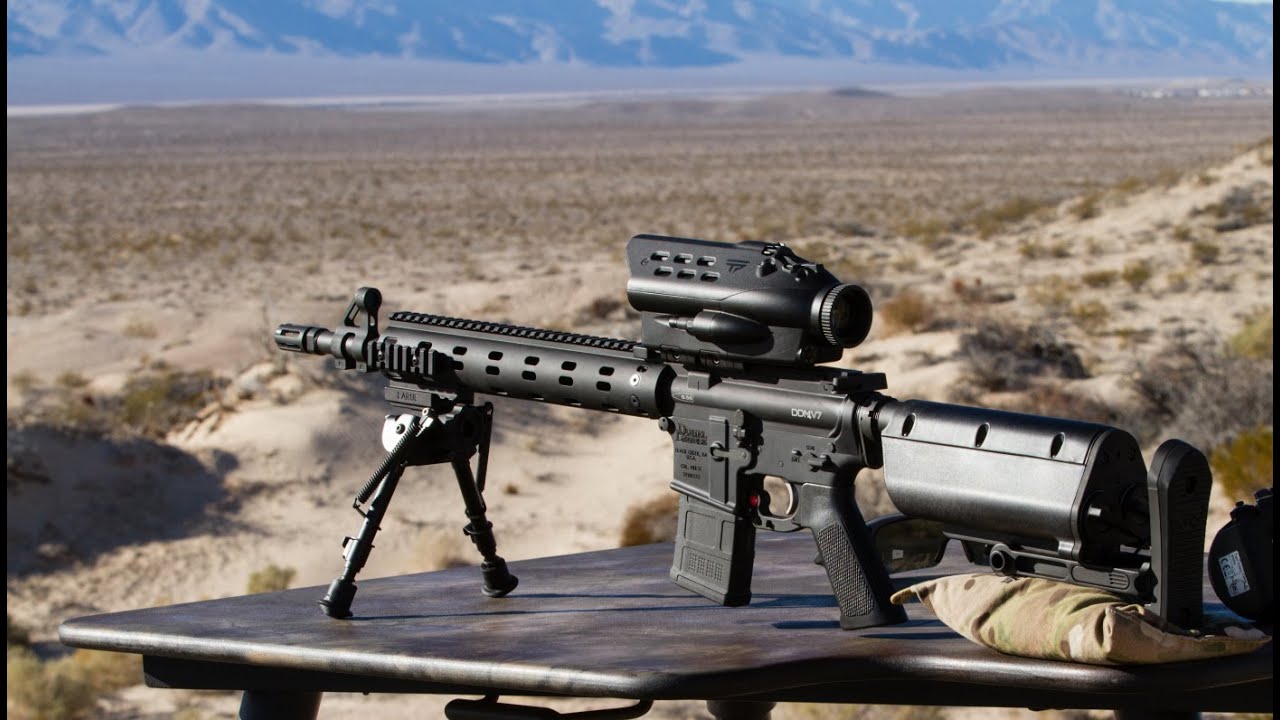
And then it went further. Around 2014, a Texas company called TrackingPoint started selling what it called a “precision-guided firearm”—a rifle with a Linux-powered ballistic computer, a built-in laser rangefinder, and a heads-up display. You put a marker on the target, pull the trigger, and the rifle decides the exact instant to actually fire, only releasing the shot when the barrel is perfectly aligned. Novices were hitting targets at 500 yards on their first try, distances that normally take years to master. The company’s pitch was that it could turn anyone into a sniper.
That pitch is also the unsettling part. A West Point graduate who fought in Vietnam argued publicly that the technology shouldn’t be in civilian hands at all, precisely because it collapses the years of skill that used to stand between a person and a long-range shot. And in 2017, security researchers showed the TrackingPoint system could be hacked over its Wi-Fi—they tricked the computer into thinking the bullet weighed 72 pounds, which threw the aim off completely. So the same intelligence that makes these systems miraculous also makes them, in new ways, breakable.
What the numbers actually mean
Step back and look at the arc. WWII: about 1,100 meters, done by eye. Vietnam: 2,286 meters, a record that held for a human generation. Then in roughly twenty years, the record jumped to 2,430, then 2,475, then 2,815, then 3,540, then 3,800, then 4,000—the last one with a drone and an AI doing the spotting.
A useful way to feel how absurd this is: a person standing on flat ground with a clear view can only see about 2.9 miles before the curve of the Earth cuts them off. The longest sniper shots are now bumping up against the edge of what a human can physically see. At those ranges, the target generally doesn’t see or hear the bullet, because the bullet is faster than the sound announcing it and the shooter is, in a real sense, over the horizon.
The romantic image of the sniper is one person, one rifle, one breath, one shot. That image was never quite true—there was always a spotter, always the math—but it’s getting less true every year. The modern long-range shot is a system: a rifle, a computer, a sensor suite, increasingly a drone overhead and an algorithm doing the geometry. The human pulls the trigger. The machine is doing more and more of the aiming.
The distance from 1,100 meters to 4,000 meters isn’t really a story about guns getting more powerful. It’s a story about the computer quietly climbing on top of the rifle—and from up there, the horizon stopped being a limit.