
Most television shows end the way people leave parties.
They say goodbye to a few people, linger awkwardly by the door, promise to keep in touch, then disappear into the night. Maybe there’s a heartfelt speech. Maybe someone sheds a tear. Maybe the camera slowly pans away while sentimental music plays.
Little House on the Prairie did not leave the party.
Little House on the Prairie burned the house down.
Literally.
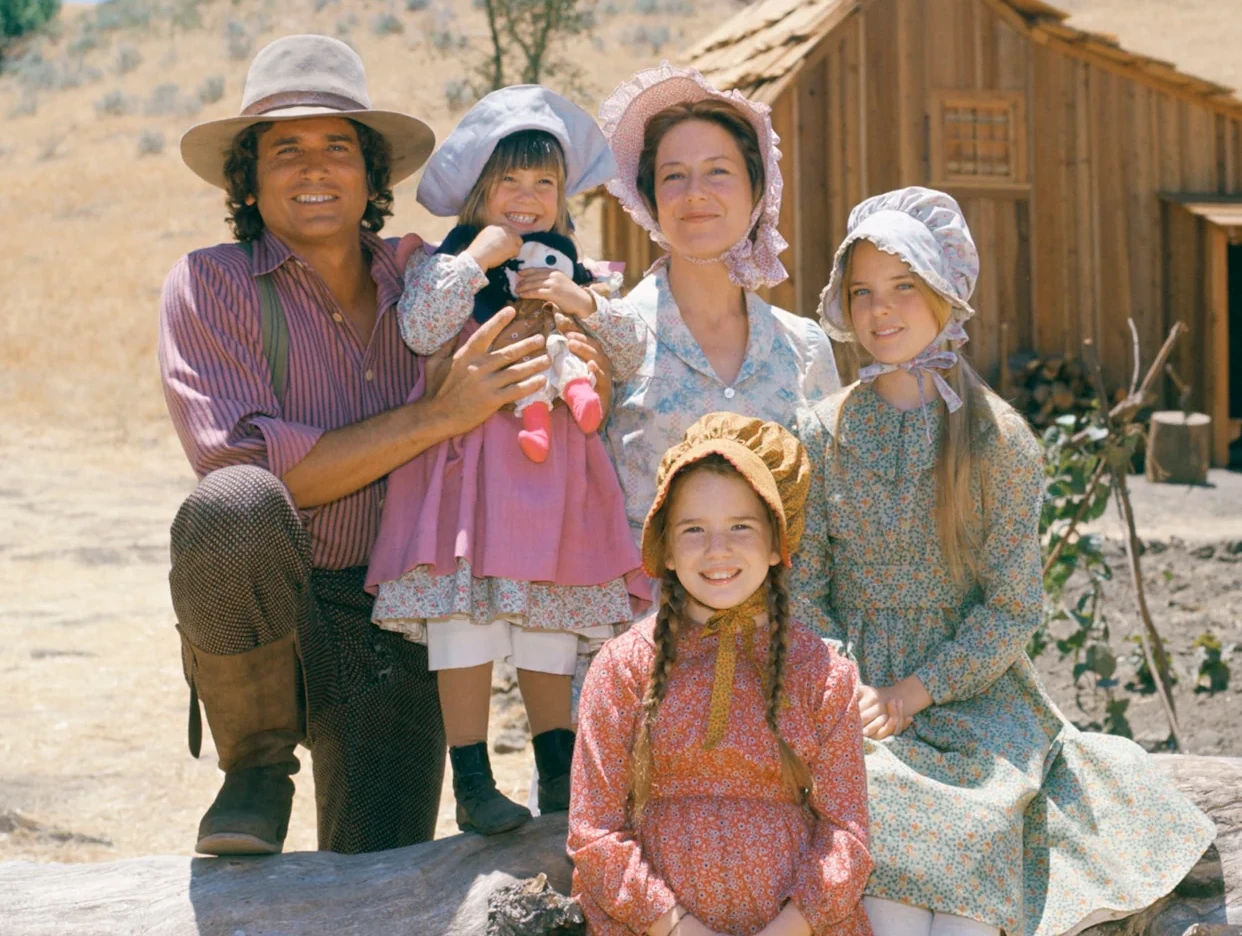
For those who somehow missed one of the defining family dramas of the late 1970s and early 1980s, Little House on the Prairie was essentially nine seasons of frontier optimism. It was a show where problems were solved through hard work, moral clarity, and occasional lectures from Michael Landon. If television had comfort food, this was homemade bread served by people who churned their own butter.
The show followed the Ingalls family as they navigated life in Walnut Grove, Minnesota. There were blizzards, crop failures, illnesses, schoolyard rivalries, and enough life lessons to fill an entire shelf of greeting cards. The emotional tone rarely drifted far from earnestness.
Which is why the ending feels like it was written by someone who accidentally wandered in from an action movie.
By 1984, the regular series had already ended. Ratings were declining, cast members had moved on, and the show had transitioned into a series of television movies. The final installment, titled The Last Farewell, was supposed to give viewers closure.
Instead, it gave them explosives.
The plot begins when a wealthy railroad tycoon discovers that he legally owns the land underneath Walnut Grove. He informs the residents that they must leave. Not negotiate. Not appeal. Not fight it in court. Just leave.
At this point, viewers probably expected one last emotional struggle. Maybe the townspeople would rally together. Maybe there would be a courtroom speech. Maybe Charles Ingalls would deliver a passionate monologue about community and perseverance.
Nope.
The citizens decide that if they can’t have Walnut Grove, nobody can.
So they dynamite it.
Not metaphorically.
Not symbolically.
They physically rig the entire town with explosives and blow it to pieces.
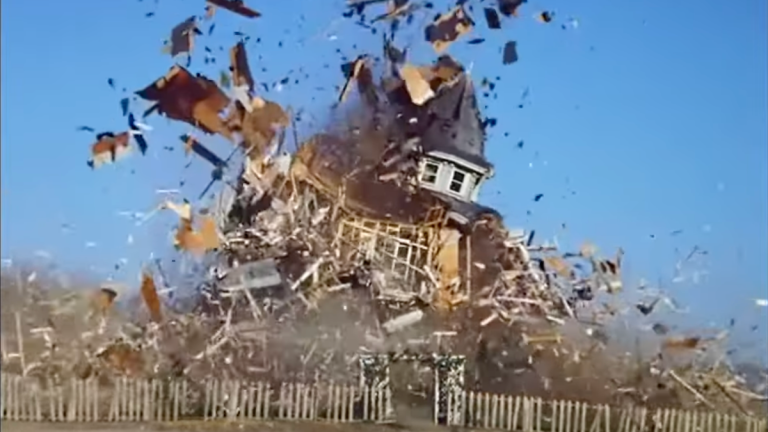
Buildings explode.
Storefronts explode.
The town explodes.
People who had spent years lovingly building homes, schools, churches, and businesses suddenly transform into frontier demolition experts.
It’s one of those television moments that sounds fake when described aloud. If someone told you this happened on a gritty cable drama, it would seem extreme. The fact that it happened on one of the most wholesome family shows ever made somehow makes it even stranger.
Imagine if the final episode of The Andy Griffith Show ended with the citizens of Mayberry detonating the courthouse.
Imagine if Gilmore Girls concluded with Stars Hollow being reduced to rubble by controlled explosions.
That’s the energy we’re dealing with here.
What’s especially fascinating is that the destruction wasn’t merely a storytelling choice. Michael Landon reportedly wanted to ensure that the elaborate Walnut Grove sets wouldn’t simply be reused by another production. If the show was ending, it was ending completely.
There is something weirdly admirable about that level of commitment.
Most creators move out of a house and leave the keys on the counter.
Landon bulldozed the house.
The result is a finale that occupies a unique place in television history. It manages to be emotional, absurd, practical, vindictive, and oddly satisfying all at the same time. The explosions aren’t presented as an act of rage so much as an act of ownership. The townspeople would rather destroy Walnut Grove themselves than allow someone else to profit from it.
It’s frontier scorched-earth policy wrapped inside a family drama.
And somehow it works.
That’s the strangest part.
Despite sounding completely insane on paper, the finale retains a certain emotional logic. Walnut Grove wasn’t just a collection of buildings. It represented the lives and memories of the people who lived there. If those people were being forced out, they wanted the final chapter to belong to them.
Television finales are notoriously difficult. Most are forgotten. Some are hated. A few are celebrated.
Very few end with enough dynamite to make an action director nod approvingly.