
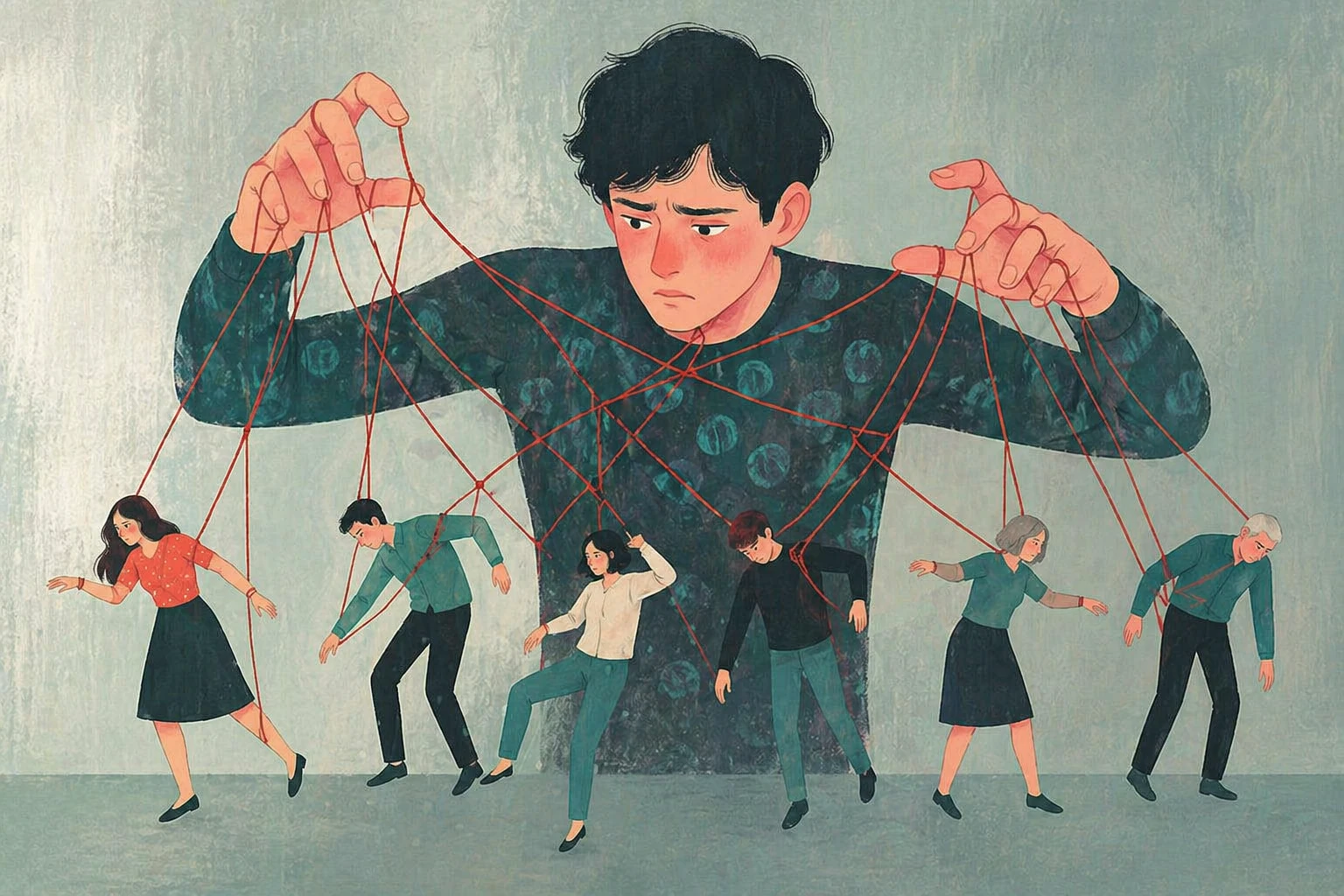
You’re not that powerful.
I don’t mean that as an insult. I mean it as a reality check.
Most of us walk around with this quiet, nagging assumption that if we just say the right thing, act the right way, dress a little better, explain ourselves more clearly, or try just a bit harder—we can control how people see us. That we can steer their thoughts. Shape their feelings. Engineer their perception of us like we’re tweaking a settings menu.
You can’t.
And the more you try, the more miserable you become.
The Illusion of Control
At some point, you probably learned—implicitly or explicitly—that your value is tied to how other people respond to you.
If they like you, you’re good.
If they don’t, something must be wrong.
So you adapt. You become hyper-aware. You start editing yourself in real time:
Don’t say that, they might think it’s weird
Smile more, you seemed off earlier
Explain your intentions so they don’t misunderstand
Fix it, fix it, fix it
Before long, you’re not even living your life anymore. You’re managing a PR campaign.
But here’s the uncomfortable truth: people are not blank slates waiting for you to write your story onto them.
They come preloaded.
They’ve got their own insecurities, biases, moods, past experiences, projections, and blind spots. They interpret you through their lens—not yours.
You could do everything “right” and still be misunderstood.
You could be kind and be seen as weak.
Confident and be seen as arrogant.
Quiet and be seen as cold.
Expressive and be seen as too much.
And there’s nothing you can do about it.
People Don’t See You—They See Themselves
This is the part that stings a little.
When someone judges you, it often has less to do with who you are and more to do with who they are.
The person who thinks you’re arrogant might be insecure.
The person who thinks you’re boring might be addicted to chaos.
The person who thinks you’re “too intense” might be afraid of depth.
You become a mirror, not a message.
Which means trying to control how everyone feels about you is like trying to control how everyone reacts to their own reflection.
Good luck with that.
The More You Try, The Worse It Gets
Ironically, the harder you try to control people’s perception of you, the less authentic—and often less likable—you become.
People can smell it.
They may not consciously think, “This person is trying to manage my opinion of them,” but they feel something’s off.
Because you’re not present. You’re performing.
And performance creates distance.
Real connection doesn’t come from being impressive. It comes from being real. And “real” includes being misunderstood sometimes.
What You Can Control
This is where things get a little more grounded.
You can’t control how someone feels about you. But you can control:
Your actions
Your values
Your boundaries
Your honesty
You can choose to act with integrity even if someone misinterprets it.
You can choose to be kind without needing it to be recognized.
You can choose to express yourself clearly—and then let go of how it lands.
That last part is the part most people resist.
Because letting go feels like giving up control.
But you never had that control to begin with.
The Freedom in Letting Go
When you stop trying to manage how people think or feel about you, something weird happens.
You relax.
You stop overanalyzing every conversation.
You stop replaying interactions in your head.
You stop chasing approval like it’s oxygen.
And ironically, you often become more likable.
Not because you cracked the code—but because you stopped trying to.
You become easier to be around. Less guarded. More grounded.
And the people who resonate with that? They stick around.
The ones who don’t?
They were never yours to convince.
The Bottom Line
You can influence people, sure. You can communicate well, show up with intention, and treat people with respect.
But you cannot reach into someone else’s mind and rearrange how they feel about you.
Trying to do that will drain you, distort you, and slowly disconnect you from yourself.
So here’s the shift:
Instead of asking, “How do I get them to see me a certain way?”
Start asking, “Am I acting in a way I can respect?”
That’s it.
Because at the end of the day, the only perception you have any real control over… is your own.