
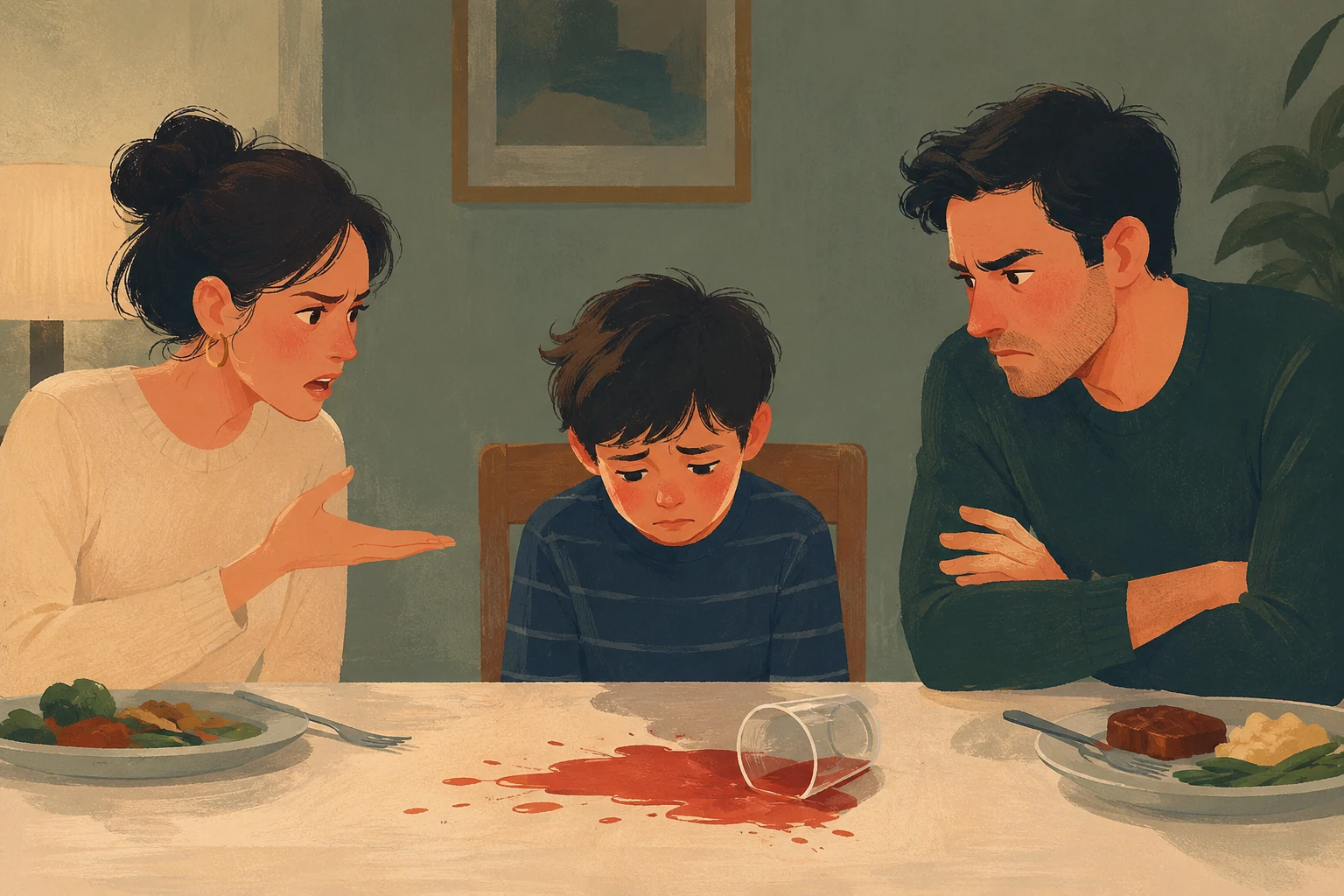
The most important moments in parenting are usually not the happy ones.
Anybody can love a kid when they’re adorable. When they’re laughing in the backseat. When they draw you a crooked picture of a dinosaur and tell you it’s you. When they run into your arms at the end of the day like you’re the center of the universe.
That part is easy.
The real parenting happens when they’re difficult.
When they’re screaming because you said no. When they’re acting rude and ungrateful. When they lie. When they slam doors. When they melt down in Target like a tiny drunk dictator. When they fail a class. When they disappoint you. When they embarrass you in public. When they become emotional mirrors reflecting back all the parts of yourself you thought you had under control.
That’s the moment your child learns who you really are.
And more importantly, it’s the moment they learn who they are allowed to be.
A lot of parents think their job is to control behavior. And sure, behavior matters. Kids need boundaries. They need structure. They need consequences.
But underneath all of that, your child is asking a much deeper question:
“What happens to me when I become hard to love?”
That question follows people for the rest of their lives.
You can see it everywhere in adulthood.
The woman who apologizes for crying because she learned emotions make people uncomfortable.
The guy who shuts down anytime he makes a mistake because mistakes meant humiliation growing up.
The people-pleaser who cannot say no because love in their house always felt conditional.
The adult who hides their struggles from everyone because vulnerability once got them mocked, dismissed, or punished.
A child’s nervous system remembers this stuff long after the specific words are forgotten.
Kids do not learn emotional safety from your best moments. They learn it from your worst ones.
They learn it from how you react when they are at their worst.
And this is where a lot of parents unintentionally screw things up.
Because when children become difficult, parents often take it personally.
The tantrum becomes disrespect.
The attitude becomes betrayal.
The crying becomes manipulation.
The emotional outburst becomes inconvenience.
And suddenly the parent stops responding to the child and starts responding to their own ego.
Now the goal is no longer to teach. The goal is to win.
That’s when you get parents humiliating their kids “to teach them a lesson.” Parents screaming because the child screamed. Parents withdrawing affection until the child “fixes their attitude.” Parents demanding emotional control from a seven-year-old while displaying none themselves.
Which is honestly kind of insane when you think about it.
A child is literally borrowing your nervous system to learn how to regulate their emotions. And many adults are out here acting like the child should somehow be the emotionally mature one in the room.
Here’s the uncomfortable truth:
Your child will probably not remember most of your rules.
But they will remember the feeling of being scared to come to you.
They will remember whether mistakes felt survivable around you.
They will remember whether your love disappeared the second they became inconvenient.
And before anybody twists this into some soft “never discipline your kids” nonsense—that’s not what this means.
You can absolutely be firm while still being emotionally safe.
You can punish behavior without humiliating the person.
You can say:
“No, this behavior is unacceptable.”
without making the child feel fundamentally bad or unwanted.
The healthiest parents are not the ones who never get angry.
They’re the ones who don’t make their child emotionally carry the weight of that anger.
That distinction matters.
Because kids are going to mess up. Constantly. That’s literally the job description of being a child. Their brains are unfinished. Their emotional regulation is incomplete. They are impulsive, emotional, irrational little chaos machines.
You know what else they are?
Watching you constantly.
Especially when things go bad.
They are learning:
What conflict feels like.
What accountability feels like.
What emotional safety feels like.
What love feels like after failure.
And one day, they will internalize your voice as their own.
That becomes the voice they hear after a breakup. After getting fired. After failing. After embarrassing themselves. After becoming difficult in their own adult lives.
For some people, that inner voice says:
“You made a mistake, but you’re still okay.”
For others, it says:
“You’re a problem. Hide it before people leave.”
That voice didn’t appear out of nowhere.
It was built.
Usually slowly. Quietly. Repeatedly.
Parenting is not really about raising obedient children. Plenty of obedient children grow into deeply anxious adults.
It’s about raising kids who can eventually face themselves honestly without collapsing into shame.
And ironically, that starts with how you treat them when they’re hardest to deal with.
Because difficult moments are not interruptions to parenting.
They are the parenting.