
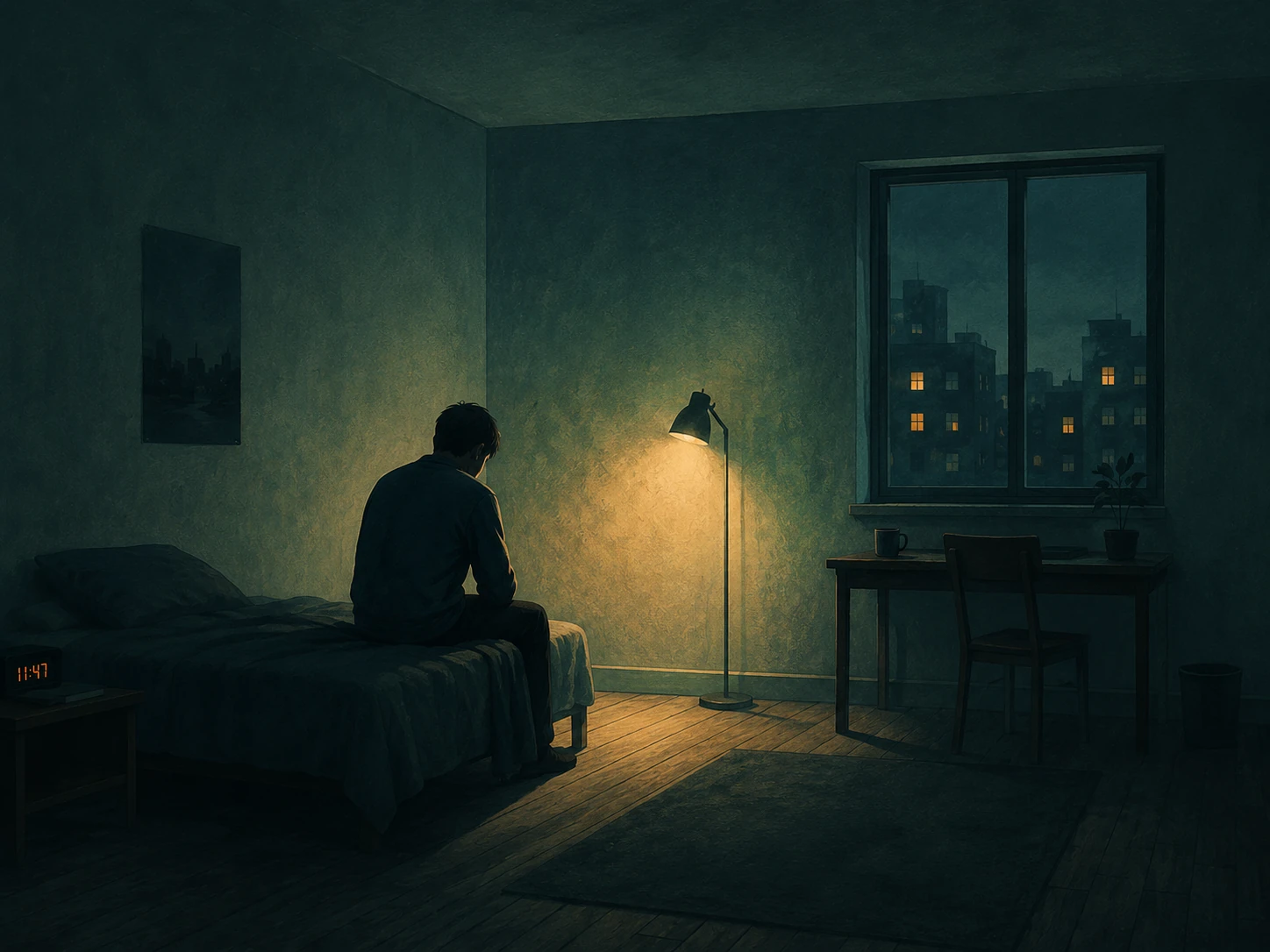
There’s a strange irony about modern life.
Human beings have never been more connected.
You can send a message across the planet in a second. You can see what your high school classmates ate for breakfast. You can watch a stranger’s wedding in Brazil, a political protest in France, and a guy teaching woodworking in Montana before lunch.
And yet, millions of people are lonely.
Not “I spent Friday night alone” lonely.
Not “my friends were busy this weekend” lonely.
The kind of loneliness that settles into your bones. The kind that follows you into crowded restaurants, family gatherings, and busy offices. The kind that makes you feel invisible even when people are standing right next to you.
Most people think of loneliness as an emotional problem.
It’s much worse than that.
Loneliness is increasingly being recognized as a serious health risk.
In fact, chronic social isolation can be as harmful to your health as smoking heavily, obesity, or physical inactivity.
Think about that for a second.
We spend endless amounts of time worrying about what we’re eating, how many steps we’re taking, whether we’re getting enough sleep, and what supplements we should buy.
Meanwhile, millions of people are starving socially.
And we treat it like it’s no big deal.
Why Loneliness Hurts So Much
Loneliness isn’t simply the absence of people.
It’s the absence of meaningful connection.
You can be married and lonely.
You can have 5,000 social media followers and be lonely.
You can attend parties every weekend and still feel profoundly alone.
The pain exists because human beings evolved to depend on one another.
For most of human history, isolation wasn’t uncomfortable.
It was dangerous.
Being separated from the tribe often meant starvation, injury, or death.
Your brain still operates with that ancient software.
When you feel socially disconnected, your nervous system often interprets it as a threat. Stress hormones rise. Anxiety increases. Sleep becomes worse. Your body remains in a low-level state of alertness.
The loneliness isn’t just happening in your head.
Your body is experiencing it too.
The Slow Drift Into Isolation
The dangerous thing about loneliness is that it rarely arrives all at once.
It’s usually gradual.
You move for work.
You stop calling old friends.
You get busy with kids.
You start working from home.
You tell yourself you’ll reach out next week.
Then next month.
Then next year.
Eventually, years pass and your social life starts to resemble a storage unit filled with relationships you haven’t opened in a long time.
Most people don’t wake up one morning and decide to become isolated.
Isolation usually happens through neglect.
It’s what grows when relationships aren’t maintained.
Just like weeds.
The Problem With Waiting to Feel Like It
People often approach friendships the same way they approach exercise.
They wait until they feel motivated.
This is a terrible strategy.
Nobody feels like going to the gym every day.
Nobody feels like calling friends every day.
Nobody feels like attending social events after a long week.
But meaningful relationships are built through repeated acts of showing up.
Not because you’re inspired.
Because you’re committed.
The uncomfortable truth is that many adults treat friendships as optional luxuries.
Then they’re shocked when they feel lonely.
Friendships aren’t luxuries.
They’re infrastructure.
They support your mental health the same way plumbing supports a house.
You only notice how important they are when they stop working.
Why Technology Isn’t Filling the Gap
Technology gives us the feeling of connection without many of the benefits.
Scrolling through updates feels social.
It’s often not.
Watching people’s lives unfold through a screen can actually increase feelings of loneliness because you’re observing connection rather than experiencing it.
It’s the social equivalent of standing outside a restaurant looking through the window while everyone else is eating.
Your brain recognizes the difference.
A text message is nice.
A phone call is better.
A conversation over coffee is better still.
A shared experience, where you’re laughing, struggling, working, or creating something together, is where the real magic happens.
Humans weren’t built merely to exchange information.
We were built to share experiences.
The Cost of Staying Isolated
Loneliness doesn’t just make life less enjoyable.
It changes how you see the world.
When people become chronically isolated, they often become more suspicious.
More anxious.
More pessimistic.
They begin assuming rejection before it happens.
They stop reaching out because they expect disappointment.
Then the lack of connection reinforces the belief that nobody cares.
It becomes a self-fulfilling prophecy.
The tragedy is that the longer loneliness lasts, the harder it becomes to escape because loneliness itself starts changing your behavior.
You withdraw.
You hesitate.
You stay home.
You convince yourself nobody wants to hear from you.
The walls get thicker brick by brick.
The Solution Is Usually Smaller Than You Think
Most people imagine overcoming loneliness requires some dramatic transformation.
It usually doesn’t.
It starts with something smaller.
Sending the text.
Making the call.
Joining the group.
Accepting the invitation.
Inviting someone to lunch.
Showing up awkwardly and imperfectly.
The goal isn’t to become the most social person in the room.
The goal is to create meaningful connections that remind you that you’re part of something larger than yourself.
One good friend is worth more than a hundred casual acquaintances.
One honest conversation is worth more than a hundred likes.
One meaningful relationship can change the trajectory of an entire life.
Final Thoughts
People often talk about health as though it’s entirely physical.
Eat better.
Exercise more.
Sleep longer.
All good advice.
But human beings aren’t machines.
We’re social creatures.
Connection isn’t some optional bonus feature added onto life.
It’s part of the operating system.
Ignoring loneliness is like ignoring a warning light on your dashboard. You might be able to drive for a while.
But eventually, something breaks.
The people who matter most in your life are not distractions from living.
They are a large part of what makes life worth living in the first place.