
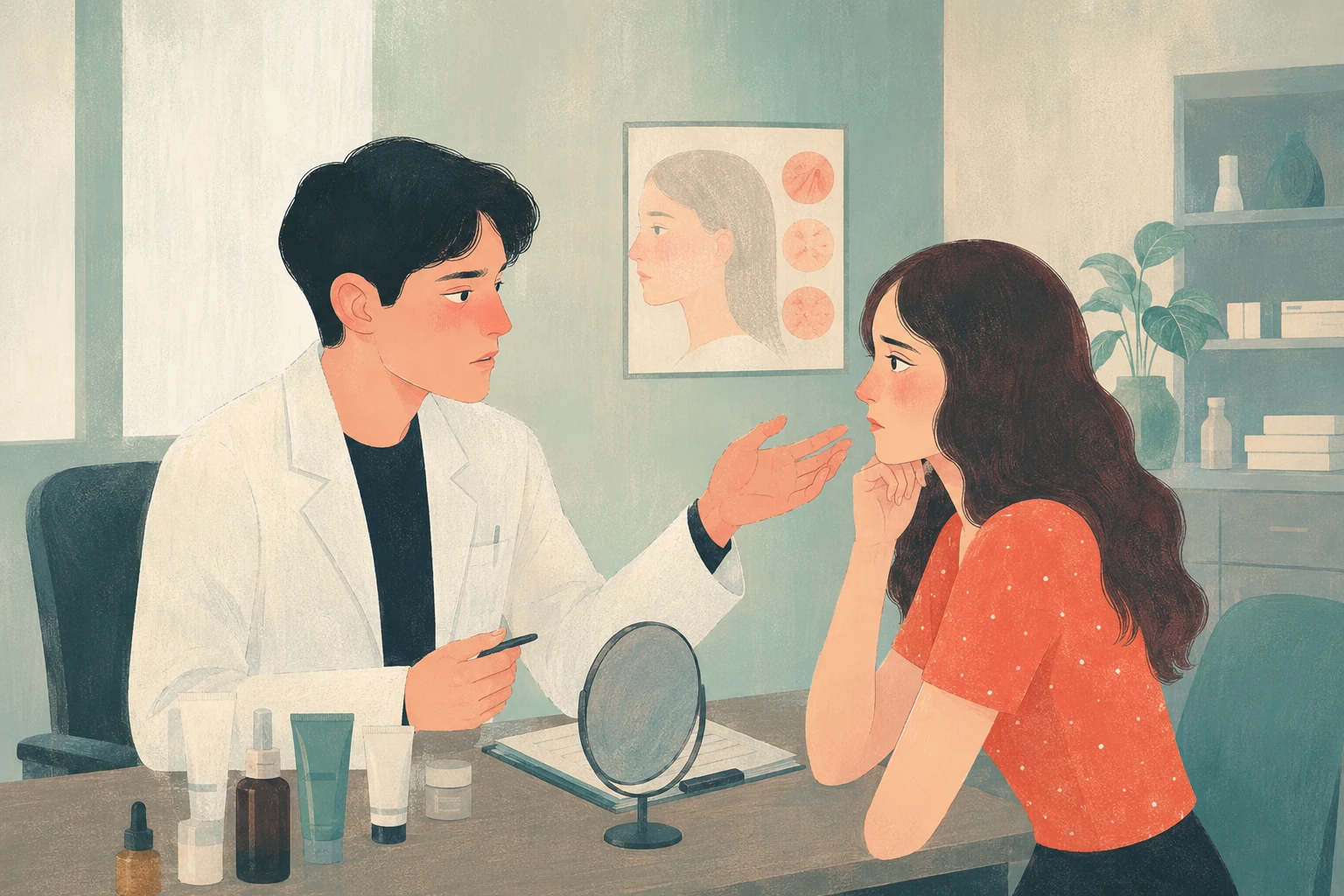
Let’s start with the question everyone wants answered. What’s the best anti-aging routine?
Most people are already making it far more complicated than it needs to be. If there are two things you want to do for your skin, it’s sunscreen and retinoids.
Those two things alone account for roughly 80 to 90 percent of the anti-aging results you’ll ever see without surgery.
Seriously? Just two things?
Yes. Proper sunscreen use and proper use of retinoids do almost all of the heavy lifting.
Everything beyond that—serums, toners, antioxidants, masks, expensive creams—can help, but the returns are much smaller.
You seem almost obsessed with sunscreen.
Please, please, please use sunscreen.
If there is one thing I can ever tell people about dermatology, it is to consistently and correctly use sunscreen.
It significantly reduces skin cancer risk and can make you look a decade younger than your actual age after years of consistent use.
What’s the correct way to use it?
SPF 30 or higher every day, even in winter and on cloudy days.
Use broad-spectrum protection that specifically says UVA and UVB.
Reapply every two to three hours.
And use enough. Most people don’t.
Even if I’m indoors most of the day?
Absolutely.
You don’t always know how much UV your windows are blocking. Plus, if you’re indoors most of the time, your skin can actually become more sensitive during the periods when you are exposed.
What exactly are retinoids?
They’re vitamin A derivatives.
They help preserve collagen and elastin, stimulate new collagen production, improve skin texture, and reduce signs of aging.
If sunscreen prevents damage, retinoids help repair and maintain what you’ve already got.
When should people start using them?
Now.
Somewhere between the ages of 15 and 25, environmental damage starts accumulating faster than your body can completely repair it.
The earlier you start, the better.
What’s the biggest mistake people make with retinoids?
Going too hard too fast.
Start slowly. Once every few days. Let your skin adjust.
Peeling and temporary irritation are normal.
And always apply them at night.
What about all the expensive skincare products people buy?
A lot of them work.
The problem is that people spend hundreds of dollars on products that provide marginal benefits while skipping the basics that actually move the needle.
Do antioxidants like Vitamin C work?
Yes.
Vitamin C, Vitamin E, and other antioxidants can help neutralize free radicals and reduce damage to skin cells.
They’re worth including, but they’re supplemental. They’re not the foundation.
What about niacinamide? It seems like it’s in everything now.
I think it’s slightly overrated.
It can absolutely be part of a good skincare routine, but once sunscreen and retinoids are covered, the benefits become much more marginal.
How important are genetics?
Unfortunately, genetics matter a lot.
Different people have different skin thickness, moisture retention, UV sensitivity, and aging patterns.
For example, people with naturally oily skin often age significantly better than people with naturally dry skin.
Wait. Oily skin is actually a good thing?
ABSOLUTELY.
People with genetically oily skin often age better. The tradeoff is that they may deal with more acne when they’re younger.
What do you think about red light therapy?
The science behind it is real.
Red light can stimulate collagen production and help preserve existing collagen.
The problem is that many of the trendy masks on the market simply aren’t powerful enough to produce the results people expect.
So the masks are a scam?
Not exactly.
The concept is good. The execution often isn’t.
I generally prefer stronger red-light panels or bulbs over wearable masks.
What about tanning beds?
I absolutely despise tanning beds.
People dramatically underestimate how damaging concentrated UV exposure can be.
Even a relatively small amount of tanning bed use appears to increase skin cancer risk.
If someone only has time and money for a very simple routine, what should it be?
Morning:
Cleanse if needed.
Apply sunscreen.
That’s it.
Night:
Cleanse.
Apply a retinoid.
Use moisturizer if needed.
That’s your foundation.
What skincare advice do you find yourself repeating most often?
That people are looking for shortcuts.
They want a miracle serum, an expensive treatment, or a secret ingredient.
Most of the time the answer is boring.
Wear sunscreen.
Use retinoids.
Be consistent.
The fundamentals work. That’s why dermatologists keep recommending them.