
I don’t tell many people this about myself.
Partly because it’s embarrassing. Partly because I know some people will never look at me the same way afterward. And partly because there are people out there who assume that once you’ve believed something hateful, you’re permanently broken.
But the truth is that for a large part of my life, I was a neo-Nazi white supremacist.
What’s strange is that I wasn’t recruited by some shadowy organization. Nobody kidnapped me. Nobody brainwashed me in a secret compound.
I was raised in it.
My father was a bigot. The people around me were bigots. The things I heard growing up were racist, hateful, and divisive. When you’re a kid, you don’t have much ability to evaluate whether the adults around you are right. You assume they know what they’re talking about.
Kids are sponges.
If the people you admire tell you that certain groups of people are dangerous, lazy, stupid, or inferior, you absorb those ideas long before you have the life experience to challenge them.
The thing that nobody talks about is that a lot of extremist beliefs don’t start with hatred.
They start with a desire for belonging.
For me, the biggest factor was my father.
I wanted his approval.
I wanted him to be proud of me.
I wanted him to notice me.
So I adopted the things he believed. I repeated the things he said. I convinced myself those beliefs were my own because I thought that’s what sons were supposed to do.
Looking back, I can see that I wasn’t becoming my own person.
I was becoming an imitation of someone else.
As I got older, the ideology became part of my identity. It gave me easy answers to complicated problems. If something was wrong in my life, somebody else was to blame. If I felt angry, frustrated, or powerless, there was always a target available.
That’s one of the reasons extremist ideologies are so appealing.
They simplify the world.
They give you villains.
They give you certainty.
And certainty can feel very comforting when you’re young and confused.
At the same time, I was destroying myself in other ways.
I got heavily involved with drugs.
Crystal meth.
Heroin.
Anything that would numb me or make me feel something different than what I felt when I was alone with my thoughts.
I speedballed like it was an Olympic sport.
There were periods of my life where I honestly didn’t care whether I lived or died.
For years, I thought I was living on my own terms. I thought I was independent. I thought I was rejecting society.
In reality, I was doing exactly what everybody around me was doing.
I wasn’t free.
I was trapped.
The turning point came around my twenty-first birthday.
I had gotten so deep into drugs that I nearly killed myself.
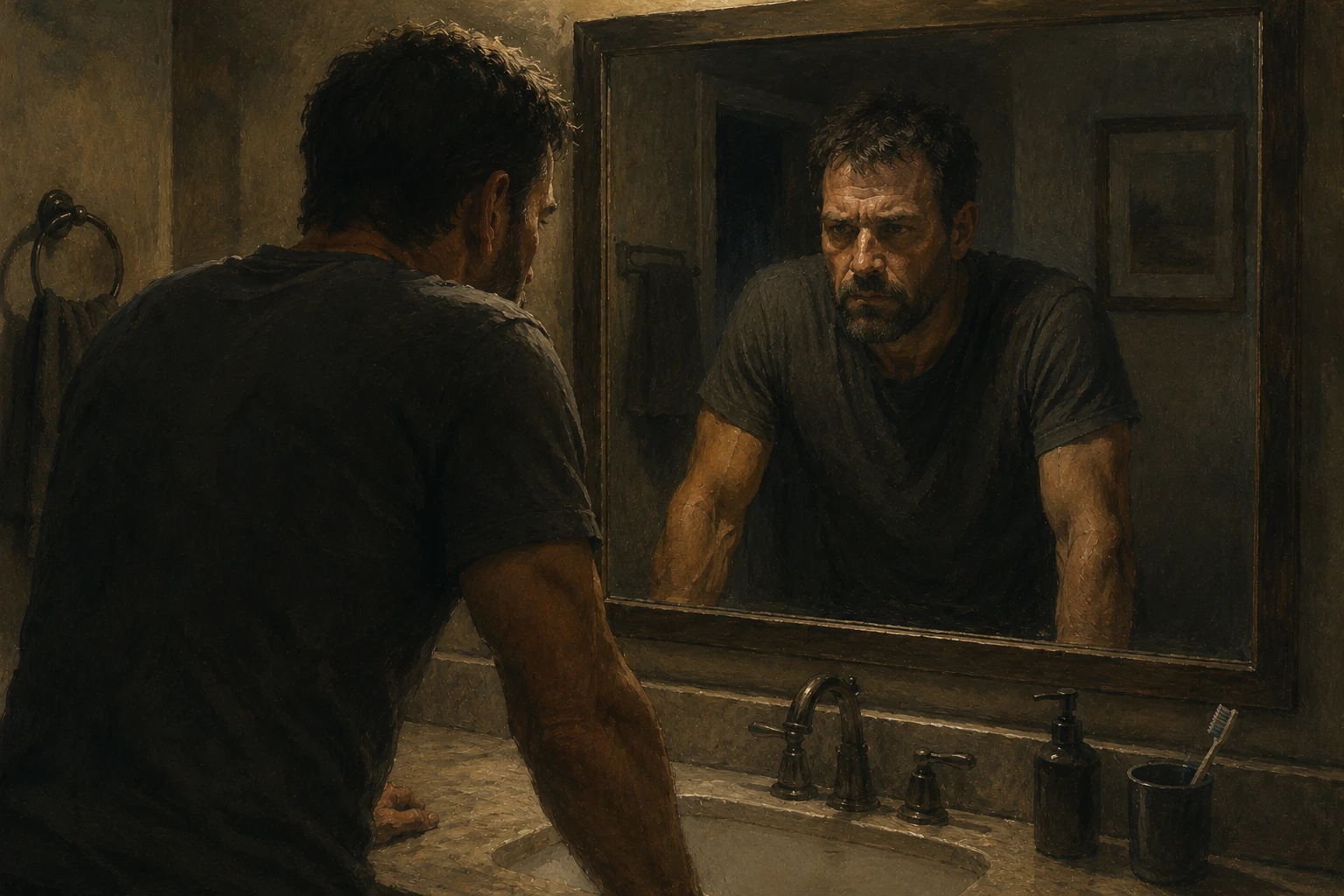
I woke up after what could have easily been my last binge and looked in the mirror.
I remember staring at myself and feeling something I hadn’t felt in years.
Shame.
Not the kind of shame someone else puts on you.
The kind that comes from realizing you’ve become someone you don’t even recognize.
I hated what I saw.
Not because of how I looked.
Because of who I had become.
That was the beginning.
Not the end.
People love stories where someone has a dramatic epiphany and instantly transforms into a better person. Real life doesn’t work like that.
Change happened slowly.
Painfully.
One piece at a time.
I got sober.
I started educating myself.
I began reading things I would have previously dismissed.
I learned about the actual history behind the ideology I had embraced.
Not the myths.
Not the propaganda.
The real history.
The concentration camps.
The murders.
The cruelty.
The suffering.
The industrial-scale evil.
The more I learned, the harder it became to maintain the fantasy.
Eventually the whole thing collapsed under the weight of reality.
The hardest part wasn’t realizing I was wrong.
The hardest part was admitting it.
Nobody likes confronting the possibility that they’ve spent years building their identity around lies.
But that’s exactly what I had to do.
I walked away.
It wasn’t always easy.
Some people didn’t appreciate it.
Some people considered leaving a betrayal.
But eventually I realized something important:
If your friendships only exist because you share hatred, they aren’t real friendships.
Years later, I became a father.
More than anything else, that’s what keeps me accountable.
My son is autistic and nonverbal.
Every morning when I drop him off, there’s a little Black girl who runs up to him, grabs his hand, and takes him to their table.
They laugh together.
They play together.
They don’t care about race.
They don’t care about politics.
They don’t care about any of the nonsense that consumed so much of my life.
They just see another kid.
Watching that has taught me more than any ideology ever did.
People aren’t born hating each other.
They’re taught.
And if hatred can be taught, it can also be interrupted.
That’s what I try to do with my son.
Not teach him what to think.
Teach him how to think.
Teach him to judge people by who they are instead of what they look like.
Teach him that kindness is strength.
Teach him that empathy isn’t weakness.
I don’t expect forgiveness from everyone.
I don’t expect people to forget what I once believed.
I certainly don’t expect praise.
The past is the past.
I can’t erase it.
I can’t undo it.
I can’t go back and become a different person.
All I can do is try to make sure the person I am today is better than the person I was yesterday.
That’s not redemption.
That’s responsibility.
And for the rest of my life, that’s enough.