
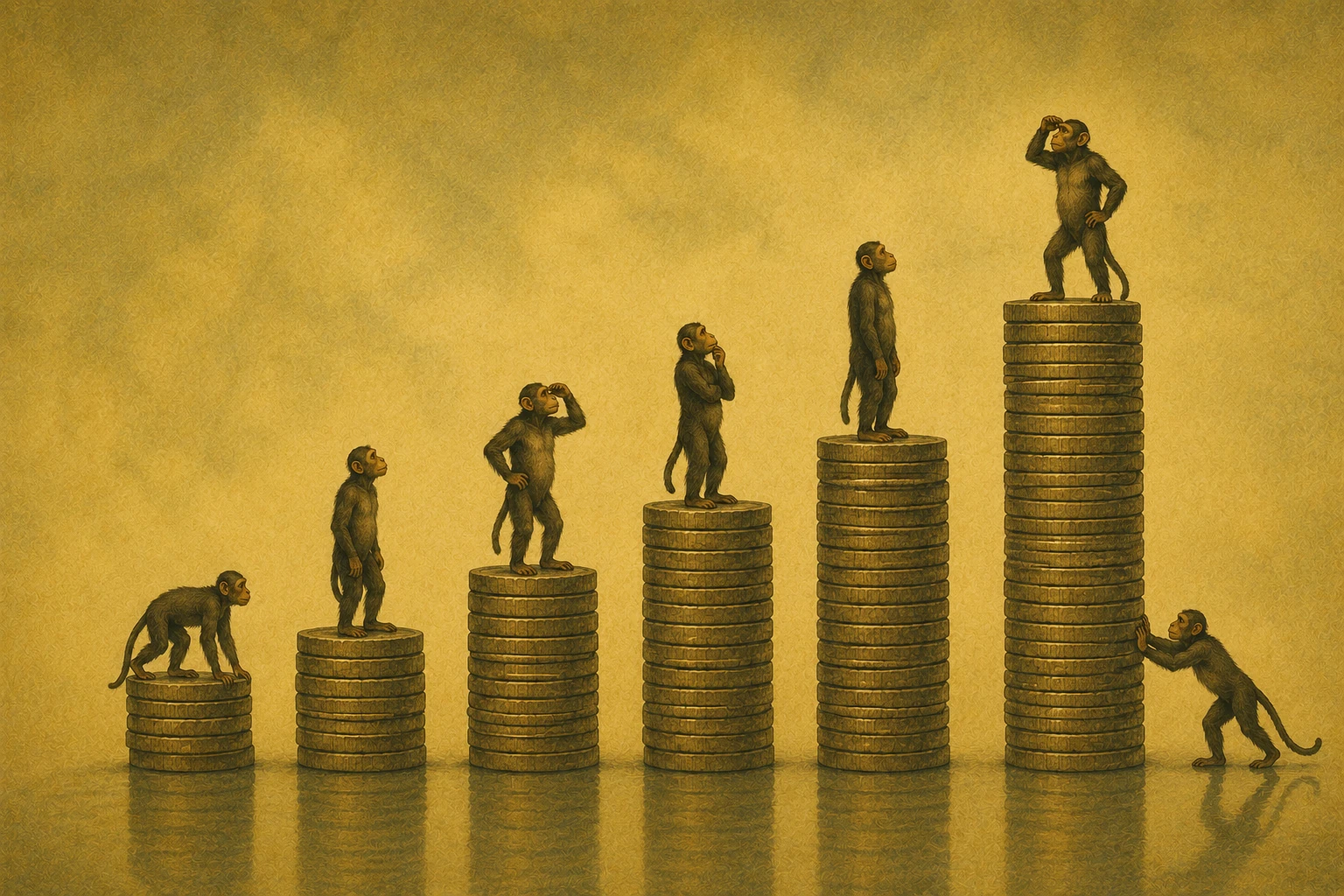
Most people like to believe they make decisions independently. We tell ourselves that our preferences are our own, that we buy what we buy because we genuinely like it, and that our political beliefs, hobbies, careers, and social circles are the product of careful thought and personal choice.
There is some truth to that. But there is also an uncomfortable reality that psychologists, sociologists, and economists have been uncovering for decades: much of human behavior is driven by a force that operates largely beneath our awareness.
That force is status.
The Ancient Software Running Modern Humans
For most of human history, humans lived in small tribes where status was directly tied to survival. A high-status hunter was more likely to attract mates, a respected leader was more likely to influence group decisions, and a trusted elder received support during difficult times.
Although we now live in cities, use smartphones, and travel in airplanes, the psychological machinery that evolved tens of thousands of years ago remains largely intact. Deep down, our brains still monitor social standing with remarkable sensitivity.
Status Is Not Just About Money
One of the biggest misconceptions about status is that it is synonymous with wealth. Money certainly helps, but status can be earned in many different ways.
In some communities, status comes from athletic achievement. In others, it comes from education, creativity, religious devotion, professional success, physical attractiveness, or social influence.
Status is always relative to the values of a particular community. This explains why people often pursue goals that seem irrational from the outside. They are not merely seeking financial rewards. They are seeking recognition, respect, and social standing within the groups that matter to them.
The Hidden Logic Behind Consumer Behavior
Status helps explain many of the purchases people make. Consider why someone spends thousands of dollars on a luxury watch when a much cheaper watch keeps time just as accurately.
The answer is not primarily about telling time.
Many products serve two purposes simultaneously. They perform a practical function, but they also communicate information about the owner. Cars signal taste, wealth, and lifestyle. Clothing signals identity and group membership. Homes signal success and stability.
This does not mean people are consciously trying to impress others every time they buy something. Rather, humans have evolved to pay close attention to social signals, and businesses have become extraordinarily skilled at packaging status into products.
Why Trends Spread So Quickly
Status also helps explain why fashions, trends, and cultural movements spread through society. People tend to imitate individuals they admire, and social media has dramatically accelerated this process.
A celebrity adopts a style. Influencers copy it. Millions of followers imitate them. Before long, an entirely new trend has emerged.
The interesting part is that most people experience this as personal preference. They genuinely believe they simply like the new style, yet many preferences often begin with high-status individuals whose choices ripple outward through social networks.
The Career Decisions We Rarely Question
Status plays a major role in professional life as well. Many people choose careers not solely because they enjoy the work, but because of the social prestige attached to certain occupations.
Parents frequently encourage children toward careers that carry high status, such as medicine, law, engineering, or finance. This does not mean status is the only factor involved, but it often exerts a stronger influence than people realize.
Some individuals spend years pursuing careers they dislike because the social rewards feel too valuable to abandon. Others avoid careers they would genuinely enjoy because they fear losing status in the eyes of others.
The Status Game Has Changed
Historically, status was often tied to physical strength, land ownership, or military success. Today, status has become more fragmented.
Different communities value different things. A venture capitalist, a university professor, a professional athlete, and a successful YouTuber may all possess high status within their respective worlds, even though those worlds rarely overlap.
The internet has accelerated this trend by allowing people to find niche communities where highly specialized forms of expertise can earn recognition. The competition for status has not disappeared. It has simply become decentralized.
Why Status Can Be Both Helpful and Dangerous
Status is not inherently bad. In many ways, it serves important social functions. It motivates people to contribute to their communities, encourages cooperation, and rewards people who create value, solve problems, and help others.
At the same time, status can lead people astray. People may chase symbols of success rather than genuine fulfillment. They may accumulate possessions they do not need, pursue careers they do not enjoy, or engage in endless comparisons with others.
Perhaps the greatest danger is that status goals often have no finish line. There is always someone richer, more attractive, more accomplished, or more admired.
Seeing the Invisible Force
The goal is not to eliminate status from our lives. That would be impossible. Humans are social creatures, and status is woven into the fabric of social life.
The more useful approach is to recognize when status is influencing our decisions. Why do we want a particular job? Why do we care about a certain purchase? Why does someone else’s success bother us? Why do we seek approval from some groups and not others?
Once you begin looking for status, you start seeing it everywhere: in politics, business, education, social media, fashion, sports, and everyday conversations.
Most people think status is something that only matters to celebrities, executives, and the ultra-wealthy. In reality, it is one of the fundamental forces that shapes human behavior. Like gravity, it operates whether we notice it or not, exerting a constant pull on the decisions we make and the lives we build.
Understanding that force does not free us from it completely. But it does make us a little less likely to mistake its influence for our own independent choices.