
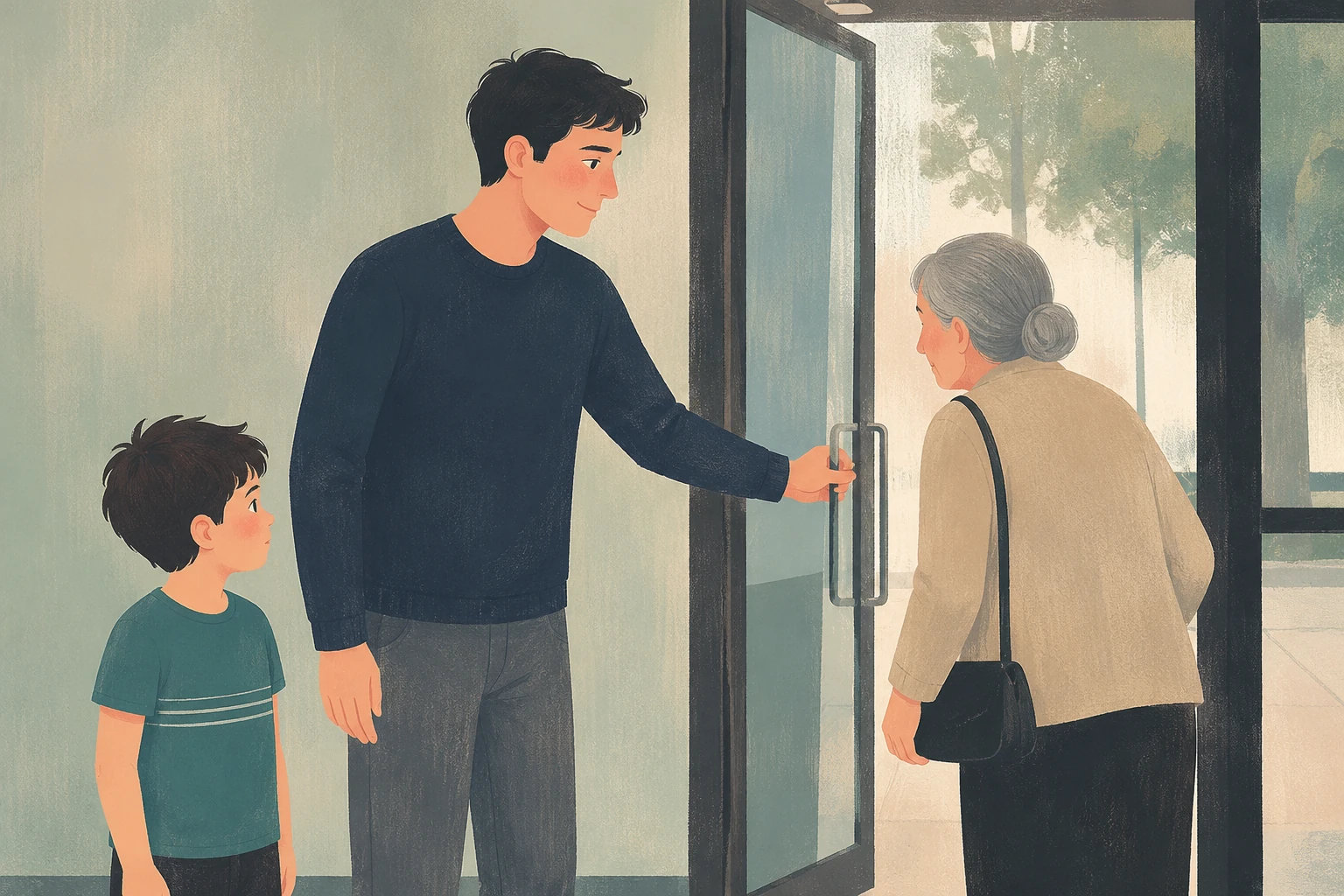
One of the great illusions of parenting is the belief that children are listening to everything we say.
They aren’t.
At least, not in the way we hope.
Children hear our words, of course. They can recite our rules, repeat our favorite sayings, and probably finish our lectures before we do. But what actually shapes them isn’t the advice we give—it’s the life we live. Long before they understand our explanations, they’re studying our behavior. They’re watching how we react when we’re frustrated, how we treat strangers, how we speak about people who aren’t in the room, and what we do when no one is applauding.
Children are always paying attention to the gap between what we say and what we do.
You can tell a child that honesty matters, but if they watch you lie to avoid an awkward conversation, you’ve just taught them something far more memorable than any lecture could. You can explain the importance of kindness while snapping at the waiter because your order took too long. You can insist that family comes first while spending every evening staring at your phone.
The lesson they absorb isn’t the one you intended. It’s the one you demonstrated.
This isn’t because children are cynical. It’s because human beings are wired to learn through imitation. Long before schools existed, before books, before parenting experts and podcasts, children survived by copying the adults around them. They learned how to speak, solve problems, build relationships, and navigate the world by watching.
That instinct never disappeared.
It’s why children often pick up expressions they were never taught. It’s why they mimic our tone of voice, our habits, our mannerisms, even our anxieties. If you’ve ever heard your child say something and suddenly realized they sound exactly like you, you’ve experienced this firsthand. It’s equal parts heartwarming and terrifying.
The uncomfortable truth is that our ordinary moments teach far more than our carefully planned ones.
Children notice whether you apologize after losing your temper. They notice whether you admit when you’re wrong. They notice how you handle disappointment, how you celebrate other people’s success, and whether you keep promises that no one else is around to enforce.
These moments don’t feel like lessons while they’re happening. They’re just life.
But that’s exactly why they’re so powerful.
Many parents spend enormous energy trying to find the perfect words for difficult conversations. They worry about explaining respect, gratitude, resilience, empathy, confidence, or responsibility. Those conversations matter, but they’re only effective when they’re supported by evidence.
Imagine a coach who delivers inspiring speeches about discipline but never shows up to practice on time. Eventually, the speeches lose their power because the behavior tells a different story.
The same is true at home.
Children don’t expect perfection. In fact, trying to appear perfect may teach the wrong lesson altogether. They benefit much more from seeing adults who make mistakes and then own them. A parent who sincerely says, “I shouldn’t have spoken to you that way. I’m sorry,” teaches accountability in a way no lecture ever could.
That single apology communicates humility, responsibility, and emotional maturity all at once.
It’s easy to underestimate the influence of seemingly insignificant choices.
When your child sees you put your shopping cart back even though no one is watching, you’re teaching responsibility.
When they see you speak respectfully to someone whose job is often overlooked, you’re teaching dignity.
When they watch you help a neighbor without expecting recognition, you’re teaching generosity.
When they see you put your phone away because someone is talking to you, you’re teaching presence.
None of these moments require a speech. In fact, adding one might lessen their impact. The lesson is already happening.
This idea extends far beyond parenting.
Leaders influence their teams the same way. Teachers shape classrooms this way. Coaches build cultures this way. Friends affect each other this way. Every group pays less attention to the values that are posted on the wall than the behaviors that are rewarded every day.
Culture is never built by slogans. It’s built by repeated actions.
Perhaps that’s why children have a remarkable ability to expose our inconsistencies. They don’t care much about the ideals we claim to believe in. They simply mirror the habits they’ve observed. Sometimes that’s deeply rewarding. Other times it’s an uncomfortable reminder that the example we’re setting isn’t the one we imagined.
The good news is that this works in our favor more often than we realize.
You don’t need to deliver the perfect speech about resilience if your child watches you face setbacks without giving up. You don’t need to preach gratitude if they regularly see you appreciate what you have. You don’t need to constantly remind them to be compassionate if compassion is simply how your family operates.
Children are not looking for flawless role models.
They’re looking for believable ones.
They don’t need adults who never fail. They need adults who respond to failure with honesty, patience, and integrity. They need to see what courage looks like in everyday life—not just during life’s biggest moments.
Because years from now, they probably won’t remember your carefully crafted lectures.
They’ll remember how you treated people.
They’ll remember how you handled stress.
They’ll remember whether your actions matched your words.
And without realizing it, they’ll carry those examples into their own lives, repeating them with their own children someday.
Whether we intend to or not, we’re always teaching.
The question isn’t whether our children are learning from us.
It’s what they’re learning.