
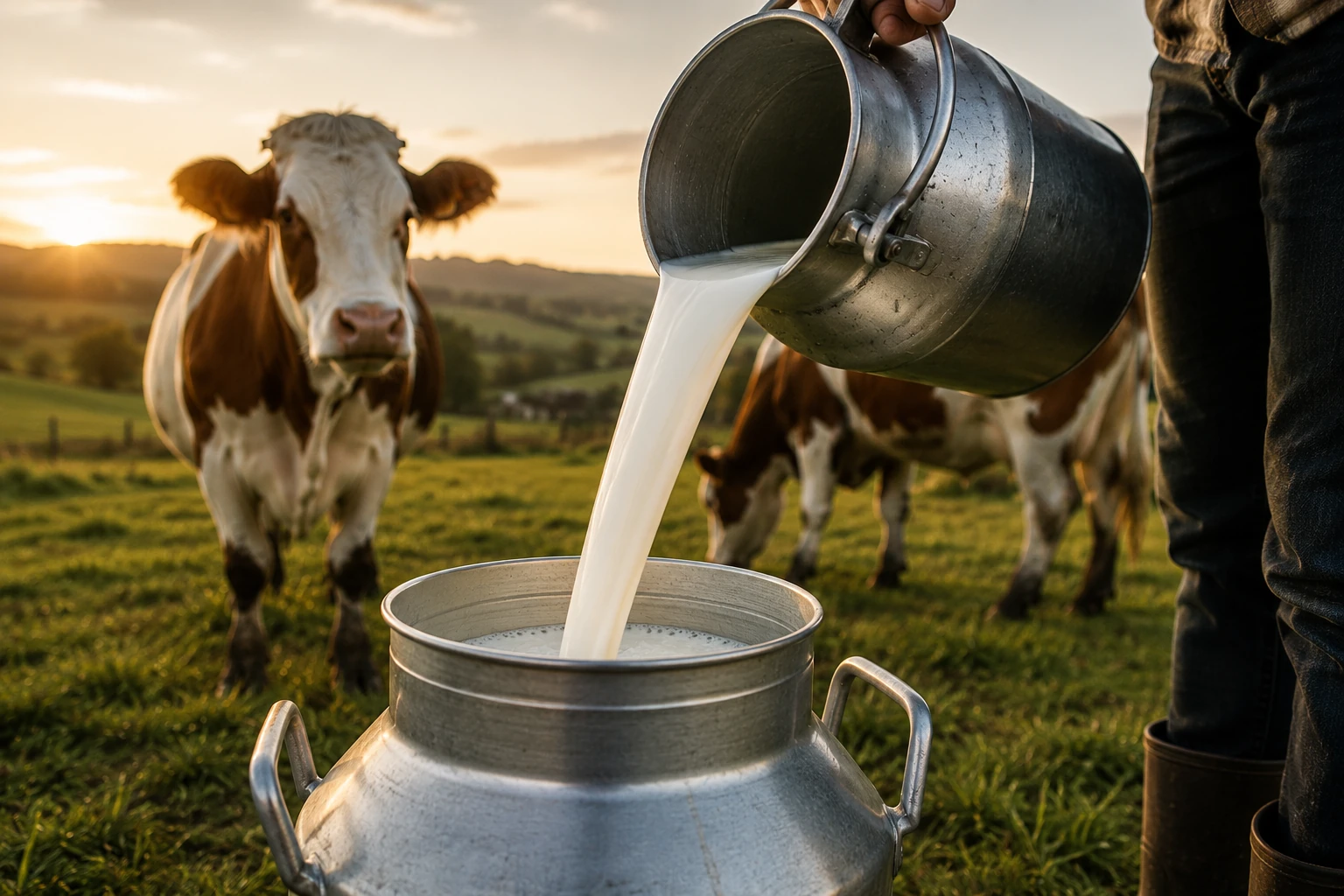
If you spend enough time on social media, you will eventually come across someone pouring a glass of raw milk and talking about how it is “real food.” It has become a symbol of everything from traditional farming to skepticism of modern food processing. Celebrities drink it. Wellness influencers swear by it. Farmers’ markets have waiting lists for it. In some circles, raw milk has become less of a beverage and more of a philosophy.
The strange part is that this debate is not really about milk.
It is about trust.
Do you trust the systems that have spent the last century making food safer, or do you trust small producers who argue that nature already got it right?
The answer is not as simple as either side would like you to believe.
What Is Raw Milk?
Raw milk is simply milk that has not been pasteurized.
Pasteurization, developed by Louis Pasteur in the 19th century, heats milk to a specific temperature for a short period of time to kill harmful bacteria. It does not sterilize the milk or remove nutrients in any meaningful amount. It simply reduces the chance that dangerous microorganisms survive.
Virtually all grocery store milk in the United States is pasteurized.
Raw milk skips that step entirely.
Why People Drink It
They Believe It Is More Nutritious
One of the biggest claims from raw milk supporters is that pasteurization destroys vitamins, enzymes, and beneficial bacteria.
There is a grain of truth here.
Heating milk does slightly reduce a handful of heat-sensitive nutrients, particularly vitamin C and some enzymes. But milk was never an important source of vitamin C in the first place, and the protein, calcium, vitamin D when fortified, phosphorus, riboflavin, and most other nutrients remain essentially unchanged after pasteurization.
Most nutrition researchers conclude that the nutritional differences are relatively small.
They Prefer the Taste
This is probably the strongest argument in favor of raw milk.
Fresh raw milk often tastes richer, sweeter, and more complex because it has not been homogenized or heated. Many people describe it as tasting like fresh cream rather than supermarket milk.
Taste is subjective, but plenty of people who have tried both genuinely prefer raw milk.
They Support Local Farms
Raw milk buyers often know exactly where their milk came from.
Instead of purchasing milk from enormous processing plants that mix milk from hundreds of farms, they are buying directly from a nearby dairy.
For many consumers, that is part of the appeal.
They See It as More Natural
Raw milk has become part of a broader movement toward minimally processed foods.
The same people who buy pasture-raised eggs, sourdough bread, grass-fed beef, and fermented vegetables often see raw milk as another way of eating closer to traditional agriculture.
For some, it is about nutrition.
For others, it is about rejecting industrial food production.
What Does the Science Say?
This is where things become more controversial.
Many claims made by raw milk advocates have been studied extensively.
The evidence for major health benefits remains limited.
Research has not consistently shown that raw milk improves digestion, boosts immunity, cures allergies, or provides dramatically better nutrition than pasteurized milk.
Some people who struggle with commercial milk report that they tolerate raw milk better, but scientists are not entirely sure why. It could be differences in processing, differences in the cows’ diet, or simply individual variation.
So far, no large body of evidence has demonstrated broad health advantages.
The Real Downside
The risk is not theoretical.
Raw milk can contain dangerous bacteria, including:
- Salmonella
- E. coli
- Listeria
- Campylobacter
- Brucella
Healthy-looking cows can carry these bacteria without appearing sick.
Even exceptionally clean farms cannot eliminate every possible source of contamination because bacteria can enter the milk during the milking process itself.
Most people who become ill recover, but some do not.
Children, pregnant women, older adults, and people with weakened immune systems face the greatest risk.
Serious complications can include kidney failure, miscarriage, bloodstream infections, paralysis, and, in rare cases, death.
These are not common outcomes, but they are the reason public health agencies continue recommending pasteurized milk.
But People Drank Raw Milk for Thousands of Years
They did.
They also suffered foodborne illnesses far more frequently than we do today.
Before pasteurization became widespread in the early 1900s, milk was a common source of diseases like tuberculosis, typhoid fever, diphtheria, and scarlet fever. Infant mortality linked to contaminated milk was dramatically higher than it is today.
Pasteurization was not introduced because scientists wanted processed food.
It was introduced because contaminated milk was killing people.
Why Is It Becoming Popular Again?
Several cultural trends have collided at once.
People increasingly distrust large institutions.
Consumers are looking for foods with fewer ingredients.
Interest in regenerative agriculture has exploded.
Social media rewards content that feels secret, exclusive, or contrary to conventional wisdom.
Raw milk checks every one of those boxes.
Owning a jar of raw milk has become, for some people, a statement that says, “I do not buy what mainstream nutrition is selling.”
That identity can sometimes become more powerful than the science itself.
Is It Worth It?
For healthy adults who understand the risks, the decision often comes down to personal values.
If you love the taste, know the farmer, and are comfortable accepting a higher risk of foodborne illness, you may decide it is worth it.
If your primary goal is better nutrition, however, the evidence simply is not very strong. Pasteurized milk provides nearly all the same nutritional benefits while dramatically reducing the risk of dangerous bacterial infections.
That is why nearly every major public health organization, including the CDC, FDA, American Academy of Pediatrics, and World Health Organization, continues to recommend pasteurized milk, particularly for children and pregnant women.
The Bottom Line
The raw milk debate often gets framed as “nature versus science,” but that is a false choice.
Raw milk is not poison, and it is not a miracle food.
It is simply milk that carries both potential benefits and measurable risks.
The upside is mostly about taste, local farming, and personal preference.
The downside is that skipping pasteurization also skips one of the most successful food safety interventions ever developed.
Whether that is a worthwhile tradeoff depends less on ideology and more on how much risk you are willing to accept for a product that, nutritionally speaking, is not dramatically different from the pasteurized version sitting in your grocery store refrigerator.