People hear the word “headache” and immediately think they understand.
They don’t.
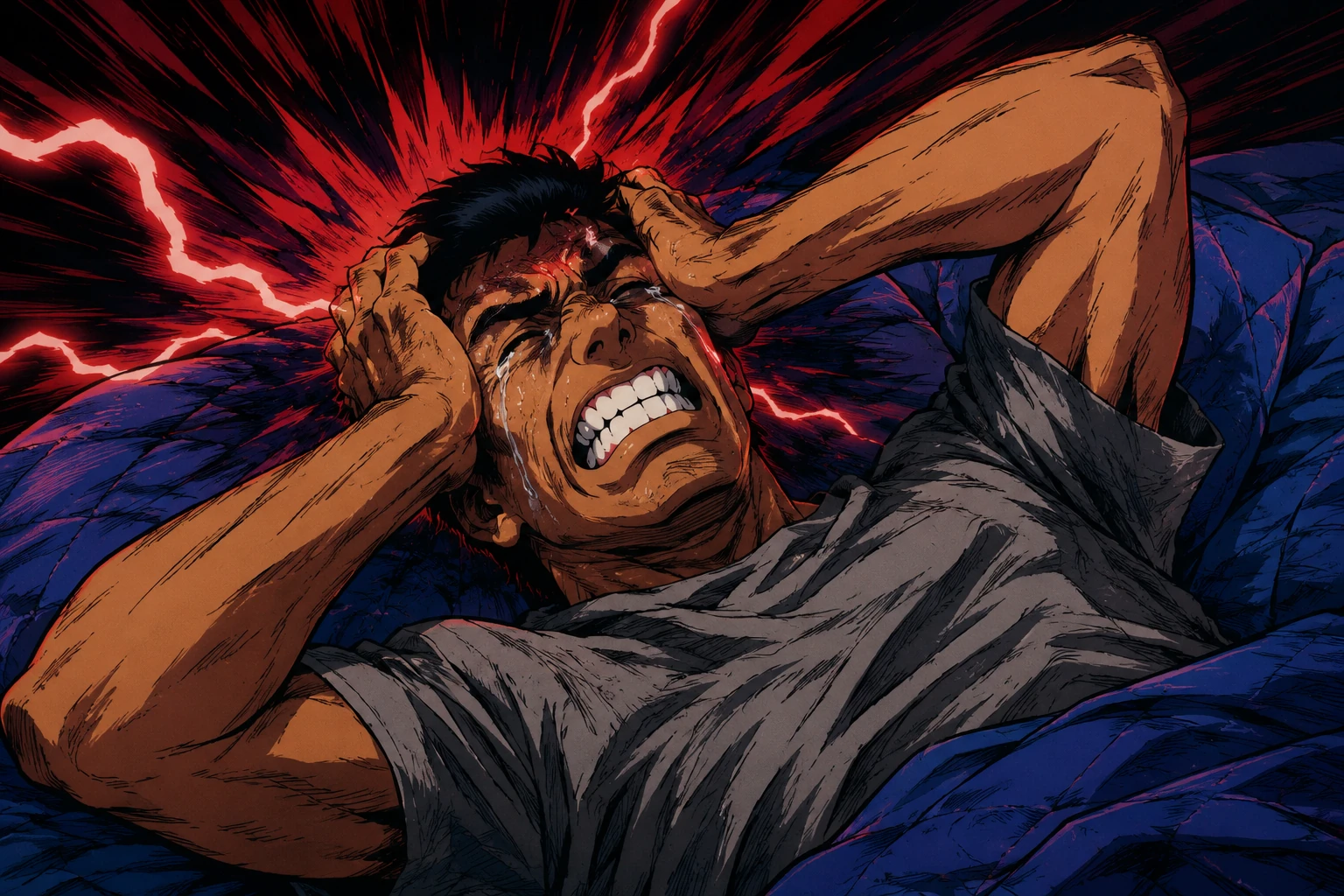
What I have isn’t something you lie down with until it passes. It isn’t something you take an aspirin for and complain about at work. It’s something that completely takes over your body, your mind, and eventually your life.
I’ve lived with chronic cluster headaches for years. Not once a month. Not a bad week every now and then. Every single day. Usually two or three attacks. Sometimes more. There are no seasons where I get a break. There is no “cluster period” followed by months of relief. Mine never really leaves.
People call cluster headaches the most painful condition known to medicine. I don’t know if that’s scientifically true, but I know this: every attack convinces me it’s the worst pain I’ve ever experienced, even though I’ve survived thousands of them.
And somehow, every single time, my brain whispers the same thing.
“This one might actually kill you.”
Before an attack fully hits, I usually get what we call a shadow.
It’s not an aura like migraine sufferers describe. It’s more like a warning siren. About a minute before everything falls apart, something feels different. My eye starts to feel strange. There’s pressure building behind it. I know exactly what’s coming.
That one minute is enough to excuse myself from whatever I’m doing.
If I’m at work, I tell my coworkers, “It’s happening.”
Then I disappear.
I’ve become incredibly good at finding bathrooms.
The pain comes so fast there’s no point trying to finish a conversation. Talking becomes impossible anyway. Thinking becomes impossible. The only thing that exists is surviving the next thirty minutes to an hour.
When people imagine unbearable pain, they picture someone lying perfectly still.
Cluster headaches are the opposite.
I can’t sit.
I can’t lie down.
I pace.
I walk circles through my apartment. Up the hallway. Around the kitchen. Back through the living room. Again. Again. Again.
Movement doesn’t stop the pain.
It just gives me something to do besides scream.
Sometimes I spend the entire attack standing under a shower because hot water helps.
Other times only freezing cold water feels right.
I can’t explain why.
When you’re desperate enough, you stop asking why.
You just chase whatever gives you even one percent less pain.
I’ve developed dozens of little rituals over the years.
None of them cure anything.
Together they might shave the sharpest edge off the attack.
When pain reaches that level, you’ll try anything.
I’ve taken medications that require regular liver and kidney monitoring because they can be so hard on the body. Topamax. Lithium. Sibelium. Triptans that usually don’t work fast enough. Oxygen worked for a while until it didn’t anymore.
People always ask what finally fixed it.
Nothing fixed it.
That’s probably the hardest part.
You become an unwilling expert on your own disease.
I’ve learned what triggers mine.
Alcohol.
Chocolate.
Yogurt.
Strong perfume.
Cigarettes.
Sleep deprivation.
Some days it feels like the entire world is conspiring to set one off.
I’ve tried healthier living.
Exercise.
Breathing techniques.
Yoga.
Some of it genuinely helps me cope better, even if it doesn’t make the disease disappear.
I’ve experimented with things I never imagined I would consider because when someone tells you they found relief, you listen.
When pain dominates your life, your standards change.
One thing people don’t understand is how lonely this illness becomes.
During an attack I don’t want comfort.
I don’t want someone rubbing my back.
I don’t want encouragement.
I don’t even want eye contact.
Leave me alone.
Please.
Don’t touch me.
Don’t talk to me.
Pretend I don’t exist until it’s over.
Not because I don’t appreciate the people around me.
Because the pain turns everything into anger.
I’ve snapped at people I love.
I’ve said things I regret.
Eventually I had to explain to everyone close to me that if they see my eye tearing, my nose running, sweat pouring off me while it’s freezing outside, they shouldn’t take it personally if I ignore them.
I’m fighting something they can’t see.
The psychological toll is almost worse than the physical one.
Outside an attack I’m usually okay.
During an attack?
Your brain goes to dark places.
People wonder why cluster headaches earned the nickname “suicide headaches.”
It’s because pain changes the conversation inside your head.
Not because you want to die.
Because, in those moments, your brain desperately wants the pain to stop.
There have been attacks where I curled up in the bathroom wishing I could simply disappear.
Then the attack ends.
And life resumes.
Until the next one.
The schedule almost makes it crueler.
Mine are predictable enough that I know roughly when they’re coming.
One wakes me around two in the morning.
Another around seven.
Then usually another sometime during the afternoon.
Imagine living with an alarm clock that doesn’t wake you for work.
It wakes you for agony.
Sleep becomes something you fear because sometimes sleeping is exactly what brings the next attack.
People offer advice constantly.
“Drink more water.”
“Try this vitamin.”
“My cousin had migraines…”
That’s another thing.
Cluster headaches aren’t migraines.
Migraine sufferers have my complete sympathy, but they’re different experiences.
When someone compares them, it usually comes from a good place.
But it still feels like explaining a house fire to someone who’s only seen a candle.
Every attack reminds me that there are levels of pain most people will thankfully never understand.
Still, life somehow keeps going.
I go to work.
I make plans.
I laugh.
I live between attacks.
That’s probably what surprises people the most.
You adapt.
Not because you’re brave.
Because humans adapt to almost anything if they have no other choice.
Hope comes in strange places.
Sometimes another sufferer tells me about a new treatment.
Someone mentions a clinical trial.
Someone suggests an implanted device.
Someone else says they finally found relief after years of trying.
I don’t know whether any of those things will work for me.
But you learn to collect hope wherever you can find it.
Because hope is one of the few things this disease hasn’t managed to take away.
People often ask me what cluster headaches are like.
I never know how to answer.
How do you describe pain that erases language?
How do you explain something that makes you pace your apartment until sunrise because standing still somehow hurts even more?
How do you explain planning your life around bathrooms, showers, medication schedules, and the next attack you know is coming?
Maybe the simplest answer is this.
I’m not afraid of pain anymore.
I’m afraid of knowing that in a few hours, I’ll have to survive it all over again.
And despite everything…
I still do.