People hear the words Fetal Alcohol Syndrome and immediately picture someone who can’t function. They imagine someone incapable of holding a job, maintaining relationships, or living independently. I understand why. Most people only ever hear about the most severe cases.
I’m not one of them.
I have a job. I own a home. I’m engaged to someone I love. I’m helping raise two incredible stepboys, and one day I still hope to become a mom myself.
But that doesn’t mean my life has been easy.
I was born after my biological mother drank throughout her pregnancy and used cocaine. I arrived at 37 weeks weighing just four and a half pounds. I was later diagnosed with Fetal Alcohol Syndrome and prenatal cocaine exposure. I don’t remember any of that, obviously, but I’ve spent my entire life living with the consequences.
As a kid, I always knew something felt different.
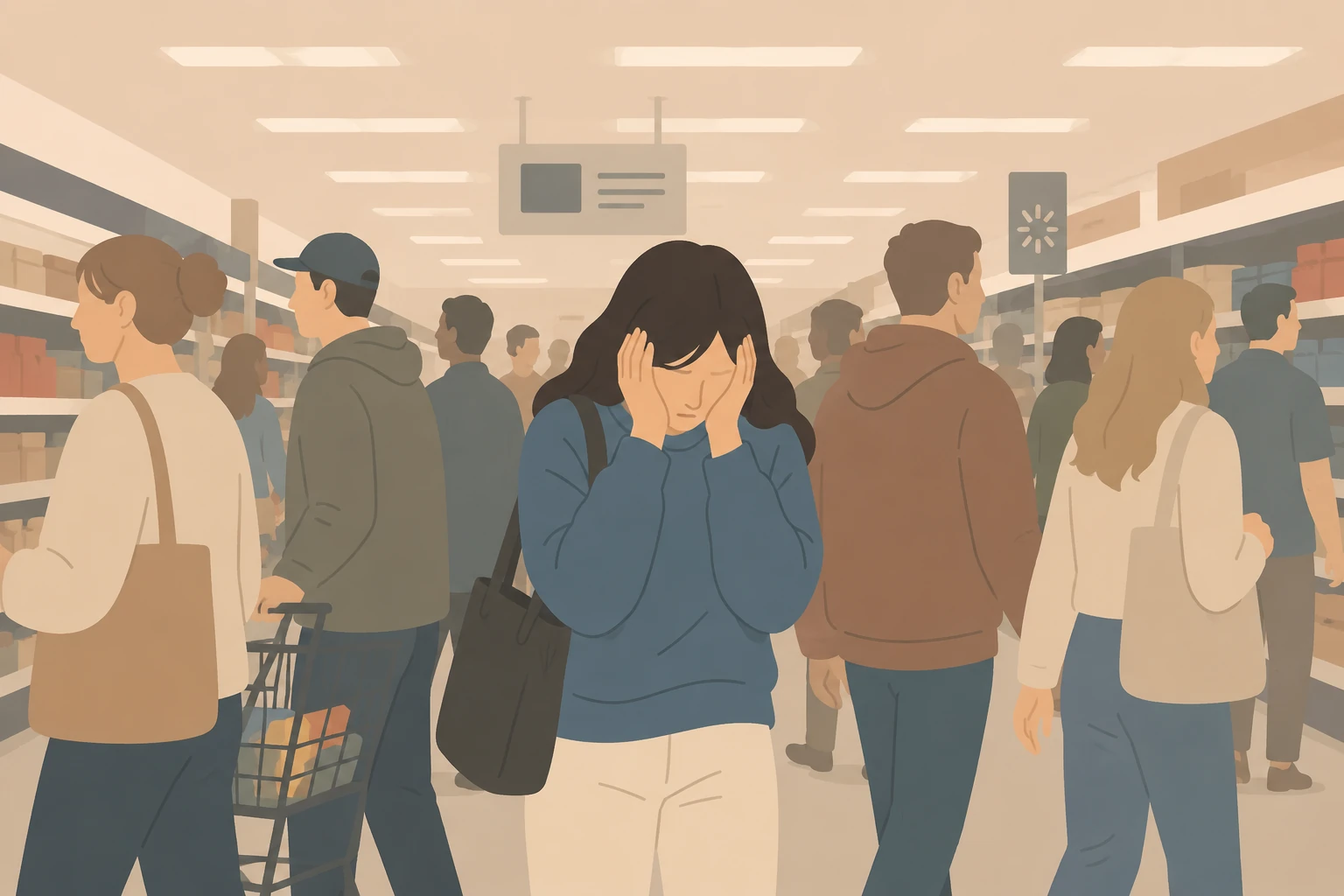
Loud noises overwhelmed me in a way I couldn’t explain. Busy environments felt unbearable. If I became overstimulated, I’d completely melt down. I was clumsy because my reflexes weren’t developing normally. When I fell, I wouldn’t even put my hands out to catch myself. I knocked out one of my front teeth that way and spent years in occupational therapy learning things that came naturally to other kids.
The hardest part wasn’t struggling.
It was not understanding why.
I was adopted, and although my parents loved me deeply, they tried to protect me from some of the painful parts of my story. I actually learned I was adopted because a cousin accidentally told me when I was six. Years later, my mom explained that I’d been exposed to alcohol and cocaine before I was born, but the conversation stayed pretty surface level. I knew the facts without really understanding what they meant.
It wasn’t until I was around eighteen that everything finally clicked.
I found my adoption records while digging through storage boxes. My mom had told me they didn’t exist, but there they were. Reading the medical reports was surreal. Doctors had documented physical features associated with FAS, noted that I’d gone through withdrawal after birth, and described things I’d never known about myself. Seeing it all written down was like reading someone else’s life, except it was mine. Suddenly, so many things I’d struggled with made sense.
Even now, my brain doesn’t always cooperate.
Emotions hit me harder than they seem to hit other people. Frustration can become overwhelming in seconds. Sometimes I shut down completely. Other times I get intensely angry before I’ve even realized what’s happening. I become overstimulated easily. I misread people’s tone, especially over text. Eye contact can feel uncomfortable. I constantly second-guess how I’m coming across to other people.
Most people don’t see any of that.
They see someone who’s functioning normally because I’ve spent years learning how to hide it.
That’s exhausting.
There are days when I feel like I’m acting my way through life, trying to look “normal” while my brain is working twice as hard just to keep up.
Therapy has probably saved my life more than once.
I’ve learned that I can’t force my brain to work like everyone else’s. What I can do is build my life around how it actually works. I depend on routines, reminders, and breaking big tasks into smaller ones. When I feel myself getting overwhelmed, I step away before everything boils over. Instead of fighting against my brain every day, I’ve slowly learned to work with it.
People often ask if I blame my biological mother.
That’s a difficult question.
I understand addiction. As a teenager, I made plenty of bad choices myself. I know how powerful it can be.
What I struggle to understand is knowingly continuing to drink and use drugs while pregnant. When I eventually met my biological mother, she told me she missed her abortion appointment and thought continuing to use drugs would end the pregnancy. Instead, it permanently changed mine. She never apologized. She never showed remorse.
That hurt more than I can describe.
For a long time, I carried that anger everywhere.
Therapy hasn’t erased it, but it’s helping me figure out how to live without letting it define me. Some people tell me I need to forgive her. Maybe someday I will. Maybe I won’t. Right now, I’m just trying to build a life that’s bigger than what happened before I was born.
Thankfully, I wasn’t alone.
My adoptive parents never gave up on me. They fought for therapy. They found specialists. They spent years helping me learn skills that many people never have to think about. Looking back, I honestly don’t know where I’d be without them. They gave me stability when my life could have gone in a very different direction.
Today, I work full time. I’m in college. I’m engaged to an incredible man, and being part of my stepboys’ lives has changed me in ways I never expected.
People sometimes assume my diagnosis means I shouldn’t have children.
They couldn’t be more wrong.
Loving those boys has shown me that being a parent isn’t about having a perfect brain. It’s about showing up every day, learning from your mistakes, asking for help when you need it, and loving your kids with everything you’ve got. That’s something I’m fully capable of doing.
Earlier this year, my fiancé and I lost a pregnancy after I developed severe hyperemesis gravidarum. It was one of the hardest experiences of my life. Even so, I haven’t given up on becoming a mother. If anything, it’s made me even more determined to prepare medically, emotionally, and financially when we try again someday.
The biggest misconception about Fetal Alcohol Syndrome is that people assume they already know what my life looks like.
They don’t.
Some people with FAS need lifelong support. Others live independently. Some struggle academically. Others excel in school, music, or writing. Every person is different.
A diagnosis tells you what challenges someone might face.
It doesn’t tell you what they’re capable of becoming.
If there’s one thing I wish people understood, it’s that I don’t wake up every morning thinking about my diagnosis.
I wake up thinking about work, my family, bills, dinner, my fiancé, my future, and everything else that fills an ordinary life.
The diagnosis is part of me.
It just isn’t all of me.
My biological mother’s choices will always be part of my story, but they don’t get to write the ending.
I do.