
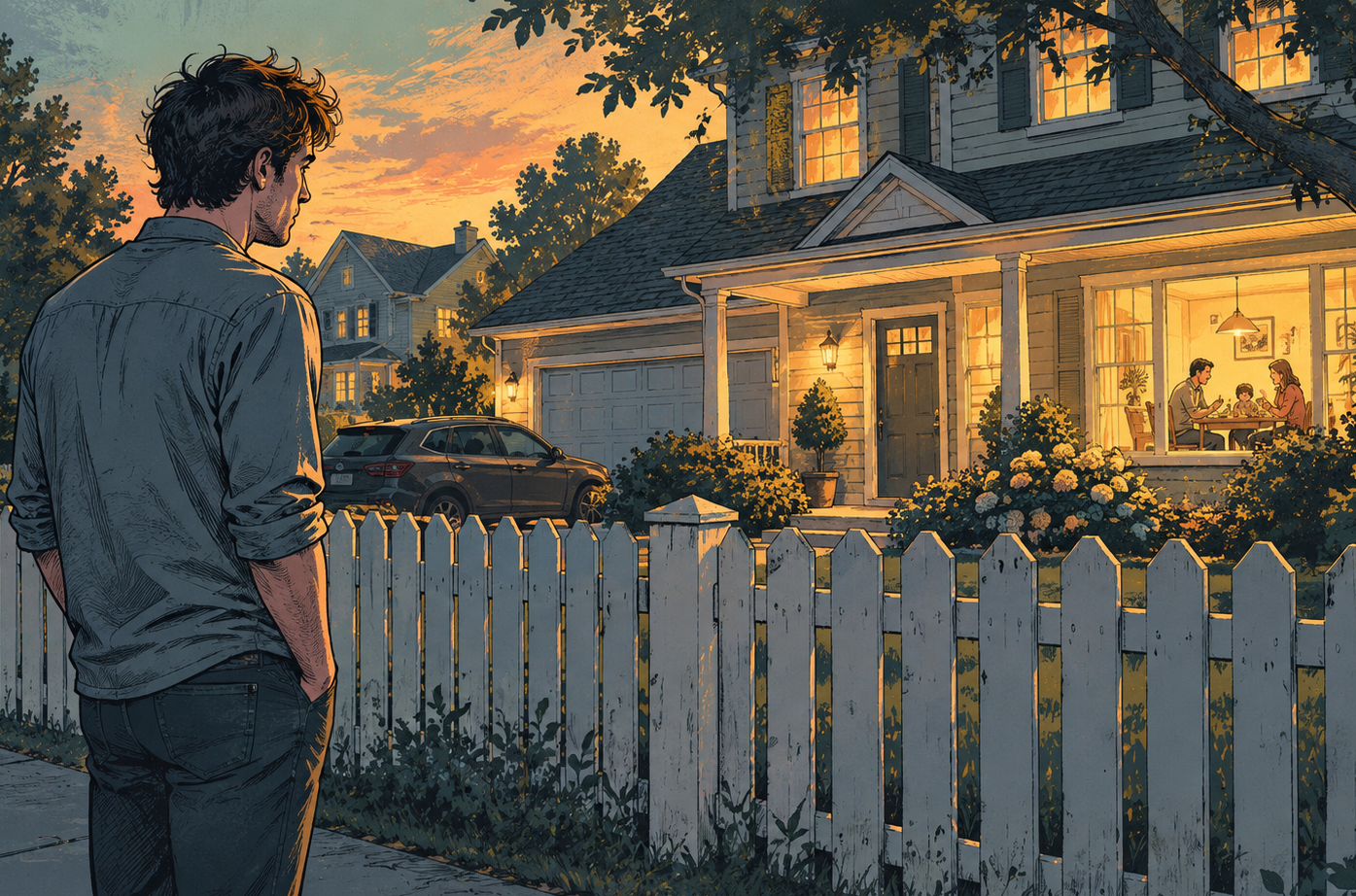
For generations, Americans believed in a simple promise.
Work hard. Get an education. Find a decent job. Buy a house. Raise a family. And if you make the right decisions, your children will have a better life than you did.
That was the American Dream.
But millions of young Americans are beginning to wonder whether that promise still means anything.
They’re working full time, earning degrees, and trying to make responsible decisions. Yet homeownership feels impossible, raising children looks like a financial gamble, and getting ahead seems harder than ever.
And that raises a troubling question.
What happens to a society when an entire generation stops believing that hard work will lead to a better future?
The American Dream was never just about owning a house or making a lot of money. It was about believing that tomorrow could be better than today.
That belief gave people a reason to work overtime, save money, start businesses, and make sacrifices for their children. When people believe their efforts will eventually pay off, they’re willing to endure temporary hardship.
But when they start believing the system is stacked against them, their behavior changes.
What Happens When Working Hard Stops Feeling Worth It?
Imagine you’re 28 years old.
You went to college because everyone told you education was the ticket to a better life. You graduated with student loans, found a job, and started working full time.
You don’t live extravagantly. You drive an older car, cook most of your meals, and try to save whatever you can.
But rent eats up a huge portion of your paycheck. Groceries keep getting more expensive. Buying a house feels like something that might happen in another lifetime.
Meanwhile, you watch people who bought homes fifteen years ago build wealth simply because they entered the market at the right time.
You look at your parents’ generation and realize that many of the milestones they reached on ordinary salaries now require significantly more money.
At some point, you start asking yourself a dangerous question.
What’s the point of working this hard if I’m never going to get ahead?
That question has consequences.
People may become less willing to work extra hours, pursue demanding careers, or make sacrifices for promotions that don’t meaningfully improve their quality of life.
Some stop chasing traditional career success altogether. Others turn to side hustles, freelancing, or speculative investments, hoping to find a faster path to financial independence.
And some simply lower their expectations.
Instead of dreaming about owning a home, they focus on making rent.
Instead of planning for retirement, they concentrate on surviving the next few months.
Instead of building a future, they learn to survive the present.
That’s not necessarily laziness. It’s what happens when people stop believing the rewards justify the sacrifices.
Marriage and Children Start Looking Like Financial Risks
When financial stability feels permanently out of reach, people start postponing the milestones that once defined adulthood.
Marriage. Children. Homeownership. Financial independence.
A couple struggling to pay rent may want children but can’t imagine affording childcare, healthcare, and a larger home.
So they wait.
They tell themselves they’ll start a family once they earn more money or feel financially secure. But that moment keeps getting pushed further into the future.
Some eventually decide not to have children at all. Others delay marriage or remain with their parents because living independently would consume nearly everything they earn.
Money isn’t the only reason people make these choices, but financial insecurity makes them harder.
And when millions of people delay or forgo having children, the consequences extend beyond individual families. An aging population can mean fewer workers supporting more retirees, putting additional pressure on retirement systems, healthcare, and economic growth.
There’s also an immediate economic consequence.
The American economy depends heavily on people making long term commitments. Buying homes, starting families, purchasing cars, opening businesses, and investing in their futures.
But when people no longer feel financially secure enough to make those decisions, entire industries can be affected.
A young adult who can’t afford a home isn’t buying furniture or renovating one. A couple who postpones having children spends less on the goods and services associated with raising a family. Someone worried about their financial future may hesitate to start a business.
Individually, these decisions make sense. Collectively, they can reshape the economy.
An economy built around the expectation of future prosperity faces a serious challenge when people stop believing that prosperity is coming.
The Wealth Gap Becomes a Generational Divide
One of the most frustrating aspects of today’s economy is that owning assets can matter just as much as earning a good salary.
Consider two people.
One bought a house fifteen years ago when prices and mortgage rates were much lower. The other is trying to buy that same house today.
The first person has watched the value of their property increase while paying down a relatively affordable mortgage.
The second person might earn a higher salary but still struggle to save enough for a down payment.
Both may work equally hard. But their financial lives can look completely different because of when they entered the housing market.
This creates a growing divide between people who already own appreciating assets and people who are trying to acquire them.
It also makes family wealth increasingly important.
A young adult whose parents can help with a down payment may enter the housing market years before someone who has to save every dollar independently.
That earlier start can compound into a significant financial advantage over time.
The danger is that economic mobility begins to feel less connected to individual effort and more connected to family circumstances.
And when people believe their financial future depends primarily on who their parents are, the American Dream starts looking less like a promise and more like a lottery.
What Happens When People Stop Believing in the System?
The American Dream has always depended on more than individual ambition.
It also depends on trust.
People need to believe that schools provide valuable education, employers reward productive work, and the economic system offers a reasonable opportunity to get ahead.
But when people repeatedly feel that these institutions aren’t delivering, skepticism grows.
A college graduate struggling with debt may question whether higher education was worth the cost.
A worker who sees corporate profits rise while their own purchasing power stagnates may wonder whether loyalty to an employer makes sense.
A renter watching home prices climb faster than their savings may conclude that the economy primarily benefits people who already have money.
Not every one of these conclusions is necessarily correct in every situation. But perceptions matter.
When enough people believe the system no longer offers them a fair opportunity, their willingness to support and participate in that system can weaken.
Some become more cynical about politics and institutions. Others become attracted to leaders promising dramatic change. Some disengage entirely.
And when different generations start blaming each other for problems that have developed over decades, the divisions can grow even deeper.
But the biggest danger isn’t necessarily anger.
It’s hopelessness.
When people believe their actions can improve their circumstances, they have a reason to invest in themselves. They learn new skills, pursue opportunities, build relationships, and make plans for the future.
But when they stop believing their efforts will make a difference, that motivation can disappear.
People may become more withdrawn, more resentful, and less willing to invest in a future they don’t trust.
A society doesn’t need everyone to become wealthy.
But it does need people to believe that their lives can improve.
A Generation Might Start Redefining Success
Of course, losing faith in the traditional American Dream doesn’t necessarily mean giving up on life.
It might mean rejecting the old definition of success.
For decades, Americans were encouraged to measure progress through familiar milestones. A prestigious career. A large house. A new car. A growing salary. A comfortable retirement.
But if those goals begin to feel unattainable, people may start asking whether they’re worth pursuing in the first place.
Maybe success becomes having enough money to live comfortably without constantly worrying about bills.
Maybe it means working fewer hours and spending more time with friends and family.
Maybe it means choosing a smaller home, a less expensive city, or a career that offers flexibility instead of status.
There’s nothing inherently wrong with questioning whether the traditional markers of success actually produce happiness.
But there’s an important distinction.
Are young people rejecting the traditional American Dream because they genuinely want something different, or because they can no longer afford it?
There’s a big difference between deciding you don’t want to own a house and realizing you’ll probably never be able to afford one.
One is a choice.
The other is a limitation.
And a healthy society should offer people meaningful choices about how they want to live.
Can the American Dream Be Rebuilt?
The American Dream was never a guarantee that everyone would succeed.
There have always been people who worked incredibly hard and still struggled. There have always been inequalities, barriers, and economic circumstances beyond an individual’s control.
But the dream was powerful because it offered a sense of possibility.
Rebuilding that belief would require more than telling young people to work harder or spend less money on coffee.
It would mean addressing the obstacles that make financial stability difficult to achieve, from housing and education costs to healthcare, wages, and the ability to build wealth.
None of these problems has a simple solution.
And there’s no reason to assume that every generation should expect exactly the same lifestyle as the one before it.
But people need to believe that responsible decisions, hard work, and persistence can meaningfully improve their circumstances.
Without that belief, the relationship between individuals and society begins to weaken.
The Bottom Line
The greatest danger of an entire generation losing faith in the American Dream isn’t that fewer people will own homes or drive nice cars.
It’s that millions of people may stop believing they have a meaningful stake in the future.
They’ll keep working, paying bills, and going through the motions. But underneath it all, they’ll wonder why they’re participating in a system that no longer seems to offer them a realistic path toward a better life.
The American Dream doesn’t have to mean a suburban house, two children, and retirement at 65.
It can change.
But it has to preserve one fundamental promise: that ordinary people have a reasonable chance to improve their lives through their own efforts.
Because when people stop believing tomorrow can be better than today, they don’t just lose faith in the American Dream.
They start losing faith in the society that promised it to them.