
I don’t expect anyone to automatically believe me.
In fact, if there’s one thing I hope you take away from my story, it’s that you shouldn’t.
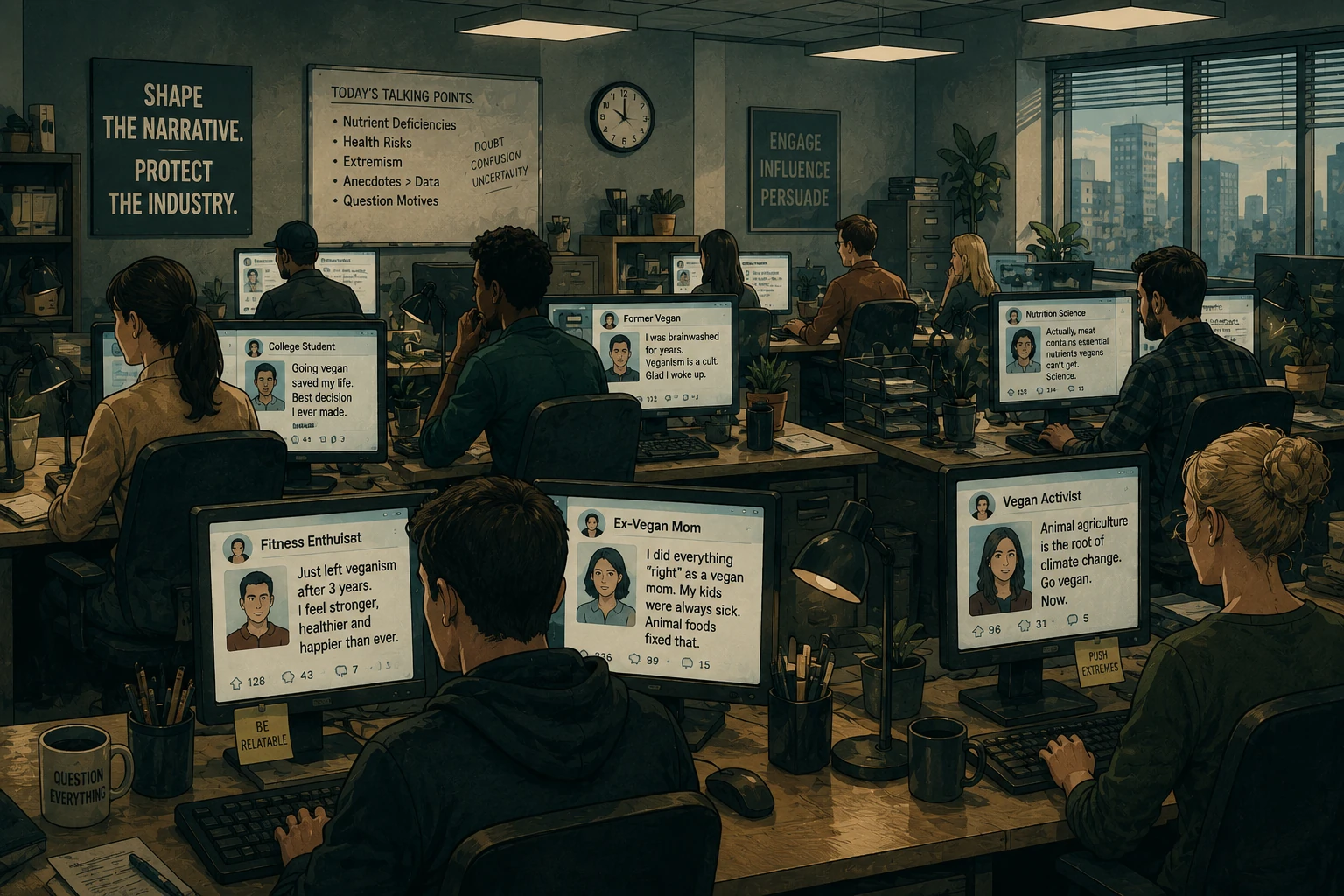
For about a year, I worked for a public relations contractor whose job was to influence conversations online. I won’t name the company. I signed paperwork that still makes me careful about specifics. But I can tell you what the work actually looked like, because the public imagines armies of sophisticated hackers sitting behind glowing monitors. The reality was much more ordinary.
It looked like an office.
Rows of desks.
Cheap monitors.
Bad coffee.
People showing up at nine in the morning to spend eight hours pretending to be someone else.
When people imagine propaganda, they think of governments. What I learned is that corporations are perfectly capable of running their own versions when enough money is on the line.
I Didn’t Think I Was Doing Anything Wrong
When I first got hired, it honestly sounded funny.
The assignment wasn’t “spread lies.”
It was framed as protecting an industry from unfair criticism.
Marketing.
Reputation management.
Digital engagement.
Everyone has their own vocabulary for making questionable work sound respectable.
I wasn’t recruited because I knew anything about nutrition.
I wasn’t recruited because I had experience debating vegans.
I was recruited because I knew how Reddit worked.
How Facebook worked.
How X worked.
How people argue online.
That was the qualification.
The first week almost felt like improv comedy.
We’d invent characters.
A thirty-five-year-old father who “had to quit veganism because his doctor begged him to.”
A former vegan athlete who “lost all his muscle.”
A worried mother.
A college student.
Someone pretending to be an ex-vegan who had escaped “the cult.”
The stories weren’t supposed to be outrageous.
The outrageous ones get ignored.
The believable ones spread.
The Best Lie Is Mostly True
One thing surprised me.
We almost never created lies completely from scratch.
That’s not how misinformation works.
Instead, we’d take something technically true and stretch it until it became something false.
A nutrient that’s harder, but absolutely possible, to obtain on a vegan diet?
That became proof the diet was dangerous.
One obscure study?
Now it represented scientific consensus.
One influencer quitting veganism?
Suddenly everyone was quitting.
Someone with an eating disorder?
We’d quietly imply veganism caused it.
You don’t need to manufacture reality when you can simply distort it.
That’s far more effective.
We Didn’t Just Attack
The thing people misunderstand is that we weren’t always arguing against vegans.
Sometimes we pretended to be them.
That was one of the stranger parts of the job.
We’d create accounts that were intentionally obnoxious.
Extremely judgmental.
Completely unreasonable.
We’d push discussions toward extremes because extreme people are easy to mock.
If someone wandered into a vegan subreddit out of curiosity and the loudest voices sounded unhinged, maybe they’d never come back.
Mission accomplished.
Sometimes we’d fill communities for former vegans with stories that never happened.
Sometimes we’d jump into celebrity discussions whenever an actor talked about factory farming.
Anywhere the topic started trending, we’d already be there.
The goal wasn’t always to convince.
Sometimes it was simply to muddy the water.
If enough contradictory stories exist, people stop trying to figure out what’s true.
They shrug.
“Who knows?”
And that uncertainty often benefits the status quo.
We Had More Accounts Than People
Every employee managed multiple identities.
Different usernames.
Different personalities.
Different writing styles.
Some accounts were years old.
Some were brand new.
Some existed only to agree with another fake account we’d made.
If you’ve ever seen a Reddit thread where three strangers seem to magically support one another’s argument, maybe they were genuine.
Maybe they weren’t.
I honestly don’t know anymore.
That’s the hardest part.
After doing this work, I lost the ability to take the internet at face value.
Not because everyone is fake.
But because enough people are.
Reddit Was Gold
Reddit was one of our favorite places.
Not because people there are gullible.
Because Reddit is measurable.
You can see views.
Upvotes.
Comment rankings.
You know exactly what catches attention.
You know which emotional buttons people respond to.
And unlike platforms built around personal identities, Reddit lets anonymous strangers build credibility over time.
We’d farm karma.
Post normal things.
Comment about movies.
Sports.
Video games.
Pets.
Then months later we’d use that same account to push whatever narrative we wanted.
The account looked authentic because, in a way, it was.
It just wasn’t authentic in the moments that mattered.
The Office Never Felt Evil
This is the part people probably won’t like hearing.
Nobody walked around twirling a mustache.
Nobody talked about manipulating the public.
Most of my coworkers were just people paying rent.
Some thought the job was hilarious.
Some genuinely believed they were defending American agriculture.
Some never questioned it at all.
That’s probably the most unsettling realization.
History trains us to imagine bad people doing bad things.
Reality is usually ordinary people doing ordinary jobs one spreadsheet at a time.
The Moment It Stopped Being Funny
At first we’d laugh.
Someone would invent a ridiculous story and watch hundreds of people believe it.
It felt like winning a prank.
Then I started reading the replies more carefully.
People weren’t debating abstract ideas.
They were making decisions.
Changing diets.
Arguing with family members.
Questioning doctors.
Trying to become healthier.
Trying to become better people.
Some of them genuinely thanked our fake accounts for helping them.
That’s when the joke stopped being funny.
Because they weren’t laughing with us.
They were trusting us.
The Internet Doesn’t Reward Truth
One thing this job taught me is that social media platforms don’t really optimize for accuracy.
They optimize for engagement.
And engagement doesn’t care whether something is true.
Only whether people react.
Fear spreads.
Outrage spreads.
Personal stories spread.
Especially stories that begin with:
“I used to believe…”
“As someone who…”
“I almost died because…”
Those are incredibly persuasive.
Even when they’re fictional.
Especially when they’re fictional.
Why I’m Talking About It
People keep asking whether I feel guilty.
Yes.
More than I realized at the time.
I didn’t quit because I suddenly became vegan.
I’m still not.
I quit because I realized I wasn’t arguing ideas anymore.
I was manipulating strangers.
People who had no reason to think the person they were talking to didn’t exist.
Maybe this story won’t change anyone’s opinion about eating meat.
That’s fine.
It isn’t really about meat anymore.
It’s about the internet.
Because once you’ve spent months manufacturing consensus, you begin seeing how easily consensus can be manufactured elsewhere.
Politics.
Health.
Climate.
Finance.
Technology.
Culture.
If someone is willing to spend millions protecting a product as ordinary as hamburgers, what do you think happens when the stakes are elections, wars, or trillion-dollar industries?
That’s the question that still bothers me.
So, Should You Believe Me?
Honestly?
No.
Not automatically.
Check sources.
Read studies yourself.
Question emotional stories.
Question mine.
Because the biggest lesson I learned wasn’t how to manipulate people.
It was how astonishingly easy it is to manipulate people who stop asking questions.
And the most dangerous lie on the internet isn’t necessarily the one that’s completely false.
It’s the one that’s just believable enough that nobody bothers to check.