
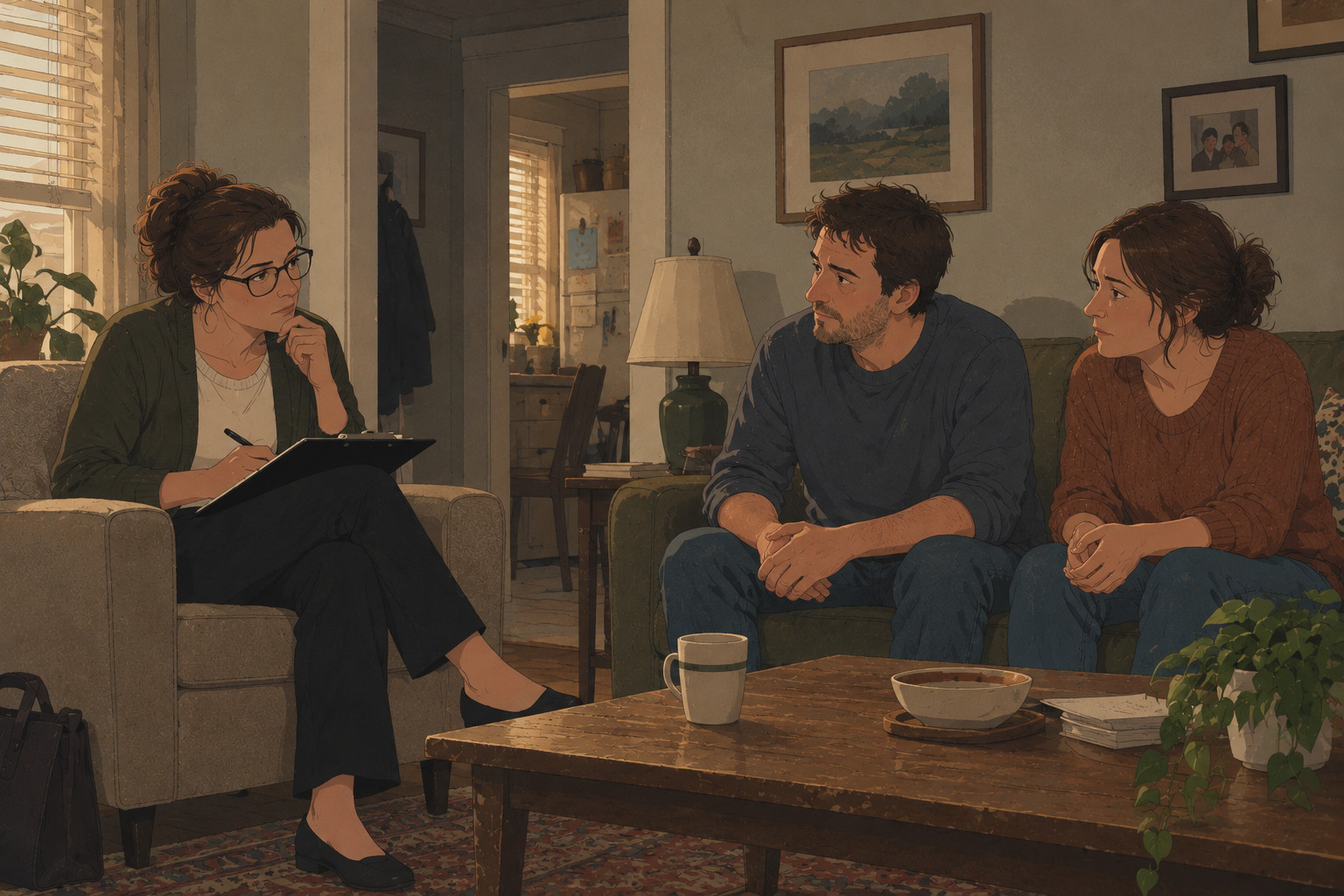
For more than a decade, I’ve worked as a social worker, assessing people who want to become foster parents, adoptive parents, or permanent guardians of children already in their lives.
Essentially, part of my job is deciding whether someone should be trusted to raise a child.
And I can tell you that after ten years of sitting in people’s living rooms, asking deeply personal questions, and hearing things most people would never dream of admitting to a stranger, I’ve learned that appearances mean very little.
I’ve met people with beautiful homes, stable marriages, good jobs, spotless criminal records, and seemingly perfect lives who had absolutely no business becoming foster parents.
I’ve also met people with troubled childhoods, criminal histories, financial struggles, and enough personal baggage to fill a moving truck who turned out to be extraordinary caregivers.
The difference isn’t always obvious. Sometimes it’s not obvious at all.
That’s what makes this job so difficult.
A typical home study takes somewhere between eight and twelve weeks. I visit the family’s home several times, interview everyone involved, explore their childhoods, relationships, beliefs, finances, parenting philosophies, and personal histories. Then I write a report that can run 35 to 45 pages.
My recommendation is reviewed by a supervisor, who can overturn it. In more than a decade, that’s only happened to me once.
I take that responsibility incredibly seriously because the consequences of getting it wrong can be devastating.
And I have gotten it wrong.
One of the hardest experiences of my career involved a family I approved to care for a child. Everything seemed fine during the assessment. I had no indication that anything sinister was happening.
Later, the child disclosed to a trusted adult that they were being sexually abused by someone in the home.
The child was removed, but the person responsible had come frighteningly close to being allowed to adopt them.
And I had helped make that possible by approving the family.
I still think about that.
People sometimes imagine that abusers are easy to spot. That there must be something obviously wrong with them, some disturbing behavior or unmistakable warning sign.
I wish that were true.
Some of the most dangerous people are charismatic, articulate, and exceptionally good at presenting themselves as trustworthy. They know how to tell you what you want to hear.
As a social worker, I can ask questions, investigate inconsistencies, review records, and observe family dynamics. But ultimately, much of what I do depends on people telling me the truth.
I cannot accuse someone of something simply because I have a feeling about them. I need concrete evidence.
And sometimes there isn’t any until it’s too late.
Over the years, I’ve heard confessions that would shock most people.
I’ve had someone reveal that their partner possessed child sexual abuse material. I’ve had someone admit to manslaughter. I’ve spoken with young children who disclosed abuse and older children who revealed troubling secrets about their parents.
I’ve had a teenager come out to me as queer while begging me not to tell their family.
I’ve had children break down emotionally during assessments, only to discover later that something terrible had been happening behind closed doors.
I’ve also encountered couples struggling with pornography addiction, and I’ve suspected domestic abuse in relationships where I couldn’t gather enough evidence to confirm it.
You learn very quickly that the version of a family presented to the outside world is not necessarily the version that exists behind closed doors.
But here’s something that surprises people.
One of the biggest red flags I encounter isn’t a criminal record, a history of addiction, or childhood trauma.
It’s conditional love.
Some prospective foster parents genuinely believe they’re wonderful candidates because they’re married, financially comfortable, religious, and have raised their own children.
Then I ask what they would do if a foster child came out as gay.
And suddenly, their willingness to be a parent has conditions.
I’ve had applicants tell me they would send that child back to Children’s Services.
Think about that for a moment.
A child who has already experienced enough trauma to enter foster care finally begins to feel safe in a new home. They develop enough trust to reveal something deeply personal about themselves.
And the people who promised to care for them decide they no longer want them.
That’s an absolute dealbreaker for me.
It’s not about whether I personally agree with someone’s religious beliefs or political opinions. I’m not allowed to reject applicants simply because I disagree with their worldview, nor would I want to.
But when those beliefs prevent someone from providing unconditional care to a vulnerable child, that’s a different matter.
The same applies to a child’s culture and religion.
If you’re fostering a child who comes from a different religious background, your job isn’t to erase that background and replace it with your own.
You can invite them to participate in your family’s traditions. But you must also respect their right to maintain their own identity.
Foster care is not supposed to be an assimilation program.
Another thing I pay close attention to is whether both adults in a relationship actually want to foster.
You’d be amazed at how often one spouse is incredibly enthusiastic while the other seems to have been dragged into the process.
When both partners demonstrate genuine excitement and commitment, that’s a huge green flag.
So is honesty.
I actually love when applicants voluntarily tell me about mistakes they’ve made that wouldn’t necessarily appear in their background checks.
It shows self-awareness. It tells me they’re willing to confront uncomfortable truths about themselves.
I’m not looking for perfect people. I’m looking for people who understand their imperfections and have done the work to address them.
Sometimes the best prospective foster parents are people who have experienced significant adversity themselves.
They know what it feels like to be frightened, abandoned, misunderstood, or powerless.
Of course, that doesn’t automatically qualify someone. If you haven’t worked through your own trauma, caring for a traumatized child can reopen wounds you aren’t prepared to manage.
But someone who has experienced hardship and genuinely grown from it may have an extraordinary capacity for empathy.
I’ve seen that firsthand.
One of the things that troubles me most about the child welfare system is how frequently poverty becomes entangled with our definition of neglect.
There’s an enormous difference between a child who is genuinely unsafe and a child whose family simply doesn’t have much money.
A modest home isn’t necessarily an unhealthy home. Secondhand furniture doesn’t make someone an inadequate parent.
In fact, when we’re assessing a relative or someone the child already knows, we’re often more flexible about financial circumstances because maintaining those existing relationships can be so important.
I’d much rather see a child remain with a loving relative who struggles financially than automatically assume they’d be better off with strangers who have a beautiful house and a larger bank account.
Unfortunately, our system doesn’t always get that distinction right.
And I have complicated feelings about the system I work within.
During my social work education, I experienced something of a breakdown when I began confronting the history of child welfare and the role social workers played in separating Indigenous children from their families.
The child welfare system has been deeply implicated in the removal of Indigenous children from their communities, often under the assumption that they would be better off being raised elsewhere.
That history isn’t something I can simply separate from the work I do today.
There are moments when I genuinely struggle with being part of a system that has caused so much harm, even while trying to do good within it.
And that’s before you consider the emotional toll.
Burnout is a serious problem in social work.
When your career involves regularly encountering trauma, hearing horrifying stories, and navigating a system that frequently lacks the resources to help the people who need it most, it’s easy to become jaded.
I’ve watched people reach the point where they stop caring as much as they should.
They cut corners. They become complacent. They convince themselves nothing will change anyway.
I believe that when someone reaches that point, they need to leave the profession, at least temporarily.
Because children and families deserve better than a social worker who has emotionally checked out.
I’ve been in therapy since I was twelve, and I genuinely believe that ongoing therapy has helped me survive this career.
I journal. I cry. I sleep. I find little things that make me happy. Sometimes I just let myself feel miserable about something I’ve encountered rather than pretending it doesn’t affect me.
There isn’t some magical technique for becoming immune to other people’s suffering.
And frankly, I’m not sure I’d want to become immune to it.
People sometimes ask why I continue doing this job when so much of it is emotionally exhausting, the pay isn’t particularly good, and the stakes are so high.
The answer is the successes.
I once helped a 21-year-old obtain guardianship of their younger sibling, preventing that child from entering foster care.
I’ve seen applicants who barely passed their assessments go on to become exceptional foster parents.
I’ve heard about children who were safely reunited with their biological families while maintaining relationships with their former foster parents, who continued showing up for birthdays and other important moments.
Those stories matter enormously to me.
Because when you spend so much time seeing the worst things people can do to children, you desperately need reminders of what people are capable of doing right.
After all these years, I think the biggest misconception about foster care is that it’s primarily about giving children a better family.
It isn’t.
The goal, whenever safely possible, is to help children return to their own families.
That’s why I’m cautious about applicants who secretly view fostering as a shortcut to adoption.
I understand the desire to become a parent. I understand how devastating infertility can be. And I’ve approved many wonderful foster parents who couldn’t have biological children.
But if you’re fostering a child while secretly hoping their biological parents fail so that you can adopt them, you’re approaching the situation with the wrong priorities.
Sometimes a child lives with a foster family for months or years and then leaves to live with a biological relative.
That can be heartbreaking.
But the foster family’s heartbreak doesn’t mean the reunification was wrong.
Ultimately, this work has changed how I judge people.
I pay less attention to their accomplishments, their homes, their social standing, or the image they present to the world.
I pay more attention to how they talk about their mistakes, how they respond to uncomfortable questions, whether they can acknowledge their own shortcomings, and whether their love comes with conditions.
I’ve learned that being a good parent has very little to do with appearing to be a good person.
And I’ve learned something else that is much harder to accept.
No matter how experienced I become, no matter how thorough my assessments are, and no matter how carefully I examine someone’s life, I will never be able to guarantee that I have made the right decision.
That’s a frightening reality when children’s lives are involved.
But every time I walk into someone’s home for the first time, I genuinely hope I’ll be able to recommend them.
I want them to succeed.
I want that child to find safety, stability, and love.
And despite everything I’ve seen, I still believe there are people capable of giving them exactly that.
Was this worth your time?
What missed? (optional)