

Can you start by telling us a little about yourself?
I’m a man in my early 30s, married, and I work in healthcare. I’m also a competitive swimmer, amateur photographer, sports fan, and nature lover. I have a lot of hobbies, although that doesn’t necessarily mean I’m good at all of them!
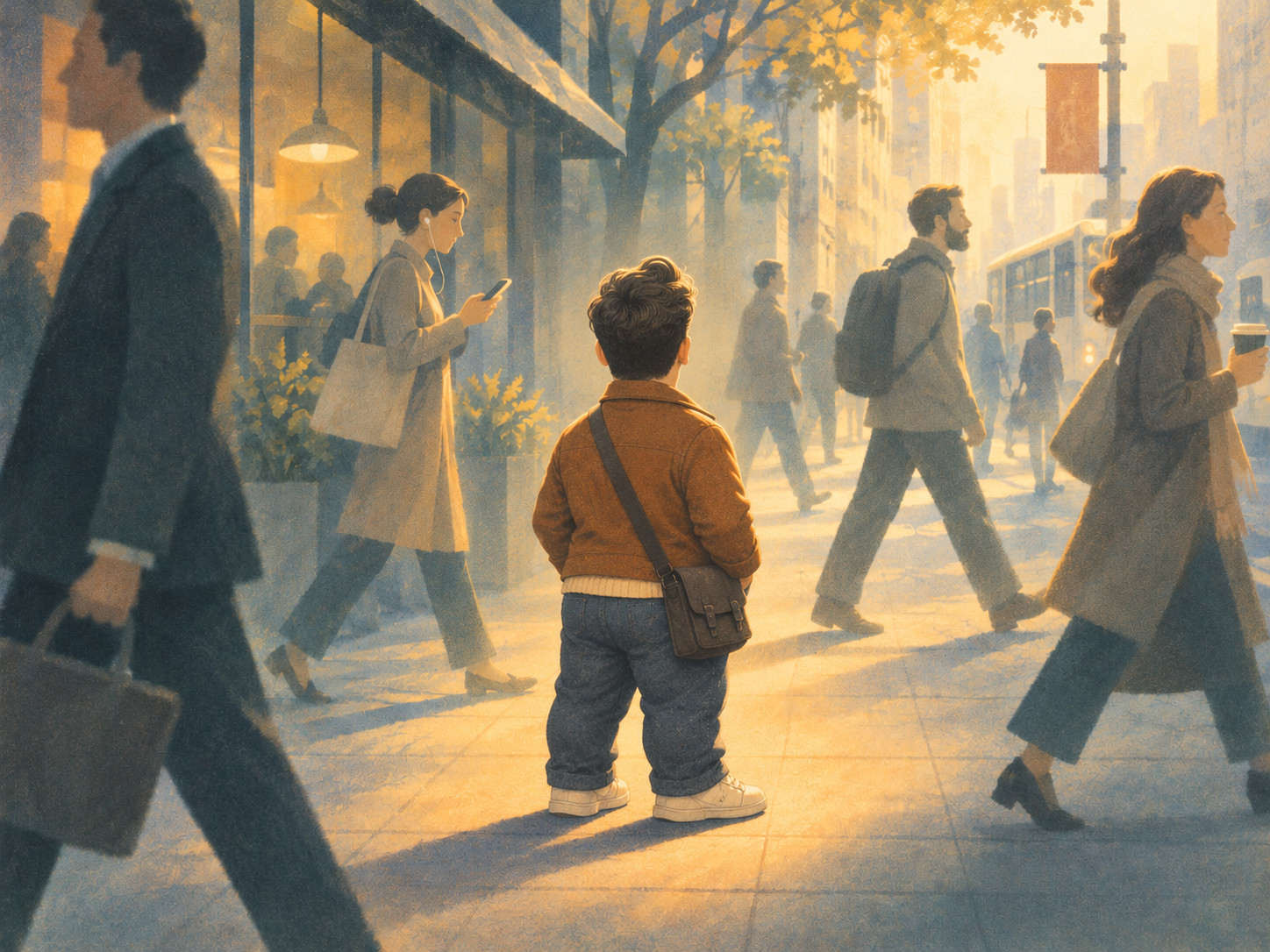
I also happen to have dwarfism.
How tall are you?
I’m 4 feet 4 inches tall.
What type of dwarfism do you have?
I have achondroplasia, which is the most common form of dwarfism. It primarily affects the growth of long bones, so my arms and legs are shorter in proportion to my torso.
There are hundreds of different types of dwarfism, and they can affect people in very different ways. Not everyone with dwarfism has the same proportions, health issues, or physical limitations.
Were you born with dwarfism?
Yes. Achondroplasia is a genetic condition that’s present from birth.
Does anyone else in your family have dwarfism?
I’m adopted, so I don’t know my entire biological family history, but as far as I’m aware, none of my biological relatives have dwarfism.
My adoptive parents and siblings aren’t little people either, although I grew up around other people with dwarfism.
Most people with achondroplasia actually have average-height parents. The condition is often caused by a spontaneous genetic mutation rather than being inherited from a parent who has it.
What’s an advantage of being a little person that taller people might not realize?
Lack of legroom on planes and buses is pretty much a non-issue!
It’s also incredibly easy to get to things that are low down. I’m renovating my house at the moment, and doing things like floor-level plumbing is surprisingly comfortable. I feel bad for tall people having to bend over all the time.
Food is cheaper, and we generally have pretty good strength-to-weight ratios and low centers of gravity, which can be advantageous in certain sports.
On a psychological level, I think having dwarfism has given me a kind of radical self-acceptance. I’ve become pretty immune to social pressures and conventional standards of appearance.
It’s also a fantastic filter for finding genuinely good people.
How do you reach things that are too high, like items on supermarket shelves?
Step stools and stepladders are my number-one life essentials.
I probably climb shelves more than I should. Reacher-grabber sticks are also incredibly useful for getting things from behind furniture or places that are difficult to reach.
Sometimes you just have to ask someone for help, and there’s absolutely nothing wrong with that.
I actually think it would be a great arrangement to go shopping with a tall friend. They could get things from the top shelves, and I’d handle the bottom ones.
Although I’d definitely appreciate someone helping me reach into supermarket freezers. I’m sick of practically falling into them!
Do you have to get your clothes specially made?
Usually not completely custom-made, because that’s expensive.
I buy regular clothes that fit my waist or chest and then have the lengths altered. I can do some simple alterations myself, and shortening trouser legs isn’t particularly expensive.
Sometimes I just buy shorts and wear them as trousers!
Shoes are one area where I actually save money because I can wear children’s sizes.
Can you drive a regular car?
Yes!
I use pedal extensions that clip onto the regular pedals, along with a seat cushion.
Some little people who drive larger cars also need modifications to the steering wheel, gear stick, or other controls.
But there are plenty of regular cars that work well for shorter drivers with relatively minor adjustments.
Have you made any special modifications to your home?
Yes, mostly to storage.
I have lower and shallower cabinets, built-in steps, and fold-down rails that let me reach things stored higher up.
I also have some shorter furniture, and things like mirrors and coat hooks are mounted at heights that work for me.
I considered lowering my kitchen counters and sinks, but decided against it. They’re more comfortable at standard height for my wife, and using a step stool works fine for me.
At work, I mainly use stools and stepladders.
Is flying easier or harder when you’re a little person?
In terms of comfort, it’s fantastic. I see tall people crammed into airplane seats and genuinely feel bad for them.
I do have some problems with air travel, though.
Seeing departure boards over crowds can be difficult, reaching overhead storage is a challenge, and walking long distances quickly when gates change can be annoying.
But once I’m in my seat, I’m just chilling.
How do you feel when strangers stare at you?
Unless someone is staring and laughing or being obviously hostile, it doesn’t really bother me.
It’s natural to be curious about people who look different, and I don’t think there’s anything inherently wrong with that.
But I’m very self-confident. Some little people find the constant staring genuinely hurtful, so it’s something people should try to avoid.
What’s the appropriate term to use: little person, dwarf, or person with dwarfism?
“Little person” and “person with dwarfism” are generally the safest terms.
“Dwarf” is also acceptable to many people, although not everyone likes it.
The term “midget” is widely considered a slur and should be avoided.
Personally, I’m happy being called a little person or a dwarf. I use both interchangeably.
Everyone has different preferences, though. If you’re talking to someone, there’s nothing wrong with asking what they prefer.
Is your wife also a little person? What was dating like for you?
No, my wife doesn’t have dwarfism, although she’s relatively short herself.
I actually had a pretty good experience with dating.
Obviously, little people aren’t everyone’s type, but I was lucky to grow up with a great community and a lot of self-confidence.
I never had much trouble dealing with stigma, setting boundaries, or finding people who valued me.
I had relationships before meeting my wife and did some casual dating too.
Of course, I experienced judgment and rejection, but that’s part of dating for most people.
I actually think dwarfism is a fantastic filter for finding open-minded people who aren’t too concerned with social norms.
What did your parents do that helped you develop confidence growing up?
I was incredibly lucky to have an amazing childhood, and I think that’s a huge part of why I’m doing so well today.
My parents both have disabilities and were very involved in disability advocacy.
They created a loving, safe home that prioritized independence while also recognizing the importance of community and support.
They taught us about disability history, activism, and the importance of self-acceptance.
They encouraged us to make friends with people who shared our experiences, but also to connect with people from all walks of life.
Most importantly, they taught us to advocate for ourselves and expect fair treatment from others.
There’s not much I would change about how they raised me.
Does your height create any challenges when it comes to sex and intimacy?
I have plenty of fun in all positions!
Some positions require a little adaptation, but there’s not really anything that’s completely off-limits if you’re willing to be flexible.
And yes, I can have sex standing up.
Yes, that involves a step stool.
My wife doesn’t mind, although I can see how not everyone would find that particularly sexy!
Are there medical problems associated with achondroplasia beyond being shorter than average?
There are some health issues that people with achondroplasia are more likely to experience.
Spinal and joint problems are among the biggest concerns. Sleep apnea and problems involving the ears and throat are also relatively common.
Personally, I’ve been quite lucky.
My main concern is that my joints are more vulnerable to damage and degeneration, so I have to be careful about my health, particularly as I get older.
Hopefully, staying active and taking care of myself will help.
Do you take the same medication doses as other adults, or are they adjusted for your size?
It depends on the medication.
Usually, I take the regular adult dose, although sometimes a weight-based adjustment is necessary.
People sometimes assume that because I’m smaller, I should take children’s medication doses, but that’s not how it works.
Pediatric dosing is different because children’s organs and metabolism function differently from adults’.
Kids aren’t just small adults, and small adults don’t have bodies that function like children’s bodies.
Does having shorter arms and legs put you at a disadvantage when swimming competitively?
Yes, obviously there’s a disadvantage.
But good training and fitness can compensate for a lot.
I’m not going to beat a serious, well-trained average-height swimmer, but I can absolutely beat someone who’s less fit or less experienced.
I compete in para-swimming, so I’m classified against swimmers with comparable physical limitations.
There are also plenty of benefits to swimming beyond speed. It’s excellent exercise without putting as much stress on your bones and joints, which is particularly important for people with dwarfism.
It’s also a great way to meet people and socialize.
Have you ever considered treatments or surgery to increase your height?
I never had treatment specifically intended to make me taller.
I did have physical therapy and wore a brace for a while because of a mild spinal curve, but that was for health reasons.
I’m very much against the idea that dwarfism needs to be “cured” simply to make people look more typical.
I’m obviously in favor of treating genuine medical problems, but there can be a fine line between treating a health issue and changing someone’s body to make it fit society’s expectations.
I know people who’ve had limb-lengthening surgery and found it beneficial, and that’s their choice.
But I don’t believe we should have to change ourselves to accommodate a world that wasn’t designed with us in mind.
How do you feel about the way little people are portrayed in movies and television?
It’s a mixed bag.
One of my favorite examples is Tyrion Lannister in Game of Thrones.
Seeing a fully developed character whose dwarfism wasn’t his entire personality, but was still an important and honestly portrayed part of his life, was pretty life-changing for me.
Especially when the show first came out.
It’s important to see little people represented as actual human beings with complex personalities rather than simply as jokes, curiosities, or fantasy creatures.
Do you consider dwarfism a disability or simply a physical difference?
Yes and no.
I love the disabled community and strongly support disability rights, but I don’t really consider myself disabled in my everyday life.
A lot of the barriers I face are related to being short in a world built for average-height people.
Of course, many people with dwarfism have significant mobility restrictions or health problems, and their experiences can be very different from mine.
Legally, dwarfism is considered a disability, and I’m entitled to certain accommodations.
But in terms of how I personally see myself, it’s a little more complicated.
What’s the best way to interact with a little person?
Just treat me like anyone else.
I’m not a child or a curiosity.
If you want to say hello, say hello. If you want to make small talk, make small talk. If I look like I need help reaching something, it’s perfectly fine to offer.
But don’t approach me just because you’ve spotted a little person and think that’s exciting.
And please don’t pick me up or pat me on the head.
Oh, and one more thing.
Maybe don’t sit directly in front of me at the cinema.
Was this worth your time?
What missed? (optional)