


I’m 40 years old. I have a full-time government job, a wife, and a house. My wife and I have traveled the world together. We go for walks, work around the house, and spend our evenings together. If you met me at a family gathering or had a conversation with me at work, I doubt you’d notice anything particularly unusual about me.
I’ve also been diagnosed with antisocial personality disorder, commonly referred to as sociopathy.
I don’t experience love or happiness in the way other people describe them. I don’t have much of an emotional attachment to the people around me, and much of what I do in life is based on understanding what’s expected of me rather than feeling an emotional inclination to do it.
I’ve been this way for as long as I can remember.
I didn’t have a particularly good childhood.
My mother struggled with mental health issues, and my father was probably the biggest bully I’ve ever encountered. My parents maintained control over nearly every aspect of my life. I was reminded regularly that nothing belonged to me. There was physical abuse, often under the guise of discipline, and what constituted acceptable behavior could change depending on my parents’ moods that day.
I don’t remember being particularly happy as a child, although my parents have told me that I was. What I do remember is feeling out of sync with everyone else.
I believe my upbringing had a lot to do with the way I turned out. Growing up in that environment taught me to pay attention to people, to recognize changes in their behavior, and to anticipate when a situation was about to turn bad. Those instincts have stayed with me well into adulthood.
I wasn’t allowed to go to therapy as a teenager because that would have threatened the image my parents presented to the outside world. Looking back, I probably would have been removed from their house had someone known what was going on.
It wasn’t until adulthood, when I became suicidal, that I finally entered therapy.
People might wonder how someone who doesn’t experience sadness in the conventional sense can become depressed. For me, it’s more a matter of overwhelming apathy. I stop eating properly. I stop sleeping much. The ordinary tasks I perform every day suddenly become monumental efforts. The sense that nothing matters starts to consume everything.
I spent years going through different counselors, psychiatrists, therapists, and treatments before finding someone I worked well with.
For a long time, I was driving myself insane trying to figure out what was wrong with me. Eventually, I came to understand that having a diagnosis didn’t mean it had to define my entire existence. It explained certain things about me, but I still had a life to live.
It was almost like I spent years swimming against a current, and I finally just went with it.
My relationship with other people is probably quite different from yours.
I tend to see people as a means to an end, almost like chess pieces. I’m aware of what people want, what motivates them, and how they might respond to certain situations.
I used to view highly emotional people as weak. I don’t really see them that way anymore. They’re just people operating differently than I do.
I’m aware when I’m manipulating someone. It’s not something I do without realizing it, and it doesn’t give me a particular sense of superiority or enjoyment. Generally, it’s about accomplishing something.
I’ve gotten someone fired from a job before, and I still believe it needed to happen. But I’ve never had an interest in manipulating people simply for entertainment. I don’t have any desire to hurt people or animals.
I also understand the difference between right and wrong. I don’t need to experience an emotional response to understand that certain actions are wrong or that they have consequences.
To me, having a moral compass is a fairly straightforward thing. Can you do the right thing when nobody is looking?
I spent much of my childhood feeling horrible. Even though I don’t emotionally connect with other people in the way most people do, I don’t see any reason to deliberately make someone else experience what I experienced growing up.
The subject that seems to confuse people the most is my marriage.
I’ve known my wife for about 15 years, and we’ve been married for 13.
When we first met, she was the first woman in the group of people I was spending time with who owned a motorcycle. I thought that was unique.
As I got older, I noticed that the people around me were getting engaged, getting married, and building lives together. I’d always felt a need to fit in, and getting married was part of that.
That probably sounds terrible to someone who views marriage as the culmination of an emotional connection between two people. But my marriage isn’t something I regard as a mistake.
I tell my wife that I couldn’t imagine doing this life with anyone else. I tell her that I couldn’t imagine life without her. Those are true statements. She’s an incredible woman, and I genuinely have no interest in meeting or being with anyone else.
What I don’t experience is the sensation of love that people talk about.
To me, love is being there when you’re needed most. Anything beyond that, on some deeper emotional level, is a foreign concept.
I’ve learned a lot about relationships by observing other couples. Growing up, I watched how my parents treated each other and decided I would do the opposite. Over the years, I’ve learned what my wife likes, what she dislikes, what she expects from me, and what I can do to make her life easier.
Sometimes it’s as simple as emptying the dishwasher before she asks me to. After being together for this long, I know her well enough to anticipate certain things.
She does most of the work around the house and asks very little of me. There are times when I recognize that I cannot give her the emotional connection she might need, no matter how much I’ve learned about being a husband.
She knows there’s something different about me, and she knows I attend therapy every week. We’ve discussed mental health on numerous occasions, although I haven’t described to her everything that I’ve described here.
She worries that depression might eventually get the better of me. I’ve told her that making me happy isn’t her responsibility. It’s mine.
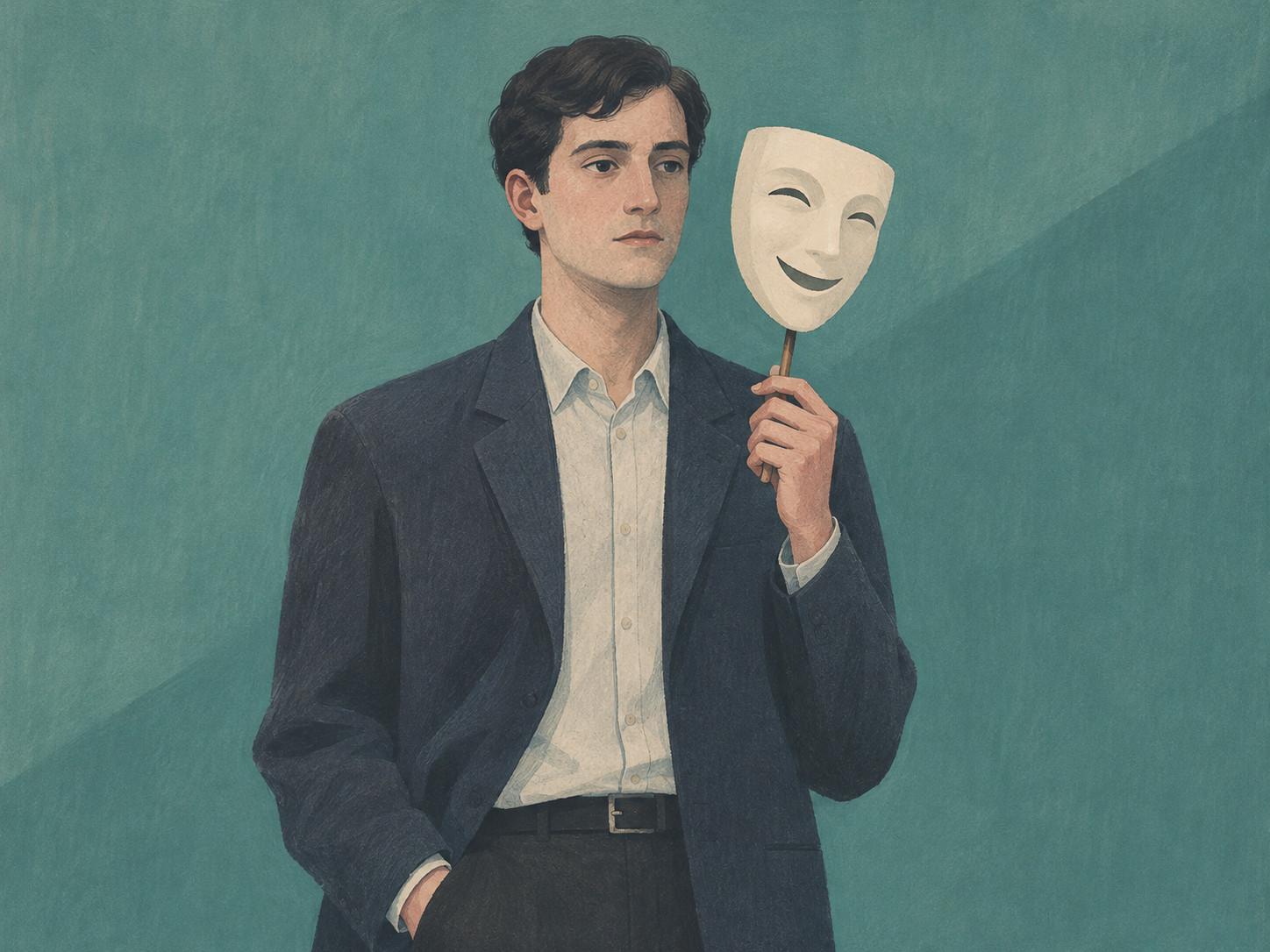
I’ve become quite good at putting on the mask when I need to, but there are limits to what I can do.
If my wife were to leave me, I don’t think I would experience heartbreak in the way most people would. There are times when I think she deserves someone better than me, someone capable of relating to her in ways that I cannot.
If I can’t be what she needs, I don’t want her to be miserable.
At the same time, I would absolutely give my life for her. That’s what I believe I’m supposed to do.
I realize those statements might seem contradictory, but that’s the best way I know how to explain it.
A lot of my life consists of going through the motions.
I go to work. I come home. My wife and I usually arrive home within an hour of each other. Most of the time, I let her decide what we’re going to do that evening.
We might take a walk, do something around the house, or sit down and relax.
I used to play video games, but eventually I lost what little motivation I had to play them. I listen to heavy metal. I occasionally find comedy funny, although most of my laughter is forced.
The last time I remember crying was after spinal fusion surgery, when I was in considerable physical pain.
I don’t have much in the way of hobbies, and I find social interaction exhausting. Family gatherings are probably one of the more difficult parts of my life. Being surrounded by people I rarely see, answering questions, and keeping up with multiple conversations takes a lot out of me.
I prefer peace and quiet.
As for what goes on inside my head, it’s often cloudy and foggy. I used to spend a lot of time ruminating on things that happened during my childhood. These days, most of my mental energy goes toward assessing the present situation and figuring out how to navigate it.
I don’t spend much time thinking about what I want to accomplish or what would make me happy. I don’t really know what happiness would feel like.
People have asked whether I wish I could experience the emotions that they do. I honestly don’t know. I recognize that there are situations where my lack of an emotional response gives me certain advantages. But it’s difficult to say whether I’d rather have something I don’t fully understand.
I think the biggest misconception about people with my diagnosis is that we’re all inherently dangerous.
People hear the word sociopath and immediately imagine some calculating, violent individual who enjoys causing suffering.
That’s not how I live my life.
I’m not claiming to be an especially good person, either. I’m aware of the way I perceive people. I’m aware that I can manipulate them, and I’m aware of the limitations I bring into my relationships.
I can only speak for myself.
I have a job. I contribute to charities. Initially, I saw charitable donations as a tax benefit, but I also recognize that they make people I know happy. I have a wife, I go to therapy, and I try to fulfill the responsibilities that come with the life I’ve built.
None of those things require me to experience the same emotions that motivate other people.
Believe it or not, I’m also an advocate for mental health. I know what it’s like to spend years trying to understand why you’re different from everyone else and wondering whether there’s something fundamentally wrong with you.
It took me a long time to stop fighting with myself over that question.
My diagnosis didn’t change who I was. It gave a name to certain things I’d been living with for most of my life.
Whether it’s antisocial personality disorder or whatever other acronym a doctor might assign to me, I’m still the person who has to get up every morning and figure out how to live with it.
And considering the hand I was dealt, I think I’ve managed to do that reasonably well.
Was this worth your time?
What missed? (optional)