
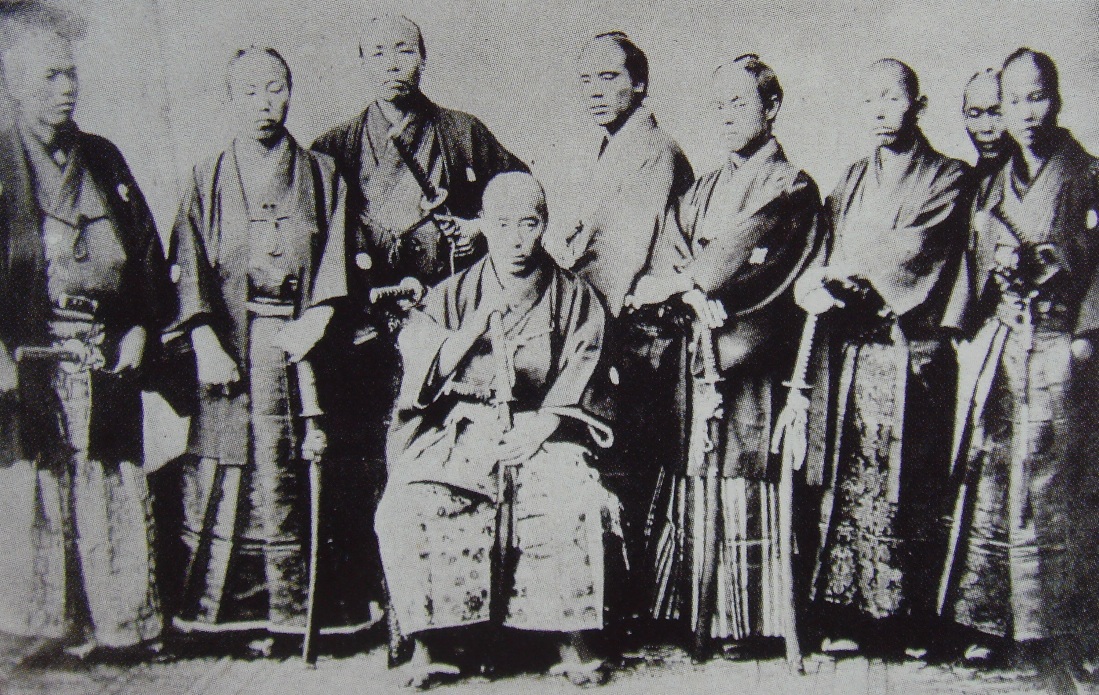
You’ve watched Shōgun. You’ve played Ghost of Tsushima. Maybe you’ve imagined yourself standing in polished armor with two swords at your side, sworn to a powerful lord and living by the legendary code of bushidō.
But if you had actually been born in feudal Japan, what are the odds you would have become a samurai?
Unfortunately, they’re not very good.
First, You Don’t Get to Choose
The biggest misconception about the samurai is that they were simply exceptional warriors who earned their place through bravery.
That was sometimes true, just not for most of Japanese history.
By the early Edo period, which lasted from 1603 to 1868, being a samurai was largely hereditary.
If your father was a samurai, you almost certainly became one.
If your father was a farmer, merchant, fisherman, or artisan, you almost certainly did not.
Think less about joining the military and more about being born into the nobility.
For the average person, becoming a samurai was not a career decision.
It was a birthright you either had or did not.
The Odds Were Around 5 to 7 Percent
Historians estimate that samurai made up somewhere between 5 and 7 percent of Japan’s population during the Edo period.
That means roughly 93 out of every 100 people were not samurai.
Instead, most Japanese belonged to one of several social classes, including farmers, artisans, merchants, fishermen, and laborers.
Ironically, if you randomly appeared in feudal Japan, your most likely job would not involve swords at all.
It would probably involve growing rice.
If You Were Born Poor
Your chances became almost zero.
Social mobility in Tokugawa Japan was intentionally limited.
The ruling government wanted stability.
People generally stayed within the class they were born into.
Farmers farmed.
Merchants traded.
Samurai governed and served their lords.
Unlike Hollywood movies, there was no local recruitment office looking for talented swordsmen.
Unless You Lived Earlier
Travel back to Japan’s Warring States period, which lasted roughly from 1467 to 1600, and the picture changes.
This was the era of constant civil war.
Powerful daimyō needed soldiers.
Lots of them.
Because wars never seemed to end, capable men occasionally rose through the ranks regardless of their birth.
The most famous example is Toyotomi Hideyoshi.
Born the son of a peasant, he rose from foot soldier to become one of the three great unifiers of Japan.
By the end of his life, he effectively ruled the entire country.
Stories like his are extraordinary precisely because they were so rare.
Hideyoshi was not proof that anyone could become a samurai.
He was the exception everyone remembered.
Could You Earn It Through Skill?
Maybe.
If you lived during the Sengoku period and proved yourself on the battlefield, you had a chance.
But consider what that actually meant.
You were not entering a martial arts tournament.
You were surviving years of brutal warfare in which disease, starvation, arrows, spears, and bad luck killed thousands.
Becoming a samurai first required surviving long enough for someone important to notice you.
What About Swordsmanship?
Here is another surprise.
Owning a katana did not make someone a samurai.
The sword was a symbol of samurai status, not the reason for it.
Many samurai spent surprisingly little time fighting with swords.
During major battles, they often relied on spears, bows, matchlock muskets, and horses.
By the peaceful Edo period, many samurai rarely fought at all.
Instead, they worked as administrators, tax collectors, judges, teachers, or government officials.
The romantic image of constant duels belongs more to fiction than everyday reality.
Bushidō Was Not Always What You Think
Ask most people what defined the samurai and they will probably answer, “The bushidō code.”
Honor.
Loyalty.
Courage.
Self-sacrifice.
Those values certainly became associated with the samurai, but the famous, highly romanticized version of bushidō developed gradually over centuries, especially during the long peace of the Edo period.
Actual samurai were human beings.
Some were brave.
Some were corrupt.
Some were brilliant.
Some were cowards.
History rarely produces groups that fit perfectly into legends.
Could a Foreigner Become a Samurai?
Very rarely.
The most famous example is William Adams, an English navigator who arrived in Japan in 1600.
His knowledge of navigation and shipbuilding impressed Tokugawa Ieyasu so much that he was granted samurai status.
That was almost unheard of.
If you somehow arrived from modern-day America or Europe in feudal Japan, your odds would be even lower than those of the average Japanese farmer.
So, Would You Have Made It?
Let’s imagine you were an average modern person transported back to Japan around the year 1700.
Born into a samurai family?
Excellent.
You would almost certainly become one.
Born as a farmer?
Almost impossible.
Your social class was effectively predetermined.
Living during the Sengoku wars?
You would have a tiny opportunity to rise through military service, but surviving long enough would be the hardest part.
Born outside Japan?
Forget it.
Unless you somehow became indispensable to one of the most powerful men in the country, history suggests it was not happening.
The Real Fantasy
Movies make us imagine becoming a legendary swordsman.
History suggests we would probably spend our lives planting rice, paying taxes, and hoping our village was not caught in someone else’s war.
And honestly, that is not unique to Japan.
Whether you dreamed of becoming a Roman senator, an English knight, or a French musketeer, the uncomfortable truth is the same.
For most of history, your future was not determined by your ambition.
It was determined by the family you were born into.
The fantasy is not that you would have become a great samurai.
It is that history ever gave ordinary people much of a choice at all.