Category

Category: History

Picture Of The Day

Picture of the Day

hermann_goring

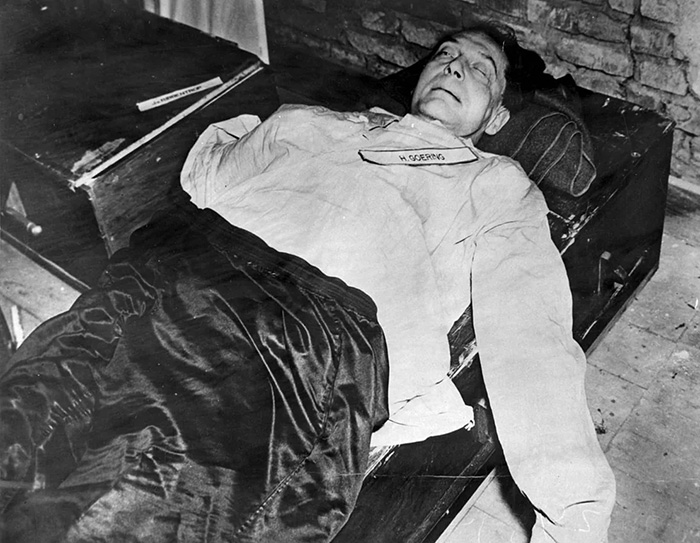
The body of Hermann Göring, Oct. 16, 1946

Hermann Göring was a prominent figure in the Nazi Party, second only to Adolf Hitler in the hierarchy of the Third Reich. His influence extended across various sectors of the Nazi regime, where he held numerous titles and wielded significant power. As one of the earliest members of the Nazi Party, Göring was instrumental in the establishment and consolidation of the totalitarian state. He founded the Gestapo, the official secret police of Nazi Germany, and was appointed as Commander-in-Chief of the Luftwaffe, the German Air Force, playing a pivotal role in the military campaigns of World War II.

Read the rest: Picture of the Day
Picture Of The Day

Picture of the Day

crash movie

Choi Eun-hee and her husband, director Shin Jeong-gyun, who were kidnapped in 1978 on his orders and were forced to make North Korean films. In two years they made 17 films, some of them were well-received outside North Korea

Choi Eun-hee and Shin Jeong-gyun were once the golden couple of South Korean cinema. Choi, a leading actress of her time, and Shin, a prolific director, were both instrumental in shaping the South Korean film industry. Their collaborations in the 1960s produced some of the country’s most iconic films. However, by the late 1970s, their personal and professional lives had hit a rough patch. They had divorced, and Shin faced financial troubles.

Read the rest: Picture of the Day
Picture Of The Day

Picture of the Day

Marcela Gracia Ibeas and Elisa Sanchez Loriga

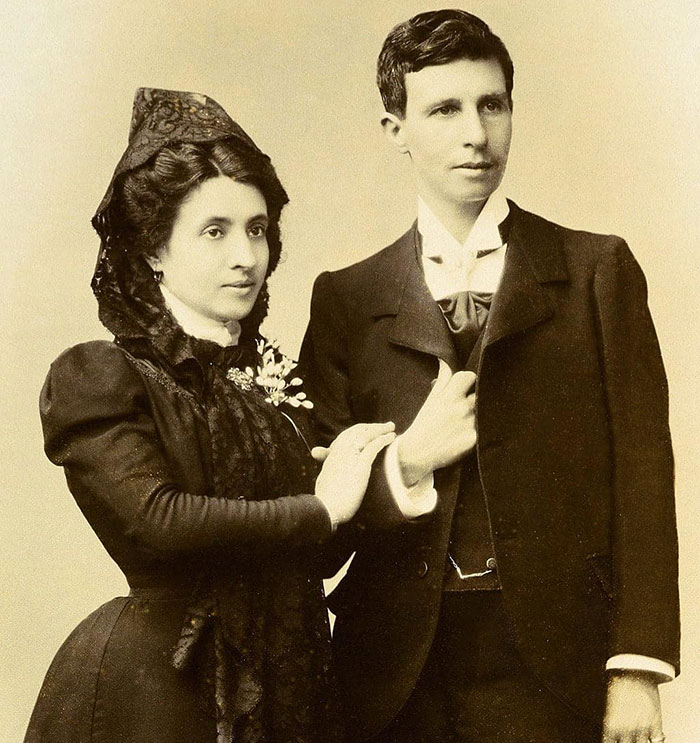
Marcela Gracia Ibeas and Elisa Sanchez Loriga at their wedding on June 8, 1901. Their wedding was the first same-sex marriage in the history of the Spanish Catholic church. 

On their wedding day, Elisa disguised herself by cutting her hair, wearing a suit, and changing her name to “Mario” on the marriage certificate in Galicia, Spain, 1901. Elisa also created a fake backstory of how Mario was actually her cousin who was an atheist that wanted to be baptized. On their wedding day, Marcela was pregnant with the child of an unknown man. This was most likely pre-planned to help validate their marriage. Unfortunately, they would spend the rest of their lives being persecuted by the law. 

Read the rest: Picture of the Day
Picture Of The Day

Picture of the Day

Gerda-Weissmann-Klein.j

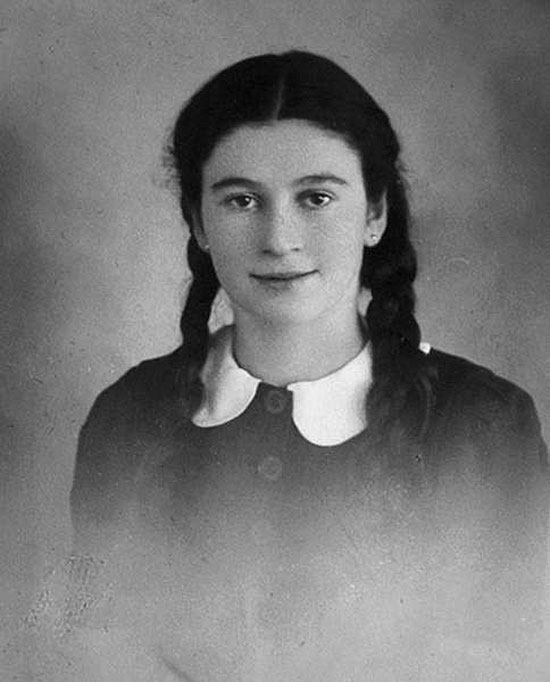
This is Gerda Weissmann Klein.

She spent three years in several different Nazi concentration camps. In late January of 1945, Gerda and 4,000 other Jewish women were forced to embark on a 350-mile death march to flee the advances of the Allied forces.

By early May, Gerda was one of only 120 women who were still alive. The rest—including several of her childhood friends—had died from exhaustion, starvation, random executions, and exposure to the elements.

Gerda was one day shy of her 21st birthday when she was rescued by American soldiers. Weighing only 68 lbs. (30.84 kg), Gerda’s hair was nearly white and her clothes were tattered and crawling with lice. She hadn’t taken a bath in three years.

Read the rest: Picture of the Day
Picture Of The Day

Picture of the Day

unwrapping mummies

Around 19th century egyptomania was so strong in europe that rich tourists would bring mummies from Egypt to unwrap them in parties.

Mummy unrollings were only one symptom of the Egyptomania sweeping England in the 19th century. Europeans had been buying mummies since Shakespeare’s times to use them as medicine, pigment or even charms; now, the Napoleonic wars and England’s colonial expanse had created a renewed interest in Egypt’s past, to the point that, as the French aristocrat and Trappist monk Abbot Ferdinand de Géramb wrote to Pasha Mohammed Ali in 1833, “it would be hardly respectable, on one’s return from Egypt, to present oneself without a mummy in one hand and a crocodile in the other.”

Read the rest: Picture of the Day
Picture Of The Day

Picture of the Day

Wojtek bear

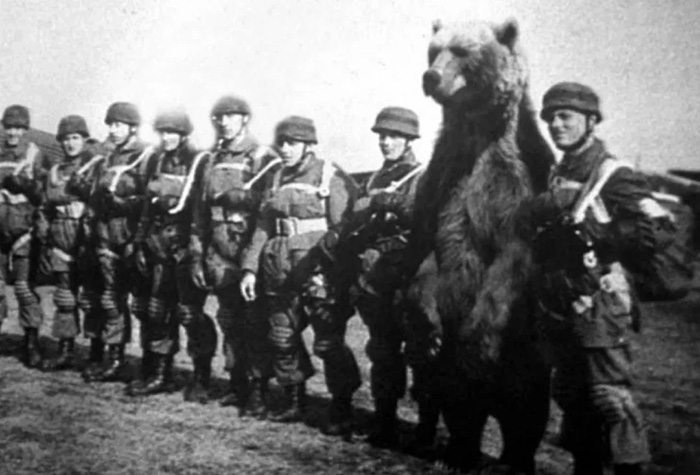
Wojtek the Bear, adopted by the 22nd Transport Company’s Artillery Division in the Polish II Corps in 1942, after an Iranian boy traded the bear for food. He served alongside his human comrades during the Italian Campaign

Wojtek, often referred to as the “Soldier Bear,” was a Syrian brown bear that played a unique and heartwarming role during World War II. Found as a young cub in Iran in 1942 after it was believed his mother had been shot by hunters, Wojtek was adopted by Polish soldiers of the 22nd Artillery Supply Company of the Polish II Corps. As he grew under the care of the soldiers, he became more than just a mascot; he became one of them.

Read the rest: Picture of the Day
Picture Of The Day

Picture of the Day

The whipping post was put into use around 1885 at the Baltimore City Jail, where until 1938, many of those convicted of wife-beating were punished.

In the early 20th century, Baltimore was among the few major American cities where judicial whipping persisted, primarily for violent offenses. The Baltimore City Jail had a whipping post in use since 1885, where many convicted of wife-beating were punished. A notable incident in 1938 saw Clyde Miller, a Baltimore printer, flogged 20 times with a cat o’ nine tails. This event marked the last use of Baltimore’s whipping post, which was specifically for punishing wife-beaters.

Whipping in Baltimore sparked significant public debate. Critics viewed it as a cruel and outdated punishment, while supporters believed it deterred crime. By the mid-1950s, legal challenges and criticism led to the abolition of whipping as a judicial punishment in Baltimore.

(source)

Picture Of The Day

Picture of the Day

At 4:31 AM, an unauthorized photo taken of Stalin inside of the Kremlin shows the very moment he was informed that Germany had began their invasion of the Soviet Union. It was taken by Komsomolskaya Pravda, editor in chief. He was ordered to destroy it, but instead saved it. June 22,

By dawn on June 22, 1941, Timoshenko, Zhukov, and his deputy chief of the general staff, Vatutin, were receiving frantic communications from front commanders. All reported air attacks and requested orders. Timoshenko told Zhukov to telephone Stalin.

Stalin heard his report and proposal to order troops to retaliate. There was a long silence during which Zhukov could hear the sound of his breathing on the line. Then Stalin ordered him and Timoshenko to come to the Kremlin and to tell Poskrebyshev to summon the members of the Politburo.

At 4:30 a.m., all were assembled in Stalin’s office. He stood by the table, his face white, with an unlit pipe in his hand. He was visibly shaken.

Molotov hastened into the room from a meeting with the German ambassador. He reported that Germany had declared war.

Stalin sank into his chair and sat in silence. This was one of the most shattering moments in his whole life. He had used every means at his disposal to avert this war. He had desperately willed it to be delayed at least until the following spring. He thought he had succeeded, but he had failed. Armaments were beginning to flow to the armed forces from the defense industries, and the intensive training programs were bringing daily improvements in discipline and efficiency. Six months would have made a vast difference.

Picture Of The Day

Picture of the Day

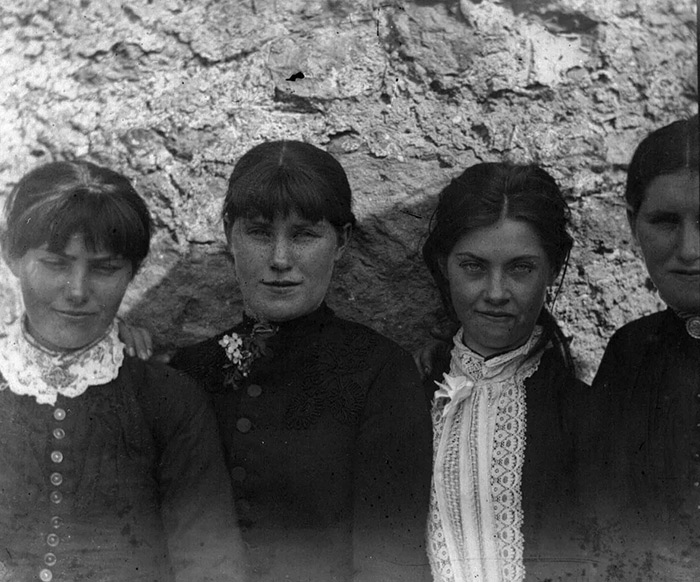
The O’Halloran sisters

The O’Halloran sisters, armed with poles and boiling water, fended off the officers evicting their family during the Irish Land War, 1889

The Second Irish Land Act of 1881 had attempted to give tenants more security by paving the way for rent reductions, guarantees of the same rent for periods of 15 years, and, in some cases, eventual proprietorship.

O’Callaghan had been charging the O’Halloran family £31, which the court ordered be reduced to £22-10 shillings, a sum the family maintained was unfair, since in their grandfather’s time the rent had been as low as £13-10 shillings.

They became one of the families to participate in the Bodyke rent boycotts, and in June 1887 they prepared to resist eviction from the land their family had lived on and tended for generations.

Read the rest: Picture of the Day