
I make approximately $50,000 a year and support a family of six.
My wife and I are both 30. We have been married for 10 years and have four children. I am the only person in our household earning an income. My wife stays home, cares for the children and homeschools them.
When people hear those numbers, they usually assume we must be miserable or drowning in debt. We are not.
Our life is not luxurious, and some months are difficult. We have to plan nearly every purchase, cook almost everything ourselves and say no to plenty of things we would enjoy. But overall, we are happy. Our home is busy, our children are cared for and our life feels full.
We make it work largely because we live in an inexpensive part of Wyoming.
Our greatest advantage is our rent: $850 a month for a three-bedroom, two-bathroom apartment. I realize that amount might not rent a single bedroom in many cities. It is the main reason we remain where we are. If our rent were closer to the national average, our current lifestyle probably would not be possible.
Our other monthly expenses include approximately $150 for utilities, $100 for internet, $30 for phones and around $200 for gas. Our car payments total about $500. We spend approximately $100 on subscriptions and try to reserve $200 for family activities.
When possible, we put about $250 into savings. Some months we save more. Other months an unexpected expense takes the money before it reaches the account.
Our grocery spending attracts the most attention.
We spend between $300 and $400 of our own money on groceries each month. We also receive approximately $300 through SNAP, along with some food from WIC. Those programs are an important part of the complete picture. My salary pays our bills, but public assistance helps us feed the family.
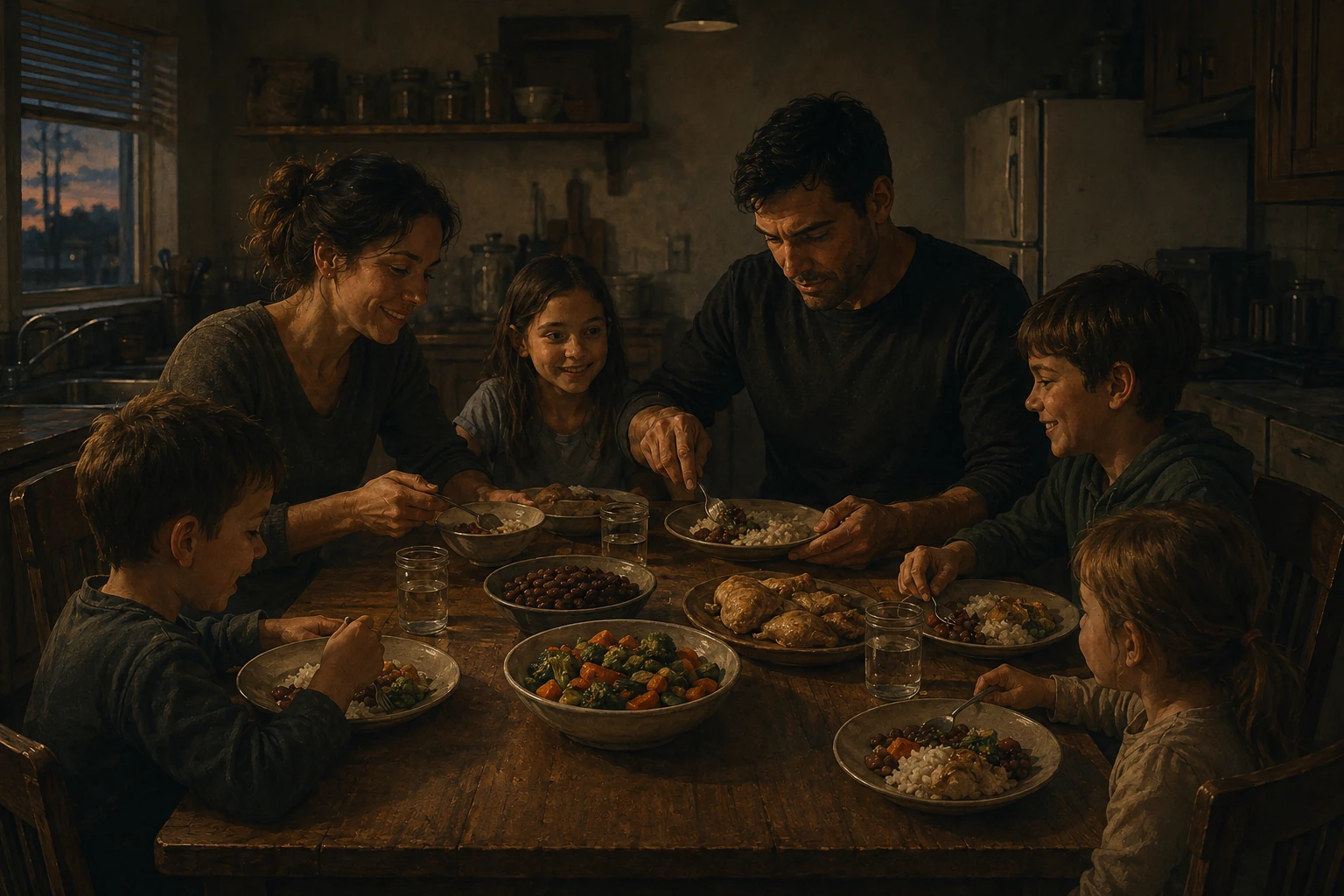
The foundation of our diet is rice, dried beans, frozen vegetables, chicken and pork. A 20-pound bag of rice costs around $11. Beans are approximately a dollar per pound, and I can get five pounds of chicken for about $12.
We rarely buy steak, beef roasts or other expensive cuts of meat. Ground beef is an occasional purchase.
We also avoid most prepared and prepackaged foods. If we can make something ourselves, we usually do. A half pork loin might cost $9. If I cut it myself, I can get approximately 12 pork chops. Four precut chops can cost the same amount.
Our meals are basic, and there is not always much variety. The same ingredients become soup one night, a casserole another night and rice bowls the next. We plan before shopping and usually avoid buying anything we cannot stretch across two or three meals.
By the end of some weeks, nobody is excited about seeing rice and beans again.
But no one goes hungry.
My wife and children receive state health insurance. I do not.
Our income is low enough for them to qualify but slightly too high for me to receive coverage. I cannot currently afford private insurance. That is probably the most vulnerable part of our situation.
I am the only income earner, yet I am also the only person in the family without health insurance. If I became seriously ill or injured, the consequences could be devastating.
I do have a substantial life insurance policy, so my family would be protected if I died. The more difficult question is what would happen if I became too sick to work but did not die. I do not have a perfect answer.
I also do not currently contribute to a retirement account. I know that cannot continue forever, but there are only so many places one paycheck can go.
During the school year, I work as a special-education paraprofessional. In the summer, I help run an adventure camp. I am also completing a master’s degree in hopes of qualifying for better positions and increasing my income.
My wife and I discussed our arrangement before we married. What she wanted most was to become a mother and raise our children. I told her I would do everything I could to make that possible.
Our children are homeschooled and participate in a cooperative with other families. They have friends who attend public school, and when they are old enough, the local schools allow them to join athletic teams.
People often ask why my wife does not get a job. Another income would help, but it would also create childcare expenses and change the family life we deliberately chose. Homeschooling and caring for four children is already a full-time responsibility, even if no one gives her a paycheck for it.
Living carefully does not mean our children never have fun.
We look for inexpensive activities such as hiking, camping and fishing. We visit affordable museums and play miniature golf. Sometimes lunch at Sam’s Club becomes part of a Saturday outing because six people can eat there without destroying the budget.
We also take one family road trip each year. On one summer trip, we visited the Reptile Gardens, Mount Rushmore and several other attractions. These are not luxury vacations, but the children get to visit new places and make memories together.
Some people believe having four children on our income was irresponsible. They ask whether we should have stopped at one or two so those children could enjoy more material advantages.
I understand the question. Every additional child requires money, attention and energy. We cannot guarantee that we will pay every dollar of four college educations or give each child a down payment for a house.
What I reject is the idea that money is the only measure of a child’s quality of life.
Our children have parents who love them, a safe home, food, education, friends and opportunities to explore the outdoors. They also have one another. I do not believe any of them would trade their siblings for more expensive vacations or restaurant meals.
Critics are correct about one thing: our situation is fragile.
We benefit enormously from unusually low rent. We receive SNAP, WIC and state medical coverage for five members of the family. We do not have significant retirement savings, and I remain uninsured. One serious emergency could place us under tremendous pressure.
This is not proof that any family can comfortably raise four children on $50,000. A family paying $2,000 in rent or buying groceries in a more expensive area could not reproduce our budget simply by eating more beans.
Geography matters. Government assistance matters. Having a stay-at-home parent who can cook, plan and homeschool matters. Our willingness to accept a simpler lifestyle matters.
Still, I push back when people describe our life as though we are constantly miserable.
There are difficult days and months when the numbers become uncomfortably tight. But there are also evenings when all six of us sit down to a meal we made from inexpensive ingredients. There are camping trips, museum visits, jokes, arguments and children running through the apartment.
There is more life inside our home than our income suggests.
I want to earn more. I want health insurance, retirement savings and a larger emergency fund. That is why I am earning my master’s degree and working toward better opportunities.
But I do not want to spend the years before that happens believing our current life is a failure.
We are not wealthy or completely secure. We are simply a family of six living on one $50,000 income and doing the best we can with what we have.
Despite all the limitations, we are happy.