
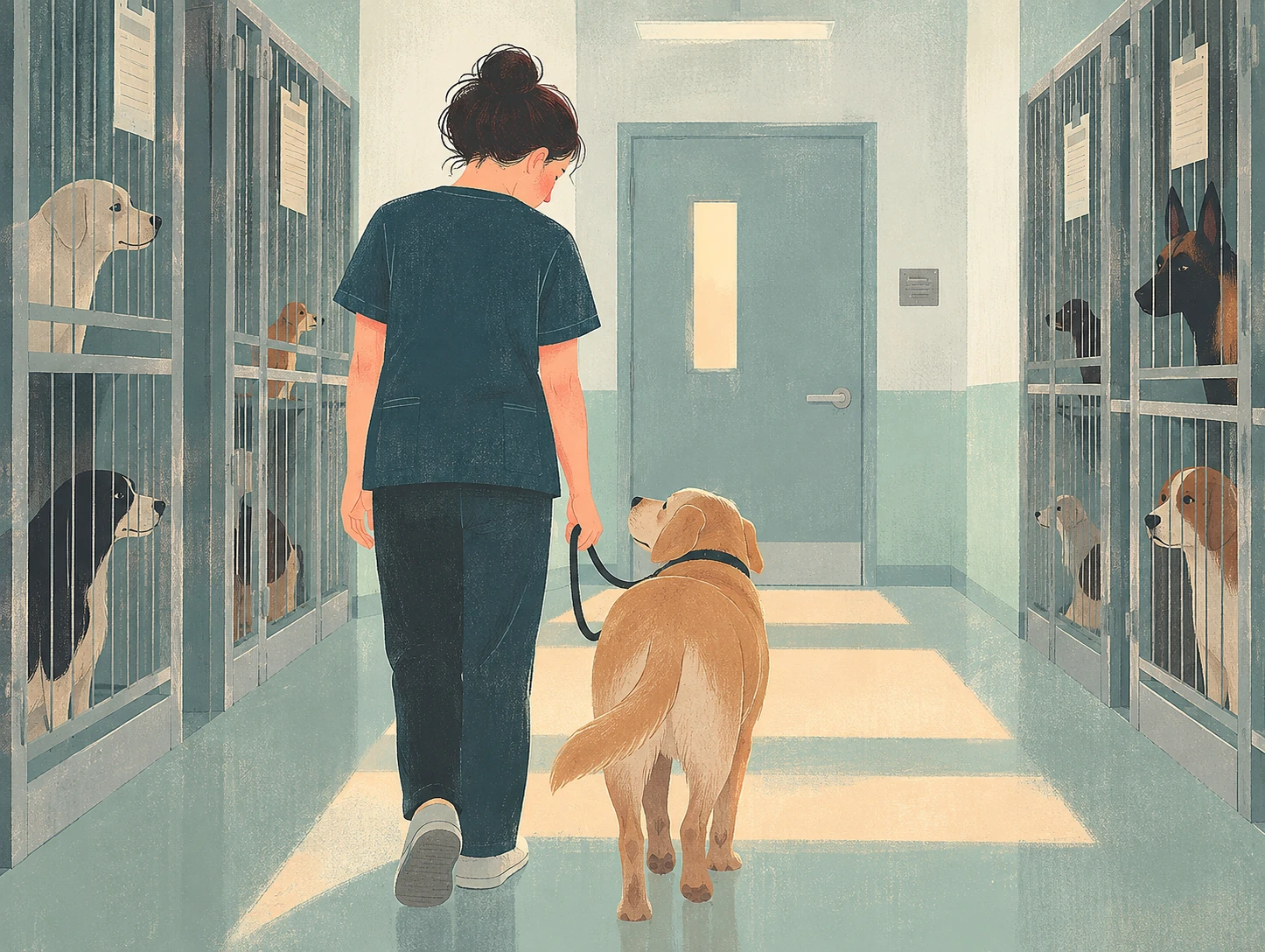
I’ve worked in animal shelters for four years. Part of my job is euthanizing animals.
On a good week, we might euthanize 20 or 30.
When the shelter is at maximum capacity, that number can climb to 100 or even 150.
I know what that sounds like. People hear those numbers and imagine some horrible place where nobody cares about the animals. They imagine workers who have become numb to it, or a system that kills animals because it’s easier than trying to save them.
The reality is almost the opposite.
Most of the people I work with care about animals so much that this job follows them home.
I’m in therapy. I take medication. I’ve gone to support groups for animal care professionals. When I first started doing this work, I had nightmares. After difficult shifts, I noticed myself becoming more irritable and short with people.
Eventually, I had to learn how to compartmentalize.
Because the next morning, there are more animals waiting for us.
Yes, healthy animals get surrendered
People ask me all the time if owners really bring perfectly healthy animals to shelters simply because they don’t want them anymore.
Yes.
It happens constantly.
Sometimes I’m angry about it. But I’ve also learned to have more empathy than I used to.
A lot of people are struggling financially. Veterinary care has become expensive. Food is expensive. Housing is expensive. Sometimes someone genuinely loves their dog but can no longer afford to take care of it.
And yes, sometimes people surrender animals for reasons that are much harder for me to understand.
Once an animal is surrendered to us, though, the owner doesn’t decide what happens next. The animal becomes our responsibility.
If the animal is healthy and has a stable temperament, generally we will consider it adoptable.
If there are medical or behavioral problems, we try to determine whether they can be rehabilitated.
But there is an uncomfortable reality behind every one of those decisions:
Time and resources matter.
There are only so many kennels.
There are only so many employees.
There are only so many foster homes.
And there are always more animals coming through the door.
Those “deadline” posts you see online can be real
You’ve probably seen posts on social media that say something like:
“Zoro has until 10:30 tomorrow morning or he will be euthanized.”
People sometimes assume those posts are emotional manipulation.
Sometimes they’re scams, so you should absolutely verify who you’re dealing with before sending anyone money.
But the deadlines themselves can be real.
Rescue organizations and foster networks may be told that an animal needs to be picked up by a certain time. If nobody comes forward, that animal may be euthanized.
I’ve had animals I desperately wanted to take home myself.
I can’t.
If an animal has been deemed unadoptable, I can’t simply decide that I disagree, put it in my car and drive home. I’d lose my job.
That’s one of the hardest things about working here.
You can’t save every animal you fall in love with.
People think euthanasia is the worst thing that can happen to an animal
After doing this job, I don’t believe that anymore.
I’ve seen kittens come into the shelter with frostbite so severe that their legs were essentially gone.
I’ve seen animals eat toxins out of garbage and slowly die from internal bleeding.
I’ve seen dogs tear each other apart.
I’ve seen animals starving.
I’ve seen animals dying from rabies and other diseases.
And I’ve seen things humans have done to animals that I don’t even want to describe.
People sometimes ask me why shelters don’t simply stop euthanizing animals and let unwanted animals live outside.
Because I’ve seen what “outside” can actually mean.
Being hit by a car isn’t peaceful.
Freezing to death isn’t peaceful.
Starving isn’t peaceful.
Being mauled by another animal isn’t peaceful.
Compared with those deaths, a quiet room, medication that allows an animal to relax and a final injection can be far more humane.
That doesn’t mean I enjoy doing it.
I don’t.
I’ve never looked at an aggressive dog and thought, “I’m glad we’re putting this one down.”
One thing I’ve always believed is that it’s not the animal’s fault.
Maybe somebody abused it.
Maybe nobody socialized it.
Maybe generations of irresponsible breeding produced an unstable temperament.
Maybe it spent its entire life terrified of people.
Whatever happened, the animal didn’t choose it.
What euthanasia actually looks like
A lot of people are terrified that euthanasia means their pet is conscious but paralyzed and suffering.
That’s not what we’re trying to do.
With cats and dogs, a catheter is placed and medication is used to make the animal unconscious before death.
Sometimes there are things that happen afterward that look frightening.
An animal may shudder. It may urinate or defecate. You can sometimes see what looks like gasping.
Those reactions can be incredibly upsetting if nobody has warned you about them.
But they don’t mean the animal has suddenly woken up.
I’ve been on the other side of this myself. I’ve had to euthanize my own pet.
I understand why owners count every second and wonder afterward whether their animal was scared.
That’s why I think veterinarians and technicians should explain the process beforehand.
For the animal, our goal is simple:
Go to sleep.
Don’t wake up.
“Why don’t shelters just become no-kill?”
This is where my opinion sometimes makes people angry.
I don’t think the term “no-kill” tells the public the whole story.
People hear it and naturally think:
No-kill shelter = good.
Shelter that euthanizes animals = bad.
But refusing to euthanize animals doesn’t make animal overpopulation disappear.
Those animals have to go somewhere.
A shelter has a finite number of cages, employees, volunteers, foster families and dollars. If every space is occupied indefinitely by an animal that has almost no chance of being adopted, eventually you have nowhere to put the next dog or cat that comes through the door.
That’s the problem we’re dealing with.
There are simply too many companion animals being born and not enough homes for all of them.
Until that changes, someone is going to be forced to make terrible decisions.
The best euthanasia is the one we prevent
People sometimes think my job is primarily about killing animals.
A huge part of animal welfare is actually trying to make sure animals never reach that point.
Our shelter offers low-cost spay and neuter programs.
We have a pet food pantry because sometimes a $40 bag of dog food is the difference between a family keeping their dog and surrendering it.
We do community outreach.
We educate owners.
We work with fosters and rescues.
We participate in programs for feral cats.
Every animal that stays safely in its home is one less animal occupying a kennel.
Every unwanted litter that never gets born means fewer animals competing for those homes.
If people ask me what they can do to reduce euthanasia, my answer isn’t complicated.
Spay and neuter your pets.
Vaccinate them.
Think seriously before breeding them.
Understand what owning an animal for the next 10 or 15 years actually means.
And if you’re able to foster or adopt from a shelter, do it.
Why would anyone keep doing this job?
I’ve asked myself that.
Other people ask me constantly.
Why don’t you quit?
Why would somebody who loves animals voluntarily work somewhere they have to euthanize them?
Because I can’t imagine doing anything else right now.
I originally wanted to become a veterinarian. I’m now studying veterinary social work because I’m interested in the intersection between animal welfare and human welfare.
And strangely enough, working with damaged animals has helped me too.
There’s something about caring for something else when you feel like you can’t fix yourself.
I’ve had to temporarily step away from this work before because of compassion fatigue. I know eventually I’ll probably leave shelter work.
But I’m not ready yet.
Because there are also good days.
There are animals we thought nobody would want that suddenly get adopted.
There are foster families who show up at the last possible moment.
There are dogs that arrive terrified of humans and eventually learn to trust people again.
Sometimes one of our favorite animals finally goes home.
We cry on those days too.
Just for a completely different reason.
People who work in shelters aren’t perfect. The system isn’t perfect. And there are legitimate arguments about how animal shelters should operate.
But I wish people understood one thing before judging the person standing in the euthanasia room.
We didn’t create the animal overpopulation problem.
We’re standing at the very end of it.
And sometimes the last kindness we’re able to give an animal is making sure that, whatever happened during its life, it doesn’t have to suffer at the end.
“`