
I’ve been attracted to bigger women for as long as I can remember, but simply saying that I like bigger women doesn’t quite describe it. What interests me specifically is the process of someone becoming bigger. I notice weight gain. I like seeing how someone’s body changes over time, how differently clothes fit, and how an old photograph starts looking noticeably different from the person sitting beside me.
There’s a name for this: I’m a feeder. The person who enjoys gaining weight is generally called a feedee or a gainer. For some people, feederism revolves around food and feeding. For others, it’s more about the physical transformation or encouraging someone to indulge. There’s a wide spectrum, and the extreme version you encounter online isn’t necessarily what these relationships look like in everyday life.
I was interested in weight gain before I understood why
I can remember being fascinated by weight gain long before there was anything sexual about it. If somebody in a movie gained a noticeable amount of weight, I paid attention. If someone I knew came back from summer vacation twenty pounds heavier, I noticed immediately. I couldn’t have explained why it interested me; it simply did.
Puberty eventually connected that fascination with attraction. I’d imagine what girls I knew would look like if they gained weight, and for years I assumed this was some incredibly specific thing my brain had invented. Then I discovered online communities full of feeders, feedees, gainers and fat admirers. There were women who intentionally wanted to gain weight and people who found the process attractive. The revelation wasn’t that I suddenly felt normal. It was discovering that I wasn’t the only person whose brain worked this way.
Dating was complicated when my girlfriends didn’t know
For a long time, I dated women who weren’t involved in feederism. Some knew that I preferred bigger women, but telling somebody you like curvy women is very different from telling her that you find the idea of her gaining weight attractive.
A girlfriend might complain that she’d gained ten pounds and her jeans didn’t fit anymore, while privately I thought she looked better than ever. I could tell her I found her attractive, but I also understood that my attraction didn’t override how she felt about her own body.
I didn’t want to encourage somebody to gain without her understanding why, and I definitely didn’t want a girlfriend changing her body because she was afraid I wouldn’t be attracted to her otherwise. There are stories about people secretly adding calories to a partner’s food or sabotaging attempts to lose weight. That’s not consensual feederism to me. Manipulating someone’s body without their knowledge is something else entirely.
Meeting a woman who actually wanted to gain changed everything
Eventually I met a woman through the feederism community who was into gaining weight herself. She had been interested in it before she met me, which completely changed the dynamic. I didn’t have to cautiously explain why I found certain things attractive, and she didn’t have to worry that I was judging her whenever she ate something indulgent or gained a few pounds.
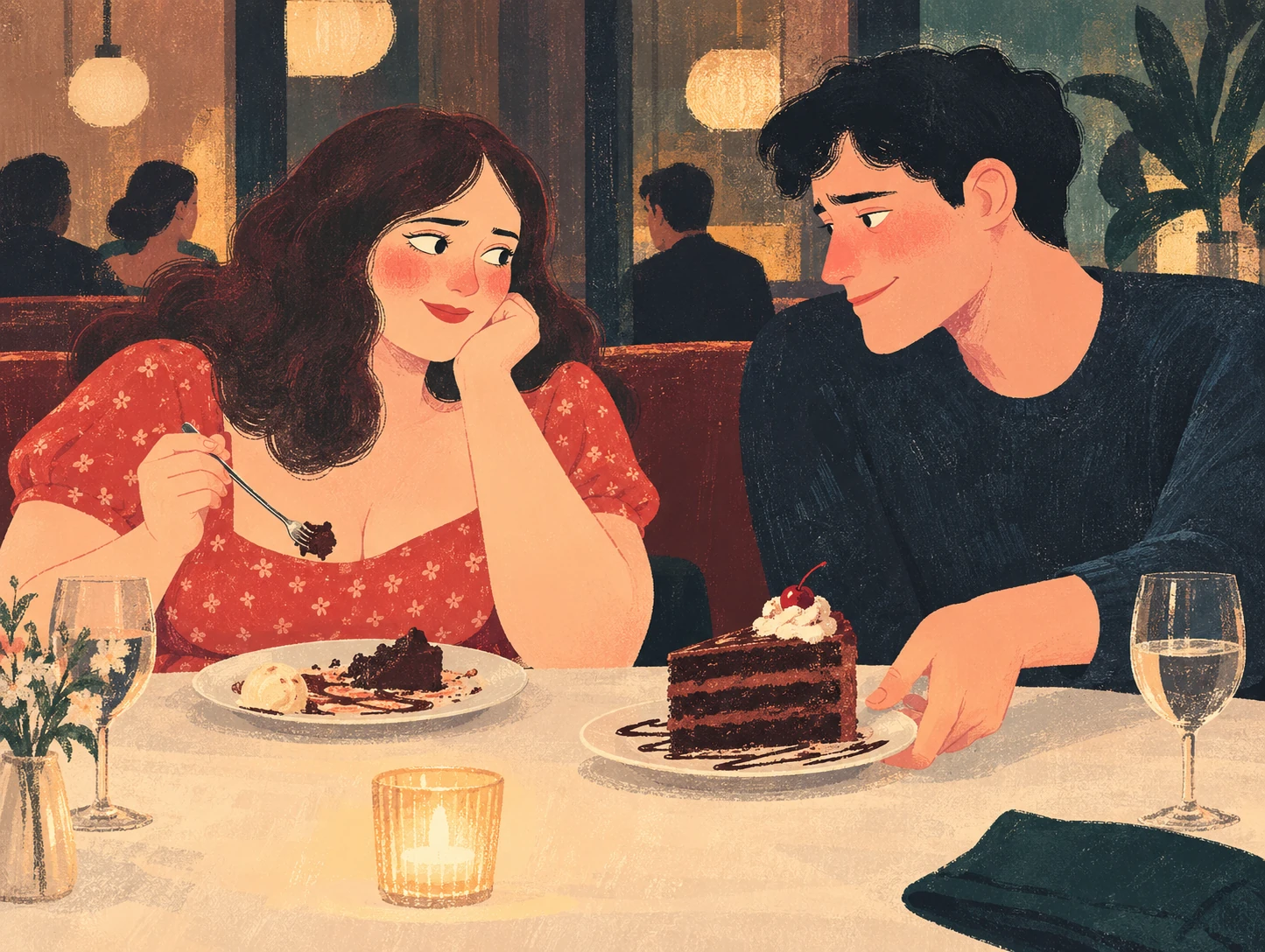
Food became something we could openly incorporate into the relationship. I’d bring home a dessert she liked, encourage her to order whatever she wanted at a restaurant or cook a big meal for us. If she noticed she’d gained weight, it wasn’t automatically a crisis. Sometimes that was exactly what she wanted, and she liked knowing that I noticed the changes too.
What surprised me was how much of the attraction could revolve around permission. Most people, particularly women, spend their lives hearing messages about controlling their appetite and making their bodies smaller. Don’t eat that. You’ve had enough. Are you really having dessert? In our relationship those messages were reversed. She was with someone telling her she didn’t have to apologize for being hungry and that I genuinely liked her body becoming larger.
The fantasy is easier than the reality
If you spend enough time looking at feederism online, you’ll encounter incredibly extreme fantasies. Someone gains fifty pounds, then another hundred. They eat enormous amounts of food and eventually become so large that ordinary activities become difficult. Sometimes the fantasy ends with the feedee completely dependent on the feeder.
I understand the appeal of extreme fantasies because fantasies don’t have to deal with consequences. Real life has doctor’s appointments, airplane seats, blood pressure, joints, stairs, work and all the mundane realities of living inside a human body.
It took me a while to understand that I could enjoy an extreme fantasy without treating it as a goal. The internet rewards extremes anyway. Someone gaining ten pounds might get some attention; someone gaining a hundred gets much more. If you aren’t careful, you can start thinking you’re somehow less of a feeder because you don’t want to keep pushing things further.
The health question is the hardest part
The obvious question is also the most uncomfortable one: if you love somebody, why would you encourage behavior that could negatively affect their health?
I don’t have an answer that makes the contradiction disappear. Significant intentional weight gain can carry health consequences, and pretending otherwise because I’m attracted to it would be ridiculous. At the same time, my partner is an adult who gets to decide what she does with her body. That creates a tension anyone practicing feederism responsibly eventually has to confront.
If my partner decided tomorrow that she didn’t want to gain another pound, we’d stop. If a doctor found a serious health problem and she decided to lose weight, I’d support her. Would part of me be disappointed? Of course. But being attracted to something doesn’t give me ownership over another person’s body.
There is a power dynamic to it
Another part that’s difficult to explain without making feederism sound sinister is that there can be an element of power involved. I enjoy being the person providing the food and encouraging indulgence. There’s something appealing about knowing I’m participating in the transformation rather than simply observing it.
That doesn’t mean I want to control someone’s life. Sometimes I’m encouraging her to eat something she already wants. Sometimes she’s teasing me because she knows I’ll notice she’s gained weight. The attraction comes partly from both of us understanding what is happening.
I don’t secretly put extra calories into someone’s food. I don’t sabotage someone’s diet, and I don’t look at every thin woman I meet and imagine making her fat. If somebody is distressed about gaining weight, her distress isn’t exciting to me. The dynamic only works when the other person genuinely wants to participate.
I don’t want my partner to become infinitely bigger
There’s a stereotype that every feeder’s ultimate goal is to make his partner as large as physically possible. Some people genuinely have that fantasy, but feederism is much broader than that. Some people are interested mainly in eating, others in fatness, weight gain, transformation or the relationship dynamic surrounding it. Some fantasize about gaining without intentionally gaining anything at all.
My own fantasies can be more extreme than anything I’d actually want for my partner. I’ve become comfortable with that distinction. A fantasy doesn’t have to become a five-year plan.
I don’t really know why I’m like this
People inevitably want an origin story. They assume something must have happened when I was a child, or that feederism is secretly about control, nurturing, insecurity or some other psychological explanation.
I’ve wondered about all of those things. Food is one of the most basic ways humans take care of each other, so maybe nurturing is part of it. I’m fascinated by physical transformation, and there’s probably an element of taboo because weight gain is something society generally tells us we’re supposed to prevent rather than celebrate. It’s also possible that my brain happened to associate weight gain with sexual attraction during adolescence and the connection simply stuck.
At this point, knowing exactly why isn’t especially important to me. Plenty of people couldn’t explain why they’re attracted to feet, muscles, uniforms or any of the thousands of other things human beings manage to sexualize.
The fetish is only one part of the relationship
The biggest thing I’ve learned is that feederism becomes much less exotic when you’re actually living with someone. We aren’t spending every evening sitting at a table while I push plates of food toward her. We go grocery shopping, argue about whose turn it is to do laundry, watch television, pay bills and occasionally annoy the hell out of each other like every other couple.
There are times when feederism is very present in our relationship and long stretches when it barely comes up. Her weight isn’t the only thing I find attractive about her, and I’m not evaluating every meal according to whether it’s moving her toward some imaginary target.
I don’t expect most people to understand why I find weight gain attractive. What I wish people understood is that being a feeder doesn’t automatically tell you how somebody treats their partner. A fetish can exist inside a loving relationship, and it can also become an excuse for selfish or manipulative behavior. The label alone doesn’t tell you which one you’re looking at.
I’m a feeder, and I’ll probably always find weight gain attractive. But I’m also somebody’s partner, and those two parts of me aren’t always going to want exactly the same thing. Learning to live with that contradiction has been a much bigger part of feederism than I ever expected when I first discovered the word online.