
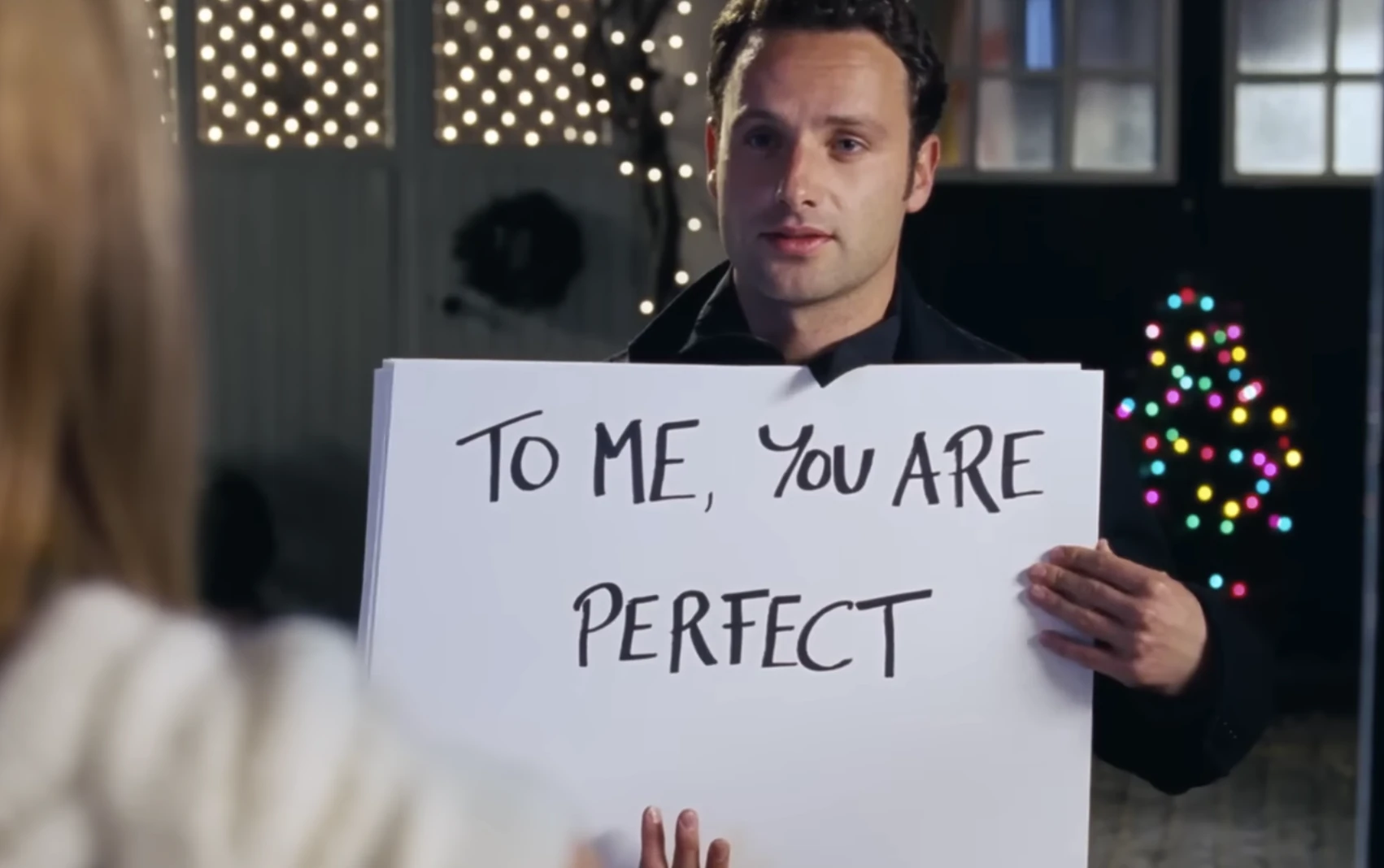
For decades, movies have taught men that getting a woman is mostly a matter of refusing to accept her first answer.
If she says she isn’t interested, keep trying. If she has a boyfriend, prove that you understand her better than he does. If she wants space, appear outside her house with music, flowers, cue cards or some enormous public declaration that makes rejecting you socially uncomfortable. Eventually, she will realize that you were the right guy all along.
This is great storytelling because it gives the hero something to overcome. Unfortunately, it is terrible relationship advice.
Rejection Is Treated Like an Obstacle
The clearest example may be The Notebook. Noah meets Allie, decides he wants her and then hangs from a Ferris wheel while threatening to let go unless she agrees to go out with him. The scene is supposed to establish his irresistible confidence and determination, but stripped of the music and movie-star charisma, it is a man forcing a woman to accept a date by making her responsible for his physical safety.
Movies routinely turn this kind of behavior into evidence of sincerity. The man’s refusal to give up supposedly proves that his feelings are deeper than those of ordinary men. Her rejection is not treated as a decision. It is treated as an obstacle.
Say Anything… gave us Lloyd Dobler standing outside Diane’s window with a boombox. Love Actually gave us Mark arriving at the home of his best friend’s wife to confess his feelings through cue cards. The Graduate gave us Benjamin interrupting Elaine’s wedding. These scenes are remembered as romantic because the men are emotionally vulnerable, but vulnerability does not automatically make someone’s behavior respectful.
Sometimes it is just pressure with a good soundtrack.
Kindness Becomes a Covert Contract
This fantasy feeds directly into the psychology of the “Nice Guy.” He believes that patience, favors and emotional support accumulate like points on a loyalty card. He may never openly tell a woman what he wants because he is afraid of rejection, so he becomes her endlessly available friend while privately hoping that she will eventually recognize his value.
When she dates someone else, he feels cheated. From his perspective, he did everything the movies told him to do. He listened to her problems, helped her move and remembered her birthday. Meanwhile, she chose some other guy who supposedly did none of those things.
The problem is that his kindness was never entirely free. It was a covert contract: “I will provide attention and support, and eventually you will repay me with romantic affection.” She never saw the contract, much less signed it, but he still resents her for violating it.
Being the Better Man Doesn’t Mean You Get the Woman
Movies reinforce this mindset by making the woman’s boyfriend an obvious jerk. He is arrogant, inattentive, shallow or unfaithful, which allows the hero to believe that romantic attraction should operate like a moral ranking system. If he is a better person than her boyfriend, then he deserves her more.
Real attraction does not work that way. Being kind is essential to a healthy relationship, but it does not compel another person to desire you. You can be thoughtful, emotionally available and completely wrong for someone. That is not an injustice. It is life.
The Story in His Head
A movie like (500) Days of Summer offers a smarter version of this story. Tom believes Summer is the answer to his unhappiness, even though she repeatedly tells him that she does not want the relationship he imagines. He is not really in love with the full, complicated person in front of him; he is in love with the role he has assigned her. The movie gradually reveals that his heartbreak is partly the result of ignoring reality whenever it conflicts with his preferred narrative.
That is the lesson romantic movies often avoid because it is less cinematic: pursuing someone harder does not make you more deserving of them. Grand gestures cannot create mutual attraction, and rejection is not always the first act of an eventual love story.
Sometimes no means no. Sometimes the woman chooses somebody else. Sometimes you behave decently and receive nothing beyond the satisfaction of having behaved decently.
Kindness Is Not a Down Payment
The emotionally mature response is not to become colder or less kind. It is to be more honest. Express your interest clearly, notice whether it is reciprocated and walk away gracefully when it is not. Kindness should be part of your character, not a down payment on somebody else’s affection.