

Let’s just put it out there: Most of us spend our lives searching for the hack, the shortcut, the path with the fewest thorns. But here’s the secret your heart already knows and your brain keeps trying to ignore—there is no easy way. Not really.
Category
Let’s just put it out there: Most of us spend our lives searching for the hack, the shortcut, the path with the fewest thorns. But here’s the secret your heart already knows and your brain keeps trying to ignore—there is no easy way. Not really.
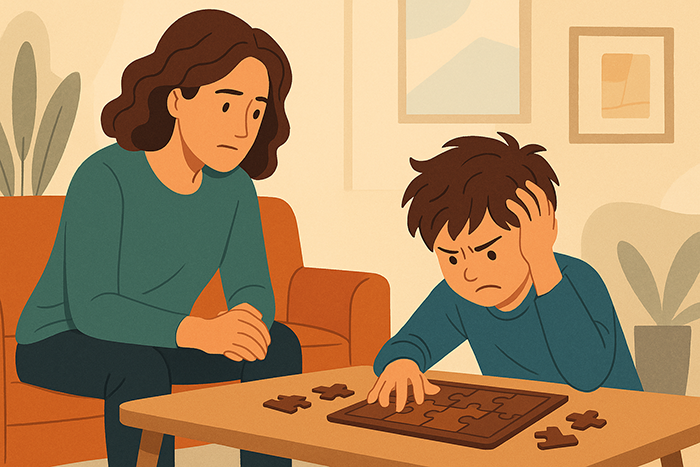
There’s a moment that every parent knows well: your child’s face crumples, frustration rises, maybe even tears start to fall. Every fiber in your body wants to fix it. To smooth the way. To reach in and solve the problem—sometimes before your child even knows there is a problem.
But what if I told you that the hard moments—those messy, imperfect, not-yet-solved ones—are exactly where your child needs to be? What if struggle isn’t something to avoid, but something to gently, lovingly allow?

It’s one of the oldest traps in the book. You meet someone who’s almost everything you’re looking for. There’s a flicker of brilliance, a hint of what they could become with just a little more time, a little more “work.” Maybe they talk about their big dreams, or you see flashes of kindness and maturity beneath layers of chaos. And you find yourself thinking, If only they’d just… or Once they finally…

There’s a moment in every parent’s journey when they realize something essential: they don’t just want their child to behave. They want their child to know themselves, to feel worthy, and to trust their inner voice—even when the world tells them not to.

Let’s cut to the heart of it.
If your child grew up and landed in a relationship just like yours—same tone, same conflict style, same emotional connection, same dynamic—would you be proud? Or would something inside you twist a little?

There’s a familiar pattern in personal finance: we justify a big, flashy purchase by pointing to long-term savings. It sounds responsible, even noble. Buy a $45,000 electric vehicle, and over the years, you’ll save hundreds—maybe thousands—on gas. No more oil changes. Fewer moving parts. Lower emissions. It all feels like a smart, forward-thinking decision.
But here’s the thing: the math doesn’t care how good your intentions are.

We’ve all been there. Someone says or does something that just gets under your skin and pisses you off. Your blood starts to boil, and your first instinct is to lash out, to fight back, to make them feel as bad as they’re making you feel.

We all know someone like this: smart, kind, reasonably attractive—and completely oblivious when someone likes them.

When planning for the future, it’s important to think about how you want to pass on your belongings, like your house, car, or savings. Deciding when to transfer these assets—before or after you pass away—can make a big difference in the amount of taxes your loved ones might have to pay. Let’s explore how each option affects taxes so you can make the best choice for your family.

It’s easy to believe that life’s major breakthroughs happen during rare, dramatic moments. But the truth is far less glamorous and much more powerful: the quality of your life is determined, day after day, by the quality of your habits.