


Let’s start with the obvious: You are not your child’s bestie. At least, not in the way they mean when they’re whispering secrets to their playground BFF or giggling uncontrollably at something ridiculous on their phones.
Category
Let’s start with the obvious: You are not your child’s bestie. At least, not in the way they mean when they’re whispering secrets to their playground BFF or giggling uncontrollably at something ridiculous on their phones.

Okay, we need to talk about your chronic over-apologizing. You know who you are. You say sorry when someone bumps into you. You say sorry when you ask for the check at a restaurant. You say sorry when you text a friend back after three hours instead of three minutes. You’re practically apologizing for existing, and honestly? It’s gotta stop.

Jiu Jitsu is not just a sport or a workout. It’s a process of self-discovery—a constant recalibration of the mind and body that forces you to engage with who you are, who you were, and who you want to become. It’s not just about learning how to fight; it’s about learning how to adapt, persist, and develop resilience in a way that extends far beyond the mats.

Secrets can be tricky for kids to navigate. On the surface, they might all seem the same—someone tells you not to share something, and you feel the weight of keeping it to yourself. But as educators, parents, and caregivers, it’s crucial to teach children that not all secrets are safe.
Some secrets are fun and exciting, like planning a surprise party or keeping a birthday present hidden until the big day. These “safe secrets” have a clear end point—eventually, the person in question will know the truth, and everyone gets to celebrate together. But the reality is, safe secrets are rare.

There’s a moment in every relationship when the newness fades—when the anticipation of seeing each other after a long day becomes routine, when small gestures go unnoticed, when the feeling of being desired starts to feel more like a distant memory than a daily reality.
It’s not that love disappears, or even that attraction does, but something shifts. Maybe it’s familiarity. Maybe it’s the logistical weight of sharing a life together. But whatever the reason, that effortless chemistry—the sense of being truly seen—needs attention.

At some point in the last decade, being good at life was no longer enough. It wasn’t enough to have a job, or a family, or hobbies. You had to be crushing it. You had to be maximizing. You had to be making six figures on the side, preferably through some convoluted scheme that involves zero actual work and a lot of generic platitudes about “leveraging” and “scaling.” And as soon as you start questioning why this all feels suspiciously like a scam, some smug, aggressively confident guy in a rented Lamborghini pops up in your feed to tell you that you just don’t want it bad enough.

I had a woman ask me exactly how does his porn hurt you and equate to cheating? She says, it’s not a real woman, she’s not coming to steal your husband, he won’t remember her after so what’s the problem? So I explained that all of the elements of cheating are there except one difference….there’s a screen.
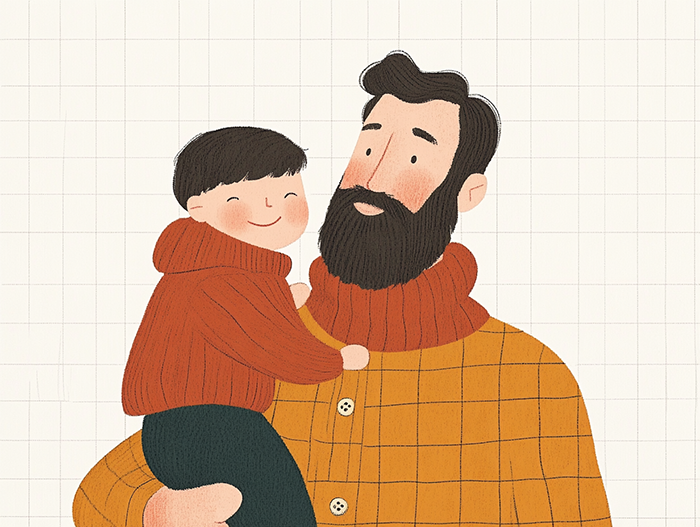
A lot of us walk around with a ghost on our shoulder—the voice of a father who had a clear idea of who we should be. Sometimes, that voice is encouraging. More often, it’s laced with disappointment, frustration, or an impossible standard we were never going to reach in the first place.

In the movies, the perfect marriage proposal is always a surprise—an over-the-top, grand gesture, complete with gasps, tears, and an astonished “Yes!” But in real life, a proposal that truly takes someone off guard is often a red flag rather than a fairytale moment.
The truth is, a marriage proposal should never be a complete shock. If it is, that means the two of you haven’t had the deeper conversations necessary for a lifelong commitment. And that’s a problem.

You know the feeling. You text a friend, “We should catch up soon!” They respond, “Yes, definitely!” And then … nothing. Three months pass. Suddenly, it’s a year later, and your main method of communication is liking each other’s Instagram posts.
Hanging out with friends as an adult is hard. Between work, family obligations, and the sheer exhaustion of pretending to have it all together, social plans tend to fall into the “we should” bucket instead of the “we did” bucket.