Category

Category: Picture Of The Day

Picture Of The Day

Picture of the Day

LAN Party

A local area network (LAN) party is when people get together in a physical space to connect their computers or consoles to the same LAN network and play video games. LAN parties became popular in the 1990s when broadband internet was expensive and uncommon. LAN parties vary in size, from a get-together with a few friends to a major event involving hundreds of strangers.

LAN parties used to be the perfect way to play multiplayer games without relying on split-screen gameplay, often limiting the experience to a maximum of four players.

Common games at LAN parties were those that benefited most from the low-latency and high-reliability environment that a local network provided. First-person shooters (FPS) were particularly popular. Titles like “Counter-Strike,” “Quake,” and “Unreal Tournament” were staples of the LAN party scene.

Read the rest: Picture of the Day
Picture Of The Day

Picture of the Day

What pugs looked like before intense selective breeding

The pug, with its distinctive round face, curly tail, and playful disposition, is a breed that has captured the hearts of many dog lovers around the world. However, the pug we know today is far from the regal and robust dog it once was. Over a century of intensive breeding has left this beloved breed with grossly distorted features and a litany of health problems, prompting experts to call for urgent action to restore the pug to its original form.

Originally hailing from China, pugs made their way to Europe in the 16th century, quickly becoming the favored pets of European royalty. They were cherished by historical figures like William of Orange, who credited his pug with saving his life, and Empress Josephine, who used her pug, Fortune, to carry secret messages during the French Revolution. Even Queen Victoria, an ardent pug enthusiast, owned as many as 38 pugs during her reign.

Read the rest: Picture of the Day
Picture Of The Day

Picture of the Day

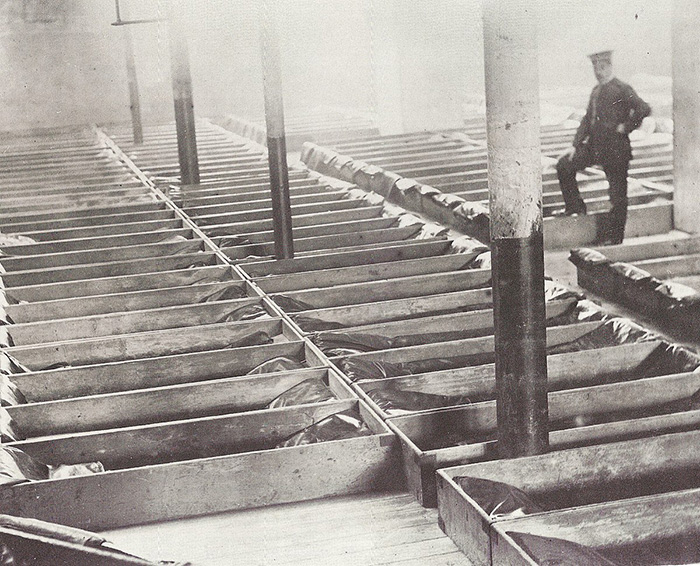
Four Penny Coffins

The concept of “Four Penny Coffins” is a significant yet somber element in the history of Victorian London, reflecting the plight of the impoverished during that era.

The Victorian era, spanning most of the 19th century, was a time of profound social and economic contrasts. While the Industrial Revolution brought immense wealth and progress to some, it also led to unprecedented levels of poverty and destitution for others. In the overcrowded, disease-ridden slums of London, countless individuals lived on the brink of survival.

Read the rest: Picture of the Day
Picture Of The Day

Picture of the Day

In 1911, an unlikely baseball team took the field at the Wyoming State Penitentiary – a team comprised entirely of inmates sentenced to death for violent crimes. Led by star player and convicted murderer Joseph Seng, the prison’s baseball team quickly became a fleeting sensation.

The “Death Row All Stars,” as they were known, were thrust into competition by the warden, Felix Alston, as part of his new reform initiatives. Their opponent in all four games was a strong local team, the Wyoming Supply Company Juniors. Against all odds, the All Stars dominated, winning each game decisively.

Read the rest: Picture of the Day
Picture Of The Day

Picture of the Day

black doll test

“The Doll Test”, which found that given a choice between Black dolls and white dolls, most Black children preferred to play with white dolls and was later cited as a factor in the Brown v. Board of Education decision

In the landscape of American history, the struggle for civil rights has been a persistent battle fought on many fronts. Among the arsenal for change, one of the most poignant and revealing weapons was not a piece of legislation or a violent protest; it was a simple psychological experiment involving children and two dolls. This was the Doll Test, a study that laid bare the insidious impact of systemic racism on young minds and became a cornerstone in the historic Brown v. Board of Education Supreme Court case that desegregated American schools.

Read the rest: Picture of the Day
Picture Of The Day

Picture of the Day

Soviet Marshal Georgy Konstantinovich Zhukov, 1960.

Georgy Konstantinovich Zhukov stands among the most prominent military figures in 20th-century history, renowned for his pivotal role in the Soviet Union’s military campaigns during World War II. Born on December 1, 1896, in a small village in the Kaluga Province, Zhukov rose from a peasant background to become one of the Soviet Union’s most decorated generals.

Zhukov’s military acumen was evident early in his career, but it was during the Second World War that his strategic genius truly shone. He was instrumental in several key victories that were turning points in the war against Nazi Germany. His first significant achievement was the defense of Moscow in the winter of 1941, where his leadership helped to halt the advance of the German Army at a critical moment. Following this, he led the Red Army to victory at the Battle of Stalingrad in 1942-1943, a brutal confrontation that is often cited as the bloodiest battle in the history of warfare and a decisive turning point in the war.

Read the rest: Picture of the Day
Picture Of The Day

Picture of the Day

hermann_goring

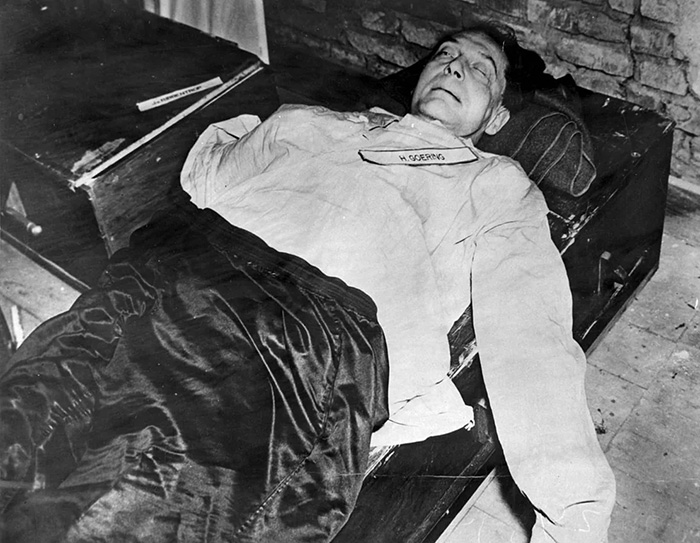
The body of Hermann Göring, Oct. 16, 1946

Hermann Göring was a prominent figure in the Nazi Party, second only to Adolf Hitler in the hierarchy of the Third Reich. His influence extended across various sectors of the Nazi regime, where he held numerous titles and wielded significant power. As one of the earliest members of the Nazi Party, Göring was instrumental in the establishment and consolidation of the totalitarian state. He founded the Gestapo, the official secret police of Nazi Germany, and was appointed as Commander-in-Chief of the Luftwaffe, the German Air Force, playing a pivotal role in the military campaigns of World War II.

Read the rest: Picture of the Day
Picture Of The Day

Picture of the Day

The brazen bull was a torture and execution device designed in ancient Greece.

The condemned were locked inside the device, and a fire was set under it, heating the metal until the person inside was roasted to death.

The head of the bull was purportedly designed with a system of tubes and stops so that the prisoner’s screams were converted into sounds like the bellowing of an infuriated bull. Phalaris is said to have commanded that the bull be designed in such a way that its smoke rose in spicy clouds of incense.

Picture Of The Day

Picture of the Day

Site of San Jose meth lab, bomb-making operation on sale for $1.5M

A spacious six-bedroom San Jose residence, spanning 6,000 square feet, which previously contained a meth lab and bomb-making operation, is on the market for $1.5 million.

The official Redfin listing for the property at 668 Potomac Court mentions the presence of a “dormant meth lab and related contamination,” directing potential buyers to county records for details.

The listing further states that any cleanup and associated expenses fall on the shoulders of the future owner. Moreover, the property hasn’t been certified as contamination-free, and access is restricted until the Santa Clara County Health Department gives the green light.

On the brighter side:

The property boasts a prime location opposite Gunderson High School and offers easy freeway access, as highlighted by its Zillow listing.

Cindy Selleos, the listing agent from Keller Williams Realty-Silicon Valley, hasn’t commented on the listing. However, the recent $125,000 price hike suggests she’s optimistic about its sale.

The Kobeissi Letter, a website offering insights into global capital markets, humorously pointed out the listing, commenting on the peculiar state of the current housing market. The site also mentioned that other properties in the vicinity, without a meth lab history, are priced around $1.6 million.

Historically, the house was occupied by Peter Karasev. He was taken into custody in March when authorities discovered explosive materials and drug-related equipment on the premises.